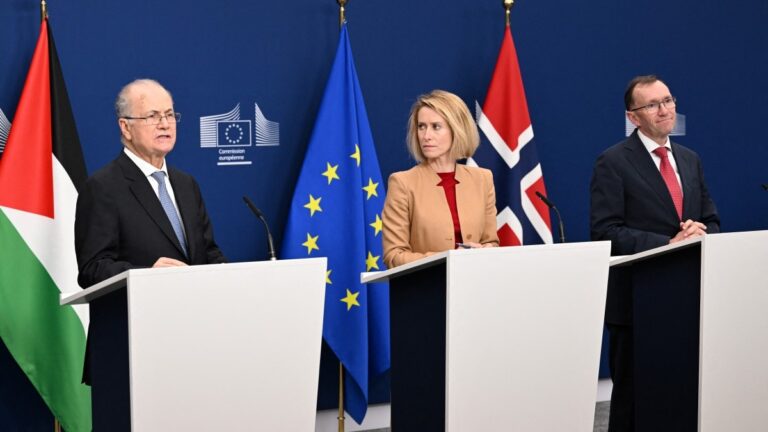
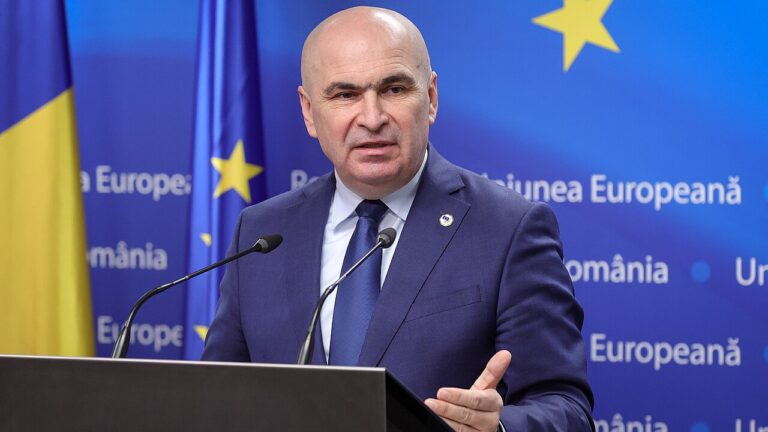
Krzysztof Śmisek (S&D), Tineke Strik (Greens-EFA), Michał Wawrykiewicz (EPP), and Sofie Wilmès (Renew) hold a press conference after the EU Parliament’s vote.
Emilie GOMEZ © European Union 2025 – Source : EP
On Tuesday, November 25th, the European Parliament adopted its second interim report on Hungary’s alleged breaches of the rule of law. While the report frames the issue as a “persistent decline of EU values and the rule of law,” Hungarian officials and their supporters argue that the confrontation is driven not by legal concerns but by Hungary’s refusal to adopt the EU’s liberal policy agenda.
Hungarian MEP Kinga Gál reacted to the vote, saying, “For 15 years, Hungary has faced the same political witch-hunt—new reports, same absurd accusations.” She accused Brussels of using their NGO network to stage attacks on Hungary for defending their own “sovereignty, securing our borders from illegal migrants, protecting our children, and calling for peace.”
The latest developments build on the European Parliament’s Committee on Civil Liberties (LIBE), which on November 5th adopted its own second interim Article 7 report, reigniting the dispute. Drafted by Dutch Green MEP Tineke Strik, the document accuses Hungary of becoming a “hybrid regime of electoral autocracy” and urges the European Council to advance the Article 7 procedure that could suspend Hungary’s voting rights.
Strik urged action on Tuesday, saying, “The lack of decisive action by the Commission and the Council against Hungary has allowed a continuous erosion of democracy and the rule of law. The EU cannot allow Hungary’s autocratisation to continue. Any further delay by the Council would violate the very values it claims to uphold.”
Tuesday’s plenary report—adopted with 415 votes in favor, 193 against, and 28 abstentions—reiterates these claims, taking stock of all 12 areas of concern. Its criticisms come down to Hungary’s refusal to allow Brussels direct influence in the country. The report cites issues with foreign-funded NGOs and other human rights organizations being subject to investigation. Earlier this year, Hungarian government spokesman Zoltán Kovács revealed that, in the last ten years, in Hungary alone, the EU spent over €60 million to fund politically active NGOs to help opposition parties—and that was only what could be verified through the EU’s own databases, which Kovács described as “riddled with inconsistencies and data gaps.”
“The EPP and their leftist allies in the European Parliament want unlimited, all-encompassing foreign interference in Hungary!” Hungarian MEP András László wrote on X after the vote.
The EPP and their leftist allies in the European Parliament want unlimited, all-encompassing foreign interference in Hungary!
— András LÁSZLÓ MEP 🇭🇺 (@laszloan) November 25, 2025
This is the dream of the Tisza Party, the European People’s Party, and the left-wing groups.
What is the essence of the draft resolution on Hungary?…
Other issues cited include the government’s decision to ban public Pride parades and other public events promoting the LGBT agenda, a move aimed at protecting children from harmful ideologies. Hungary maintains that these national policies reflect democratic mandates rather than breaches of EU law.
Conservative MEPs see the case of Hungary as a warning example for all European countries wishing to decide their own fate. Patriots for Europe (PfE) MEP Jorge Buxadé (VOX) said,
Hungary is worth defending. Because defending Hungary is defending ourselves—defending the identity, sovereignty and freedom of our nations.
The broader dispute underscores the longstanding clash between Brussels and Budapest over national autonomy. Despite years of debate, there is little consensus among member states on how to proceed. Advancing Article 7 would require support from at least four-fifths of EU governments, while sanctions would require unanimity—an unlikely outcome.