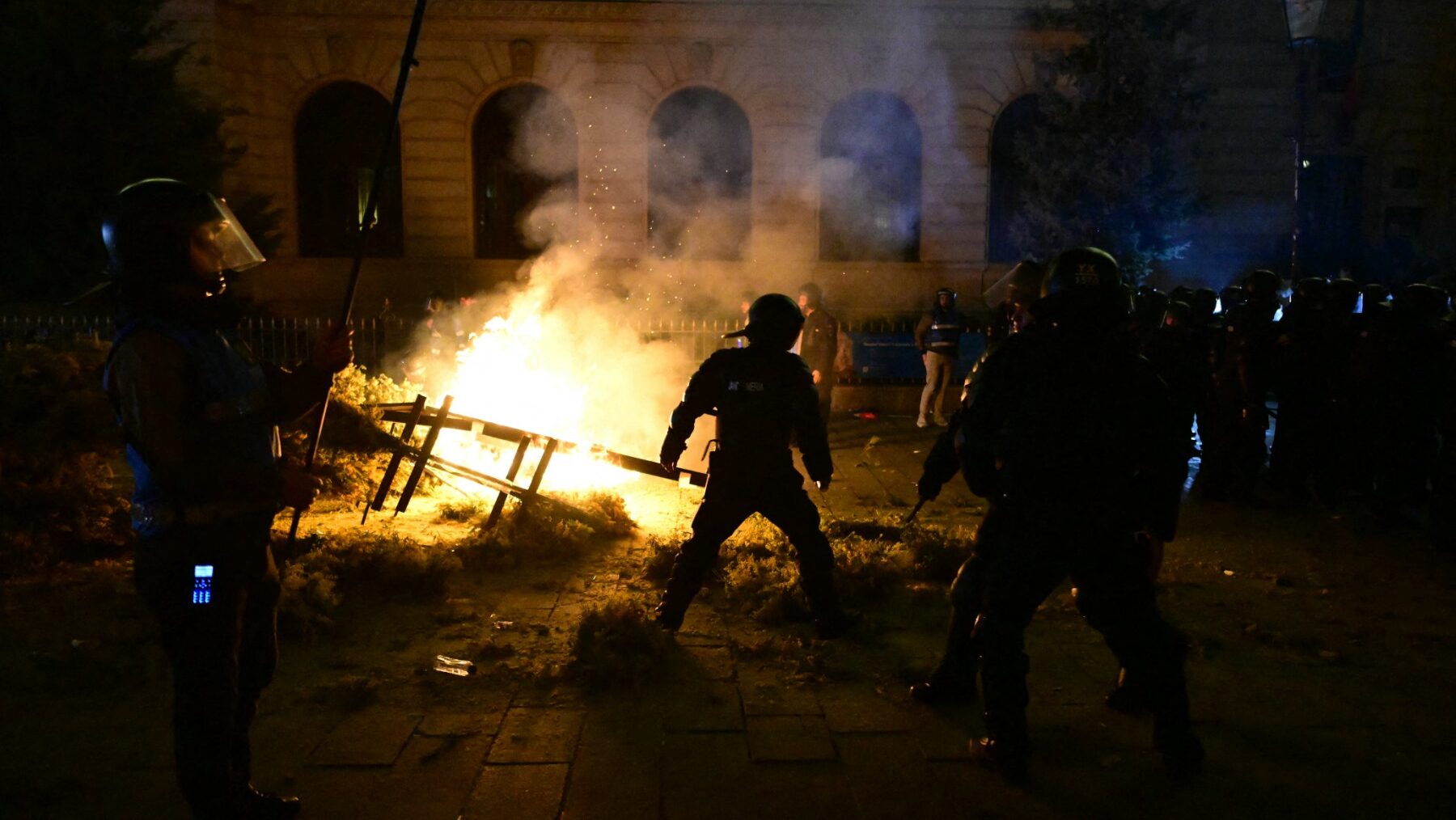
Daniel MIHAILESCU / AFP
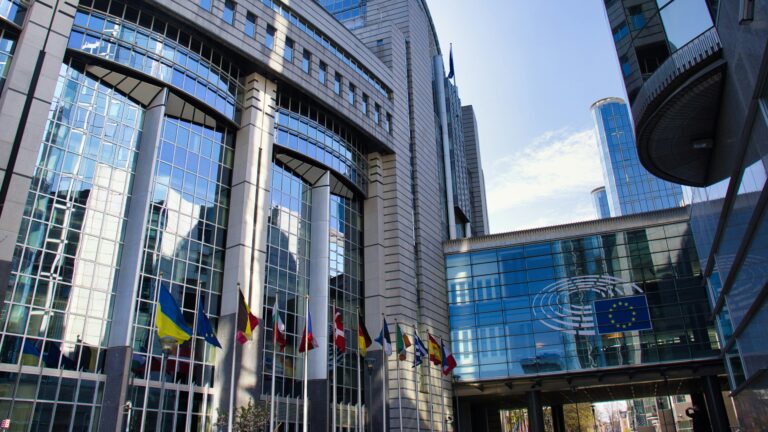
The risk of internal conflict in Europe is no longer a fringe idea, several experts warned at the European Parliament on Wednesday, saying growing tensions across the continent are starting to resemble conditions seen before past outbreaks of violence.
At an event hosted by the European Conservatives and Reformists (ECR) group, academics, security experts and MEPs said a mix of social division, mass immigration, declining trust in politics and weakening state authority is making parts of Europe more unstable.
Opening the discussion, MEPs Charlie Weimers and Marion Maréchal said Europe’s political class has avoided confronting the scale of change in recent years. Weimers warned that shutting down debate around migration and cultural cohesion risks making tensions worse, describing Western societies as a “pressure cooker.”
Professor David Betz said Europe is already moving in a dangerous direction.
“I don’t think the question mark is necessary. Europe is on the path toward civil war,” he said, arguing that these kinds of conflicts build slowly over time.
Betz said politics is becoming less about policy and more about clashes between groups that no longer see eye to eye. When that happens, he warned, tensions can harden and eventually turn violent.
He also described a situation in which the state appears tough on ordinary citizens but struggles to deal with crime or disorder, which he said weakens trust and fuels anger.
Political scientist Ralph Schoellhammer said Europe could first face a period of unrest before any full-scale conflict.
“When there is inflation, higher taxes and a decline in living standards, the conditions for unrest are created,” he said, comparing today’s situation with the years before the revolutions of 1789 and 1917.
Schoellhammer warned that Europe’s stability has long depended on economic security, but that balance could break if living standards fall. He added that rapid cultural change—often seen by many as being imposed—has left some citizens feeling they have lost control, which can drive people toward more extreme positions.
French lawyer Thibault de Montbrial said warning signs are already visible.
“For decades we have been living in societies that are increasingly violent and distrustful, and the main factor of trust between citizens—cultural homogeneity—has been deeply weakened,” he said.
He pointed to rising attacks on police, teachers and other public officials as a sign that respect for authority is breaking down.
Irish journalist Eoin Lenihan said Ireland shows how quickly tensions can rise. He cited unrest linked to immigration, housing shortages and economic pressure, including recent riots and attacks on accommodation centres.
“The idea that Ireland could face serious unrest seemed impossible a few years ago, but today it is a real possibility,” he said.
The discussion reflects a broader shift in Europe’s political debate. Scenarios that were rarely discussed in mainstream settings are now being raised openly in the European Parliament.
Speakers warned that ignoring these tensions will not make them go away. As Weimers put it: “If we do not talk about the causes of social fracture, we are not preventing conflict—we are preparing it.”