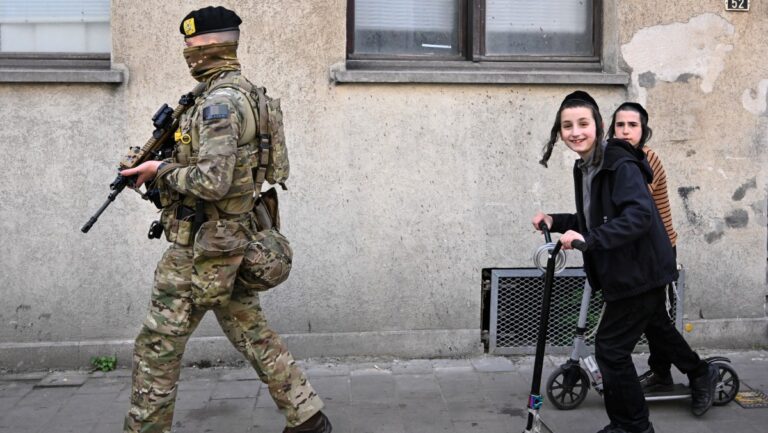
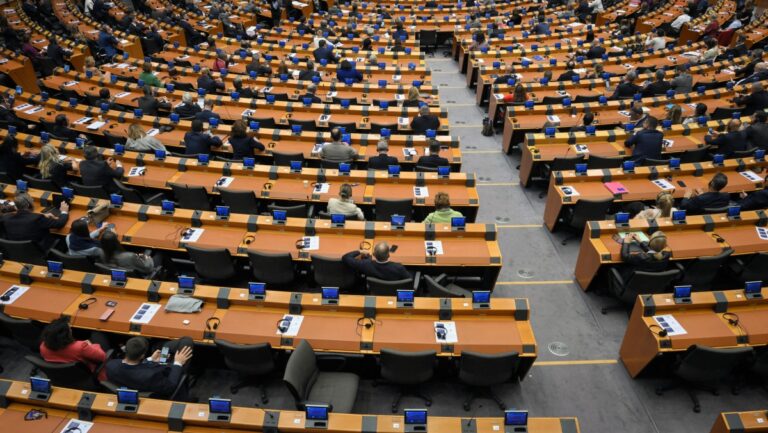
The European Court of Human Rights on Thursday, June 26th, ruled against France in a ‘racial profiling’ case following complaints from individuals who felt they had been targeted on the basis of racial criteria during police checks.
The ECHR decision that confirmed police ‘discrimination’ for the first time in France brings the issue of ethnic statistics back to the forefront: although banned in France, recording ethnicity would in fact help to set the record straight. If police officers ‘target’ certain populations during routine checks, it is because they are overrepresented among fraudsters and offenders.
The lawsuit was based on the case of a certain Karim Touil, who was stopped nearly 15 years ago and who believes he was the victim of police harassment because of his ethnic origin. Five other cases were also heard by the Court, but were dismissed.
In France, the issue of ‘racial profiling’ is a politically sensitive subject, especially since some of the random checks have escalated, such as in the case of young Nahel, whose death during a police check led to the riots of June 2023.
The French Human Rights Defender issued a report denouncing, in conjunction with the ECHR, the existence of ‘discriminatory practices’ within the police force. According to the report, “young men perceived as Arab, black, or North African are four times more likely to be subjected to at least one identity check than the rest of the population.” However, as Paul Sugy notes in Le Figaro, the methodology of the compiling of the document is questionable, as it is based solely on the statements of those surveyed without attempting to cross-reference the figures.
Contradictory studies have been conducted by social scientists to debunk the myth of police racism. First of all, the locations where checks are carried out (trains and the underground), such as the Gare du Nord in Paris, a place known for its high crime rate, are themselves frequented by a population that is not predominantly white, which skews the initial sample. Furthermore, clothing and behaviour during checks are just as important, if not more so, than skin colour: wearing ‘hip hop’ style clothing, such as baggy jogging bottoms or hoodies, makes you more likely to be checked, whether you are white or black. A black man in a suit and tie is likely to be left alone.
There is also another form of ‘discrimination’ that is never denounced. Those stopped are mainly men, not women. Yet no one takes offence at this in the name of so-called gender equality. No wonder: offenders are mainly men.
As common sense dictates, police officers in France focus their checks on the target population most likely to break the law. Racial profiling exists, and it is normal and logical. If it targets people of foreign origin—black or Arab—it is also because it is part of the fight against illegal immigration. That’s also a fact: illegal immigrants are more likely to come from Mauritania or Cameroon than from Norway or Ireland.
Finally, it is important to cross-reference statistics on checks with statistics on crime, something that both the Left and the media in France are reluctant to do in the name of anti-racism. In February, Paris police chief Laurent Nuñez indicated that more than a third of those charged with crimes in the Paris metropolitan area were foreigners, and that they accounted for half of all burglaries and violent robberies.
Les fameux contrôles au faciès qui toucheraient 2 fois plus les Algériens que les Subsahariens…
— Marc Vanguard (@marc_vanguard) June 16, 2025
👉 Non, aucune explication monofactorielle ne tient la route, et surtout pas celle-ci, pour expliquer la surreprésentation des immigrés dans les crimes et délits en Europe. https://t.co/ZQOwJAKm0u pic.twitter.com/P8y3KU41go
While the ban on statistics on ethnicity prevents the French from going deeper in analysing facts, simply examining the nationality of offenders, which is permitted, is enough to reach the same common-sense conclusions: police focus their checks on the groups of people who make up the largest proportion of criminals. Focusing checks on elderly white women with shopping bags would therefore not be very productive in terms of improving overall security in France.
What the ECHR will never say is that there are also other discriminatory practices, albeit reversed, as recently revealed by the Institute for Justice. In transport, the authorities target solvent individuals who are likely to pay their fines—often native French people who are not inclined to challenge authority. As they are not supported by heavily subsidised anti-racist associations, they will never complain to Brussels and will pay their fines, without saying a word.