MEP Christine Anderson
Photo: Alexis Haulot / European Union 2022 – Source: EP
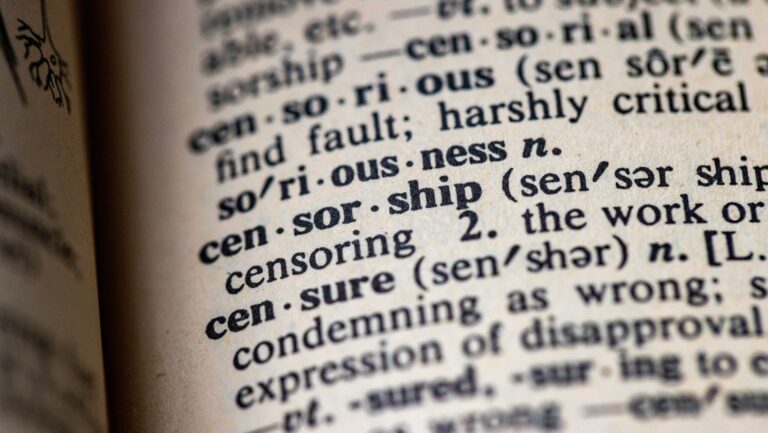
The EU is pushing ahead with plans to expand online censorship and boost funding for partisan fact-checkers, under a controversial new initiative unveiled on May 20th—however, lawmakers remain deeply divided on this so-called “European Democracy Shield” (EDS).
In the debate that followed, mainstream parties accused opponents of spreading Russian propaganda, even though the conservative opposition groups simply warned that the new rules could be turned against critics and dissenters.
As we wrote previously, the EDS is a flagship project of the von der Leyen Commission, aiming to build on the existing Digital Services Act (DSA) to safeguard member states’ electoral integrity from foreign manipulation.
While everyone agrees that the problem exists and needs to be addressed, Brussels’ solution—a centralized censorship regime backed by an army of EU-funded ‘fact-checkers’—understandably drew heavy criticism from national conservatives.
“This report is basically setting the ground rules for the EU to have more interference in national elections,” MEP Christine Anderson of the Europe of Sovereign Nations (ESN) group told europeanconservative.com after the meeting.
“But this is national competency, and they have no business meddling in there. What they try to achieve is obviously to retain control of who gets elected,” Anderson added. “This is the exact opposite of democracy, the rule of law, and freedom of speech.”
Rapporteur Tomas Tobé of the centrist European People’s Party (EPP) claimed the EU needs “a new independent structure at EU level” to coordinate anti-disinformation efforts, because member states are clearly not equipped to protect their own electoral processes.
He brought up Romania as an example, despite the lack of evidence that Russian meddling influenced last year’s canceled election.
This shows why the EU needs “a much more comprehensive and effective approach than what we have today,” claimed Tobé, whose “core” objective would be to enable Brussels to detect, analyze, and counter information manipulation on social media in real time.
The primary proposal of the Democracy Shield is to massively increase the funding of professional “fact-checking” organizations, potentially through a separate fund set up for them, paid by EU taxpayers. These would include the ones who already worked with Brussels during the 2024 EU elections—the same NGOs that Meta booted months ago after admitting that their leftist bias caused more problems than they have solved.
Other ideas include stricter rules on “hate speech” and forcing social media platforms to reveal how their algorithms work.
The EU is already preparing fines for platforms like X and Meta, while also suing five member states over failure to enforce DSA rules.
Apart from the fact-checkers, the Shield would also support “trustworthy” news media with more taxpayer funds to help them counter what the EU deems harmful narratives. It would also support NGOs who monitor “hateful” content and teach skills such as “digital media literacy” and “critical thinking.”
What’s alarming is that the EU has already been spending massive amounts on both: it was revealed that it secretly funneled €130 million to friendly news sites ahead of the EU election, while a recent study identified €650 million worth of research grants awarded for studying “hate speech” and “disinformation” online. In other words, the Democracy Shield is not starting from scratch, but building on already existing infrastructure.
“The concern is that any such measure might not strengthen but undermine European democracy,” the Patriots’ shadow rapporteur on the file, Jaroslav Bžoch said while summarizing the conservative group’s position. The Czech MEP explained that instead of censoring content and telling people what’s true, the EU should focus on education and preserving free speech and the plurality of thought.
Increasing the public funding of NGOs is not a bad idea in itself, “but, unfortunately, this does not reflect the political reality,” Bžoch added, “as they can easily become a tool to promote a political agenda,” as it happened in the case of the Green Deal.
This argument was echoed by EPP member Sander Smit, who went against his own party to remind his colleagues about both the ‘Timmermansgate’ concerning climate NGO lobbying and last year’s microtargeting scandal around the ‘Chat Control’ legislation, both of which broke out in his native Netherlands and were ultimately swept under the table by his own colleagues in the EPP. The EU needs to seriously address these issues to “show our credibility” before increasing the public funding of NGOs, Smit said.
Another Patriot MEP, Csaba Dömötör, also recognized the dangers of malign foreign interference, but warned against replacing it with Brussels’ own interference by giving unprecedented power to unaccountable fact-checkers. Dömötör also raised the issue of transparency, recalling that it took 86 freedom of information requests and months of fighting until the Commission finally released documents showing that it awarded an astronomical €17 billion to NGOs in recent years.
However, one of the most important considerations was only raised by the ESN’s shadow rapporteur, Christine Anderson, who reminded the room that national elections are strictly defined as a member state competence in EU law. Allowing Brussels to have any say in how they are conducted is therefore “a red line” under the current treaties. The starting point, instead, should be restoring trust in public institutions and a “strict respect for EU treaties.”
Furthermore, public-funded NGOs—or “NearGOs,” as she referred to them—have time and again damaged rather than protected democracy, Anderson warned. The fact no one really agrees on what constitutes hate speech and disinformation “opens the door for subjective censorship,” the AfD lawmaker argued. These actors, when state-funded, “risk becoming gatekeepers of ideology, and not truth,” blurring the line between propaganda and education.
Of course, trying to find a balance between countering disinformation campaigns and respecting freedom of expression is not easy, she told us after the meeting. But the bottom line should be allowing free and open discussion to determine what’s real or not, otherwise truth becomes a “dictat,” like in the mRNA vaccines, she said.
In a healthy democracy, people should have the right to be wrong, because only through free discussion can you eventually get to the truth.