FREDERICK FLORIN / AFP
Western Europe is quietly shifting onto a war footing. From Brussels to Berlin, governments are prioritising military readiness and manpower over diplomacy, reshaping the continent’s future around preparation for conflict rather than the pursuit of peace.
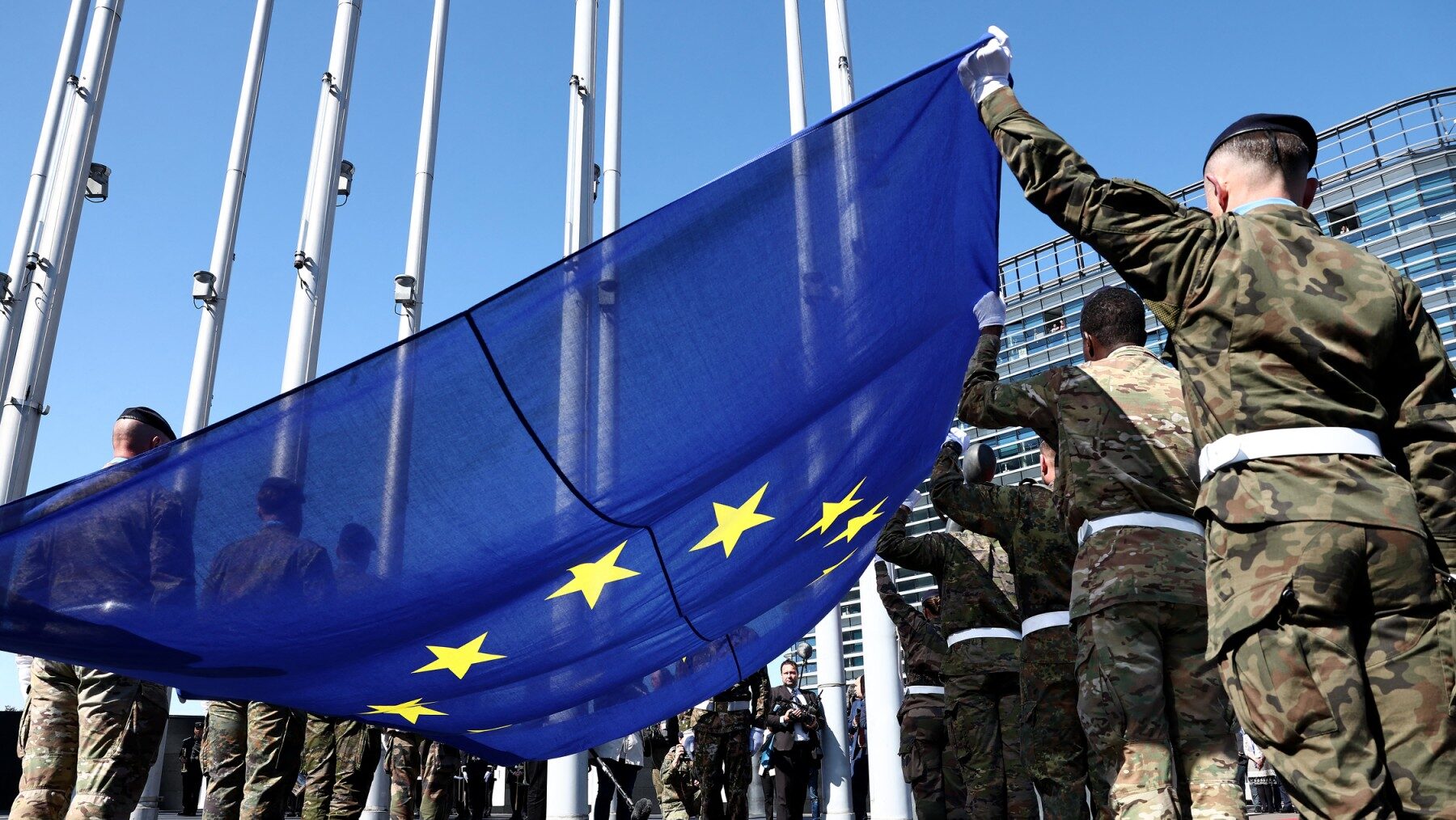
The European Commission’s call for collective “full military readiness” has accelerated national preparations across the continent, with governments increasingly prioritising rearmament over diplomacy. Rather than focusing on de-escalation or negotiated solutions, European policy is being reshaped around deterrence, military infrastructure, and the expansion of available manpower.
Germany illustrates this transformation clearly. The CDU/CSU-Social Democrat coalition has agreed on a compromise to reintroduce military conscription in a new form. The defense ministry says the process is intended to identify who would be available in an “emergency.”
France moved to expand its military manpower, shifting from reservist growth to direct recruitment for a new form of national service. Paris announced the launch of a campaign to recruit thousands of young people for a new ten-month voluntary national military service, with the first participants set to begin in September. The scheme, unveiled by President Emmanuel Macron in November, is open to French citizens aged 18-25 who wish “to play a part in the nation’s capacity to resist in an uncertain environment,” according to armed forces chief of staff General Fabien Mandon.
Austria is also reassessing conscription. On Tuesday, a Military Service Commission appointed by Defense Minister Klaudia Tanner is due to present reform proposals in response to the “current security situation.” The commission, made up of 23 members from the civil service, military, and interest groups, has examined several options, including an “8+2” model with eight months of military service followed by two months of mandatory exercises over several years, and a second model keeping six months of basic service but adding mandatory training. Civilian service could be extended under both approaches.
A similar emphasis on readiness over reconciliation is evident in the United Kingdom. Under a forthcoming Armed Forces bill, London plans to raise the age at which retired soldiers in the strategic reserve can be mobilized from 55 to 65 and to lower the legal threshold for recall from cases of “national danger” to “warlike preparations.” The changes come as the British Army has fallen to just over 70,000 full-time troops, its smallest size in more than 200 years. Officials justify the measures by warning of a possible large-scale war with Russia.
Armed Forces minister Al Carns said war was “already knocking on Europe’s door,” and the UK has announced it would deploy troops to Ukraine alongside France if a ceasefire is agreed.
After months of warnings about “Europe’s vulnerability,” the European Commission has unveiled a roadmap to reach “full military readiness” by 2030, placing defense at the centre of the European project. Commission President Ursula von der Leyen described the strategy as a “necessary response” to “growing threats,” arguing that Europe must be ready for a potential conflict with Russia.
Taken together, these developments suggest a decisive shift in Europe’s political priorities. As Brussels and national governments focus on mobilisation and military preparedness, diplomacy and the pursuit of negotiated solutions appear increasingly marginal.