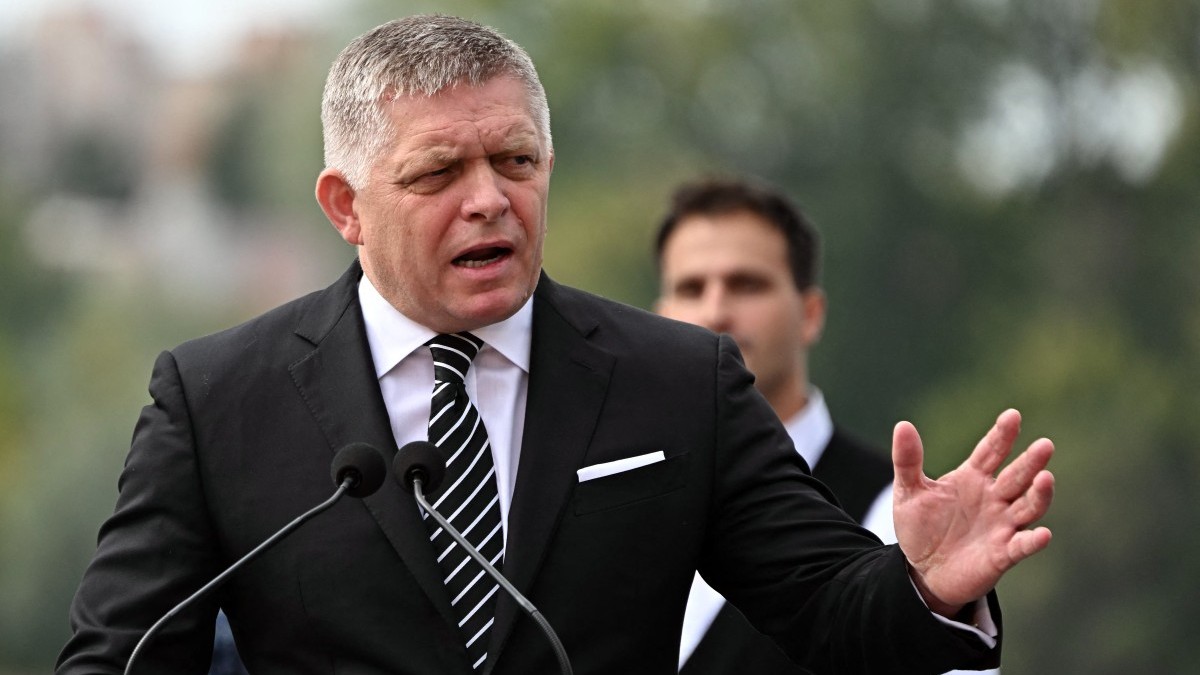
Slovak Prime Minister Robert Fico on September 28, 2025
Attila Kisbenedek / AFP
Slovak Prime Minister Robert Fico announced his intention to coordinate with Visegrád Four (V4) partners—Poland, Slovakia, Hungary, and Czechia—to force the European Union to revoke or radically revise its ban on new combustion-engine cars slated for 2035.
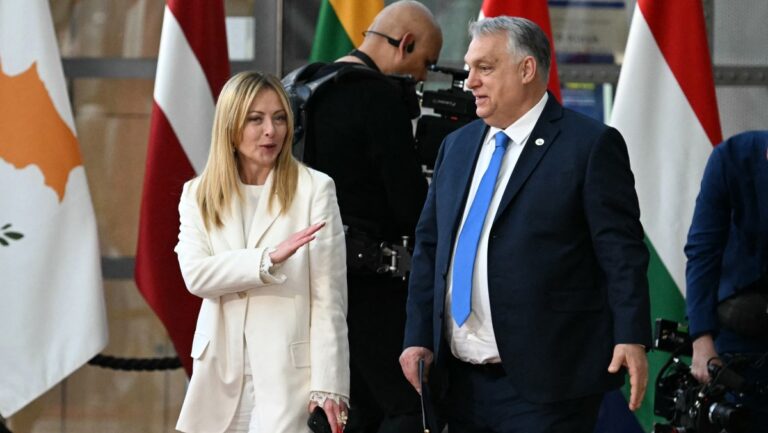
He urged Hungary’s Viktor Orbán, currently holding the V4 presidency, to convene a meeting of the four nations before the European Council gathering on October 23–24.
Following his meeting with representatives of the automotive industry, Fico said at a press briefing on Thursday, October 9th: “An atmosphere indicating that the 2035 target needs to be reformed, that this target must undergo revision, prevailed completely.”
He stressed that the automotive industry accounts for 10% of Slovakia’s GDP, contributes 44% of exports, directly employs 125,000 people, and supports another 220,000 jobs indirectly. Any negative shift in production, he warned, would mean a disaster for Slovakia.
I have said repeatedly that the European Commission often focuses on all sorts of sanctions and measures, but not on what is truly important for the European Union.
Critically, Fico counts on Hungary’s Orbán as a close ally in this effort, and expects that Czech Prime Minister-elect Andrej Babiš will soon join the drive.
Babiš’s ANO party is negotiating a coalition with the anti-immigration SPD and the right-wing Motorists party, which all oppose what they view as the EU’s overreach under the Green Deal agenda.
These three governments will now share a sovereignty-oriented approach to EU policymaking, giving the V4 bloc new strength—save for Poland, governed by a more Europhile cabinet that has not embraced this line.
Since Donald Tusk’s return as head of the Polish government in 2023, V4 leaders have failed to meet on a regular basis, as they had done in the past. According to Fico:
The V4 should return to where it once was. I think it’s no secret that the V4 was one of the most important forms of regional cooperation—a format that was capable of influencing European Council decisions.
The timing of Fico’s appeal coincides with growing opposition elsewhere in Europe. Italy and Germany have co-signed a letter warning that the 2035 ban would impose “disproportionate penalties” on automakers and should be modified to permit low- or zero-emission fuels beyond pure battery electric solutions.
Meanwhile, Germany’s Chancellor Friedrich Merz, after holding crisis talks with German auto industry leaders on Thursday, said he would “do everything” to stop the EU’s rigid 2035 deadline.
Fico’s offensive places pressure on Brussels to reconsider what, he asserts, is an unrealistic technological mandate disconnected from industrial reality. “We must be flexible,” he said. “We will bring proposals: either an extension of the date or 2035 combined with new substantive conditions to help manufacturers survive.”