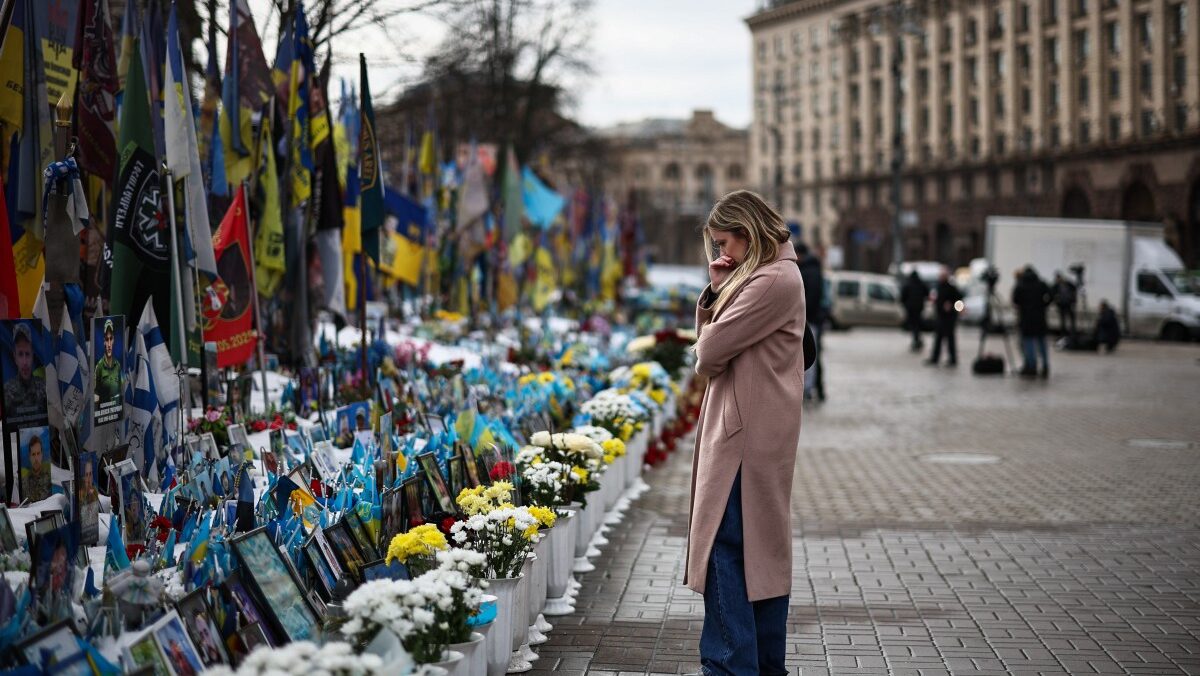
A memorial on Independence Square in Kyiv on February 24, 2026
HENRY NICHOLLS / AFP
Four years after Russia’s full-scale invasion of Ukraine, European leaders gathered in Kyiv on Tuesday to reaffirm their support for President Volodymyr Zelensky and pledge continued military and financial backing.
The anniversary was marked by renewed pledges of military aid and long-term financial assistance, as Kyiv continues to press for additional weapons, security guarantees, and a clear pathway toward European Union membership.
“We have defended our independence, we have not lost our statehood; Putin has not achieved his goals,” Zelensky told gathered leaders.
Speaking via video link, Zelensky said Ukraine “never chose this war” and tried “everything we [could] to stop it,” while accusing Moscow of deliberately pursuing continued aggression. He called for expanded sanctions, long-term security guarantees and a clear timetable for Ukraine’s accession to the European Union.
Support from Ukraine’s Western allies followed swiftly. NATO head Mark Rutte said Ukraine needs “ammunition today and every day” in its fight against “Russian terror.”
UK prime minister Keir Starmer said, “We must always double down on our support for Ukraine,” and pledged further help for Ukraine’s military effort.
French president Emmanuel Macron wrote on X that Europe has already mobilised €170 billion in support and warned that there is “no justification” for questioning a €90 billion loan package agreed in December to provide Kyiv with predictable funding over the next two years.
Moscow struck a markedly different tone. Kremlin spokesman Dmitry Peskov said the past four years had been “extremely significant” for Russia and would remain in the nation’s memory, arguing that the war had united the Russian people. Peskov added that Russia’s goals “haven’t been fully achieved,” and that therefore the war would continue.
Not all European leaders echoed the dominant message of continued military backing. Hungarian prime minister Viktor Orbán called for an immediate ceasefire and renewed peace efforts. He wrote on X, “Four years of senseless killing, with hundreds of thousands of lives lost. For four years, European and Hungarian families have been paying the economic consequences of this war.”