Image par Roberto Cardona de Pixabay
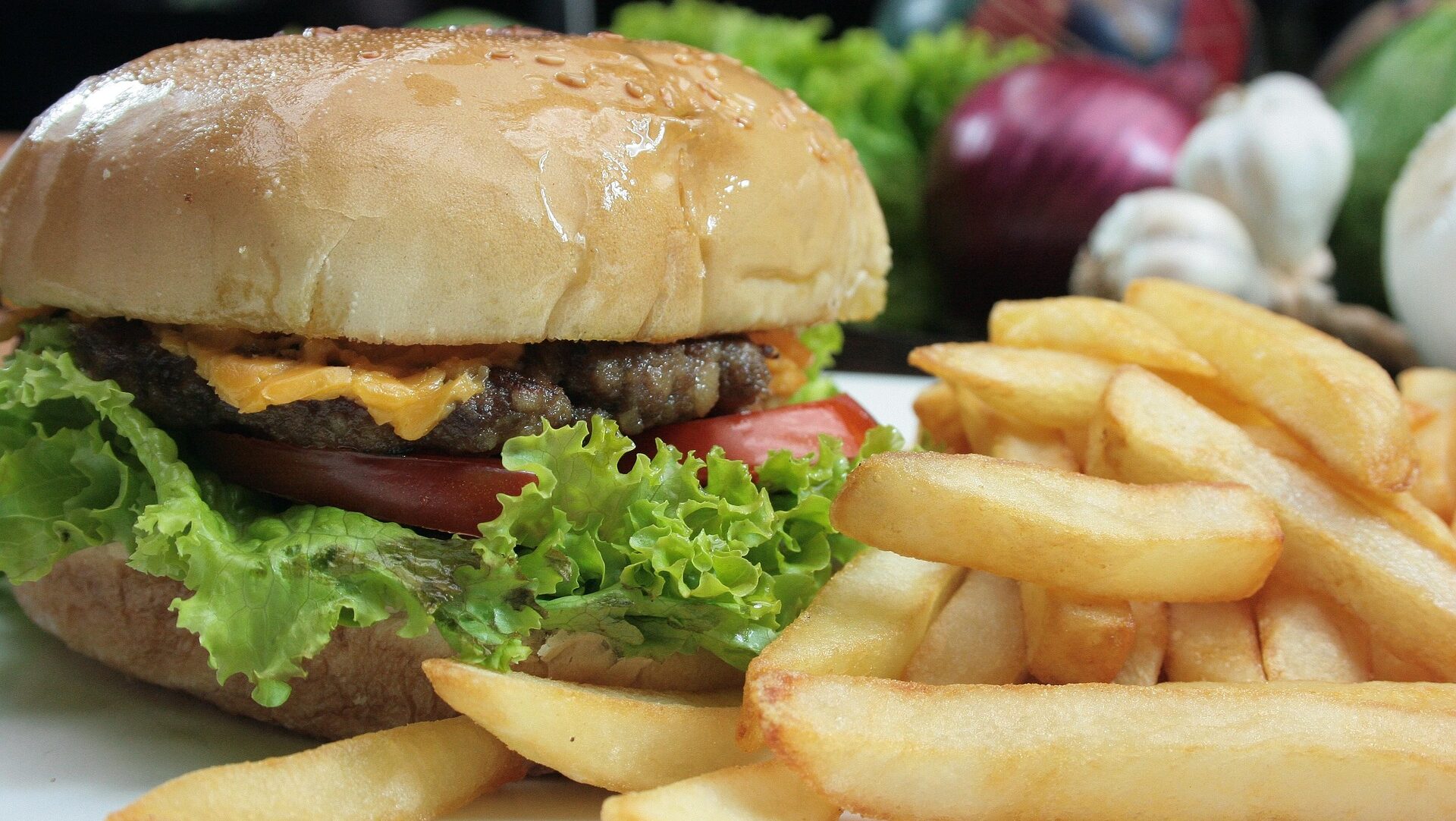
Five Guys, an American chain originating in Virginia that offers “quality burgers and fries,” has been operating in France quite successfully since 2016. Its management has recently announced that some of its restaurants will now offer halal meat to their customers. While the stated reason is economic interest, this pursuit of profit is accelerating cultural change.
Five Guys currently has only 35 restaurants in France, far fewer than, for instance, McDonald’s which operates 1,500 outlets. Six of those have just switched to halal, in Clichy, Créteil, Rosny-sous-Bois, Lille, Lyon and Marseille. The introduction of halal meat has been accompanied by the end of alcohol sales.
The chain explains on its website that it wants to offer its burgers and chips “to as many people as possible.” In fact, this “as many people as possible” is actually a community-based targeting strategy, as revealed by the location of the six restaurants chosen: they are located in cities with a notoriously large immigrant population. Although burgers containing bacon are still on the menu, they are cooked on hotplates and with dedicated utensils, “to avoid any risk of cross-contamination,” the chain painstakingly explains to reassure concerned customers.
The Five Guys case reflects a major trend bound to affect all fast-food outlets, and more broadly, the consumption of French meat, with consumers often left with no choice.
Bernard Boutboul, president of Gira Conseil, a firm specialising in out-of-home catering, estimates that if McDonald’s decided to take the plunge into halal, it would triple its turnover. This is an estimate, but one based on indisputable facts: McDonald’s competitor, the Quick burger chain, has indeed doubled its turnover in three years (from €250 million to €515 million) since its acquisition by H.I.G. Capital in 2021, which was accompanied by a switch to 100% halal. The strategy is clear: capitalise on the growing Muslim population in France to boost sales. Quick has signed a certification agreement with the Grand Mosque of Lyon, and other chains, such as KFC and O’Tacos, are also halal, although this is less prominently communicated. For now, McDonald’s is holding out, but for how long?
Although obviously not all fast-food customers demand halal meat, it is clear that France’s Muslim population, estimated at around 7 million people, represents a large market to be satisfied. As for other consumers, many see no problem with eating halal meat, sometimes even without knowing it, and are unreceptive, often due to a lack of clear information, to arguments that should discourage them from endorsing this practice: the suffering of the animals slaughtered in this way, and the payment of a fee to the Islamic clergy.
Halal as a phenomenon is not insignificant. “It is a practice that excludes,” says anthropologist Florence Bergeaud-Blackler, a specialist in the entryism of the Muslim Brotherhood.
The size of the halal market in France, across all sectors, is difficult to quantify precisely, but is estimated to be worth between €7 and €12 billion, making it twice as large as the organic market, according to the website L’Essentiel de l’éco. It is calculated to have grown by nearly 30% since 2010, making France the second-largest halal market in the world after Malaysia.
The phenomenon appears to be inexorable. “We surveyed Gen Z, for whom halal is no longer even an issue. I think that in 10 years’ time, we won’t be talking about halal anymore because it will have become so commonplace,” says Bernard Boutboul.
On social media, Five Guys’ decision has not gone unnoticed, and calls to boycott the brand have multiplied.
https://t.co/Oc2av8ufqs il faut BOYCOTTER cette chaîne de malbouffe
— Patrick Jardin (@jardin599) November 3, 2025
Fast food chains are no longer content with offering mediocre, standardised food made from ultra-processed products that are devoid of any nutritional value and run counter to the best of French cuisine: they are becoming the harbingers of the Islamisation of the country.