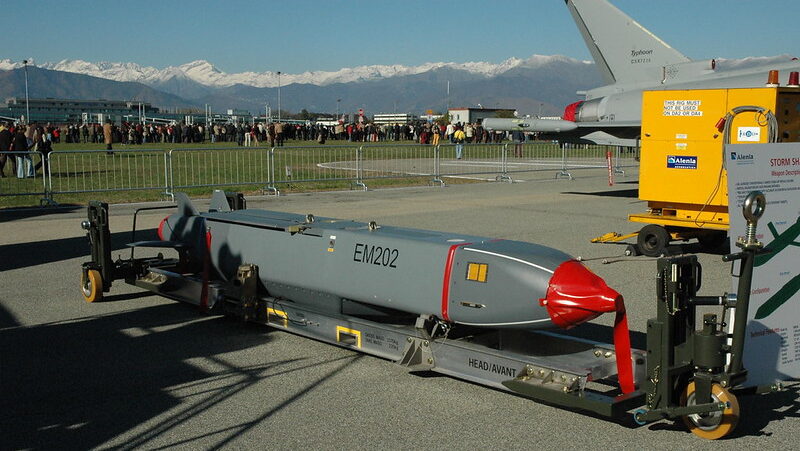
MBDA Storm Shadow cruise missile shown at Torino Caselle Airport on 14 November 2004 at the Alenia Aeronautica Flight Test.
fsll2, CC BY-NC 2.0, via Flickr
Under cover of darkness on the night of April 6–7, a series of coordinated arson attacks struck multiple sites connected to the arms industry in France’s Cher department, raising concerns about targeted sabotage and the security of critical infrastructure. Far from being isolated incidents, they reflect a worrying trend: that of radical activism reaching a new level by directly targeting the country’s strategic industrial capabilities in a climate of relative leniency and underestimation of the phenomenon.
Several electrical installations supplying defence companies, like MBDA or KNDS Ammo France, set up in the Defence Industry and Technology Base (Base Industrielle et Technologique de Défense or BITD) of Bourges were deliberately set on fire. The operation, which was clearly coordinated, caused widespread power cuts and damage amounting to millions of euros. Repairs could take several months. Beyond the material impact, the very logic of these attacks is striking: they target critical infrastructure to indirectly paralyse industrial activities essential to national sovereignty.
The slogans found at the scene, referring to a struggle “against war,” leave little doubt as to the ideological motivation. A worrying reality is becoming clear: militant groups are now taking it upon themselves to resort to clandestine, destructive methods that are potentially dangerous to the public.
The acts of sabotage in Bourges did not come out of nowhere. For several months now, radical movements, often from the far left, have made sabotage their preferred method of action. Several scandals have made headlines in the French press in recent months: the city of Cannes was plunged into darkness following deliberate power cuts, whilst acts of sabotage have paralysed the rail network on a vast scale. However, what is changing today is the nature of the targets. The arms industry is now explicitly touched, against a backdrop of international tension in which France intends to forcefully reaffirm its unique military capabilities and strategic role.
The Marseille incident set a precedent. In February, a factory belonging to the supplier Eurolinks was sabotaged by activists claiming to be pro-Palestinian on the grounds that the company was involved in supplying Israeli military equipment. This action marked a turning point: it was no longer simply a matter of denouncing a system but of making a concrete attempt to disrupt supply chains linked to an international conflict. In other words, activists now intend to exert direct influence on geopolitical issues through their illegal actions on French soil.
In the face of this rise in far-left activism, the response from the authorities still appears inadequate. Some months ago, Sébastien Lecornu, then minister for the armed forces, warned industry about the risks of sabotage and espionage. But this realisation wasn’t followed by any clear strategy for deterrence.
The increasing number of attacks on infrastructure—power grids, transport, public buildings, sometimes revealing internal collusion—points to organised activism that bears little resemblance to the traditional forms of social protest previously led by trade unions. These attacks on strategic national interests, which undermine the economy, security, and the state’s credibility in equal measure, reveal a kind of French paradox: whilst the country is investing heavily in its defence and seeking to strengthen its strategic autonomy, it is struggling to effectively protect the infrastructure that forms its foundation. For the time being, the state has not demonstrated its determination to respond to attacks in a firm and consistent manner and to defend, on national soil, the nation’s geopolitical and strategic choices.