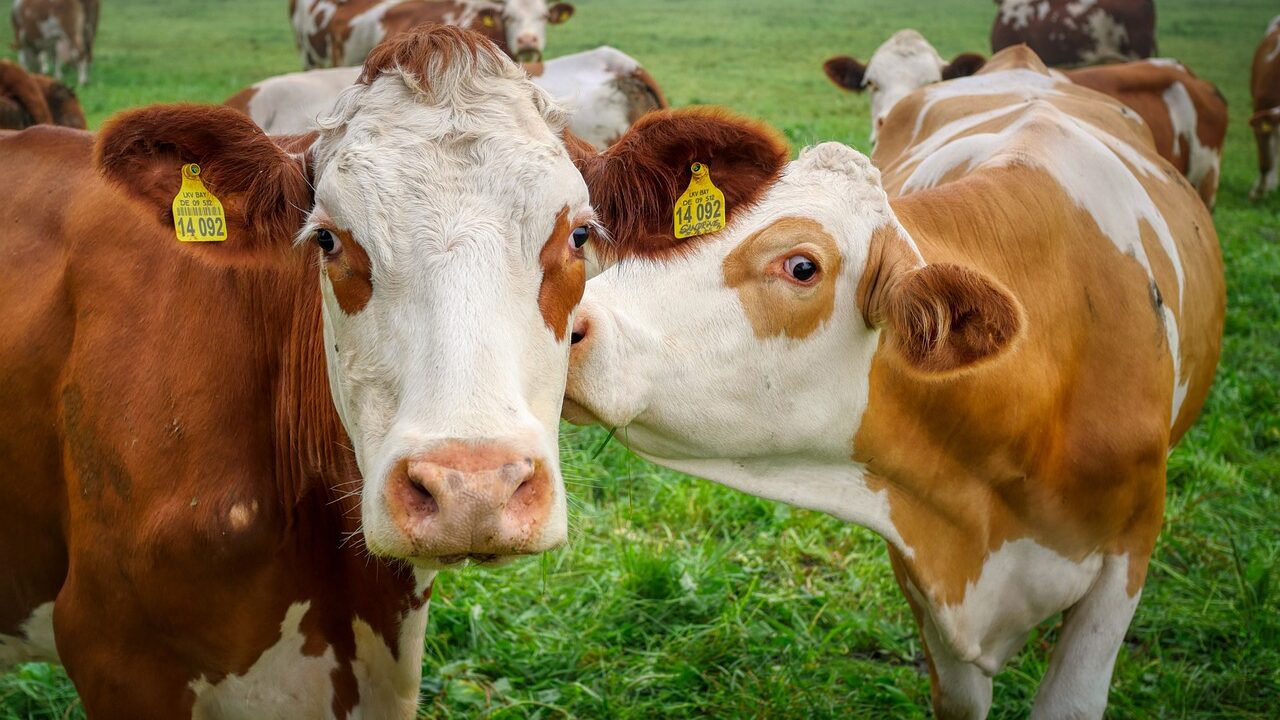
French farmers are once again voicing their discontent as an outbreak of Contagious Nodular Dermatitis (CND) affects cattle herds in several regions. As a precautionary measure, several farmers are being forced to slaughter their animals due to the presence of infected animals. Health authorities are facing fierce resistance on the ground. Beyond the fight against the epidemic itself, the methods of which are the subject of debate, deep anger is stirring in rural areas, with farmers feeling misunderstood, despised, and abused by the public authorities.
The first cases were identified in the summer of 2025 in Savoie. Then, in December, cattle farms were affected in the southwest, in the departments of Ariège and Haute-Garonne. The disease is complex. It is mainly transmitted by insect bites. Its incubation period is long, making it difficult to detect. Its morbidity is extremely variable: what is true for one herd will not necessarily be true for the neighbouring herd.
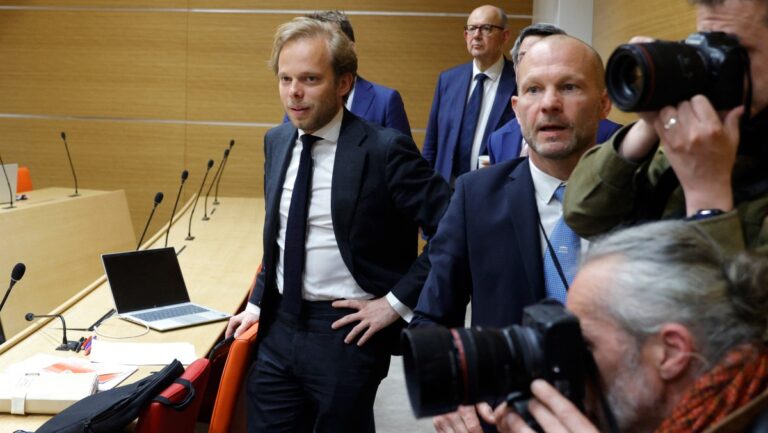
The authorities’ response to the risk of an epidemic is to slaughter the herd as soon as a case is identified and to extend vaccination in infected areas. On farms, farmers are expressing their frustration and anger at a policy they consider excessive. The recommended strategy remains relatively moderate: for the time being, there is no question of systematic vaccination of livestock, especially since vaccination is not an absolute guarantee of herd preservation. But the unease lies elsewhere. Farmers do not understand the intense deployment of law enforcement requested by Paris to lift the blockades. The debate is becoming increasingly politicised and is no longer simply about the merits of the health policy towards the epidemic. Images have circulated of gendarmes storming a farm in Ariège, crystallising a number of opponents of the government around the farmers.
For several days, blockades have been organised on major roads in southwestern France, with tractors and camps. The Coordination rurale, a young and rapidly expanding agricultural union, supports the movement, as does the Confédération paysanne: together, they represent half of the profession.
In French public opinion, a wave of support for farmers is emerging in response to the excessive use of force by the police against a social group that has the support of the population. Why such firmness when laxity prevails in the case of riots in the suburbs? Farmers are seen as ideal scapegoats, easy to lash out at without fear of social consequences. Native French and white, at the head of small family farms, the farmers targeted by the crackdown have become symbols of a France that is dying under the blows of ill-considered decisions made by uprooted elites. Powerful images are circulating on social media, showing farmers in tears as they remove the bells from the necks of their cows, which they will have to send to the slaughterhouse—animals they know by name, which they have selected, helped to bring into the world, and surrounded with care and affection.
On the Right, many are offering symbolic support to the farmers who are being persecuted in this way. Céline Imart, MEP for Les Républicains (LR) and herself a farmer, explains it this way in an op-ed in Le Figaro:
Herds slaughtered, armoured vehicles deployed, tear gas used against farmers already on the brink of ruin. Crisis management has been so inadequate on a human level and support for affected farmers so disastrous that it gives the impression that the state no longer knows how to respond to the distress it no longer hears except with force. When a country claims to love its agriculture but only sends in the police, the problem is no longer so much the disease as the state itself.
MEP Marion Maréchal strongly denounced the double standards imposed on farmers on her X account: “Those whose job it is to protect the French people have no business interfering with those whose job it is to feed them.”
Quand une rave party d’extrême gauche occupe illégalement une plaine agricole dans l’Aude, l’Etat n’intervient pas.
— Marion Maréchal (@MarionMarechal) December 12, 2025
Quand des rodéos sauvages ravagent des cultures dans le Val-d’Oise, l’Etat n’intervient pas.
Mais quand des éleveurs en détresse défendent le travail d’une vie… pic.twitter.com/4NR6ueu3IT
Agriculture Minister Annie Genevard is travelling to the southwest on Monday, December 15th, to try to contain the anger and rural mobilisation that is spreading and intensifying.
The nodular dermatosis crisis adds to the tensions already surrounding the Mercosur trade deal, which French farmers want nothing to do with. Although Emmanuel Macron has given the impression that he is opposed to the agreement and is listening to farmers, seeking to delay its implementation, it is becoming increasingly clear that he does not really have the means to oppose an agreement that has been voted on at the European level and which will endanger French farmers by subjecting them to fierce competition from agriculture with drastically reduced standards.