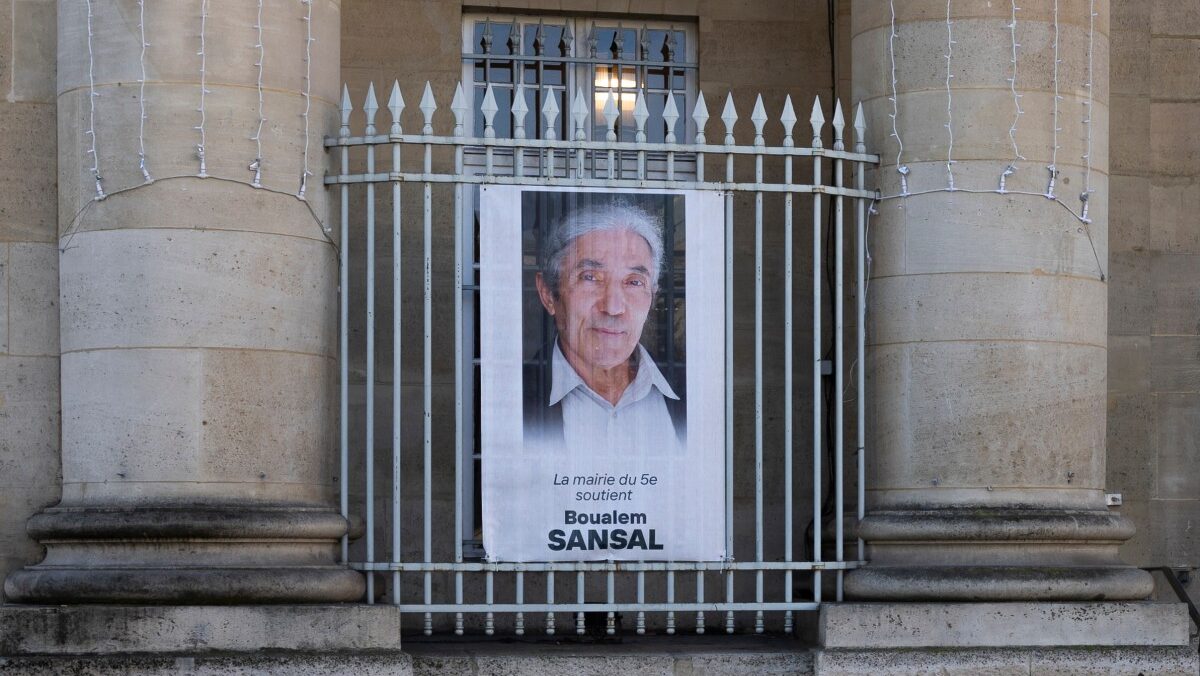
French-Algerian writer Boualem Sansal will have to serve a prison sentence in Algeria after his five-year prison sentence was upheld by the Algerian courts. The bombastic statements of the French government thus proved futile in the face of the Algerian authorities’ determination not to give in to France.
Boualem Sansal was sentenced on appeal to five years in prison on Tuesday, July 1st, for ‘undermining national unity.’
The writer was unjustly arrested on the orders of the Algerian government in November 2024 on the grounds that he posed a threat to state security. He was accused of giving an interview to conservative Frontières magazine a month before his arrest, in which he contested Algeria’s claim to territories that historically belonged to Morocco during the French colonial era.
His supporters were hoping for a possible presidential pardon, which could have come on Friday, July 4th—the eve of Algeria’s national holiday. Thousands of people were pardoned by President Tebboune, but Sansal was not among them. The following day, the writer announced that he was giving up his appeal to the Court of Cassation, making the court’s decision final.
The failure to secure Sansal’s release is also a failure of French diplomacy to obtain Algeria’s respect on a highly symbolic issue. In April, Foreign Minister Jean-Noël Barrot travelled to Algiers to try to reverse the balance of power and ‘warm up’ bilateral relations between the two countries, but to no avail.
Minister Barrot described Sansal’s appeal sentence as “incomprehensible and unjustifiable” and said that “Franco-Algerians should not pay the price for tensions between the two countries.” But it is precisely this principle that has shaped his weak policy in recent months—one that has failed to secure the writer’s release.
In France, critics are speaking out against the minister’s impotence and France’s submission to the shameless demands of a territory formerly under its control. “Emmanuel Macron and Jean-Noël Barrot have been pathetic accomplices of the Algerian regime,” criticised Louis Aliot, vice-president of the Rassemblement National (RN). He argued that, to date, France has shown no political will to assert itself with Algeria because of the Franco-Algerian electorate on French soil: “The mere fact of thinking that there is a Franco-Algerian vote on our soil that they would like to benefit from is already a scandal in itself. Because we are defending the freedom of a man, the freedom of a writer,” he explained on Europe 1 radio.
“We will mobilise to secure his release,” Barrot told MPs during question time in parliament. But, having failed in the past, it is still unclear how he intends to do this.
For Noëlle Lenoir, former minister and president of the international support committee for the writer, there remains a slim hope that Sansal will eventually be released before the end of his sentence: he has cancer and, according to her, the Algerian government will not risk him dying in prison due to lack of care.