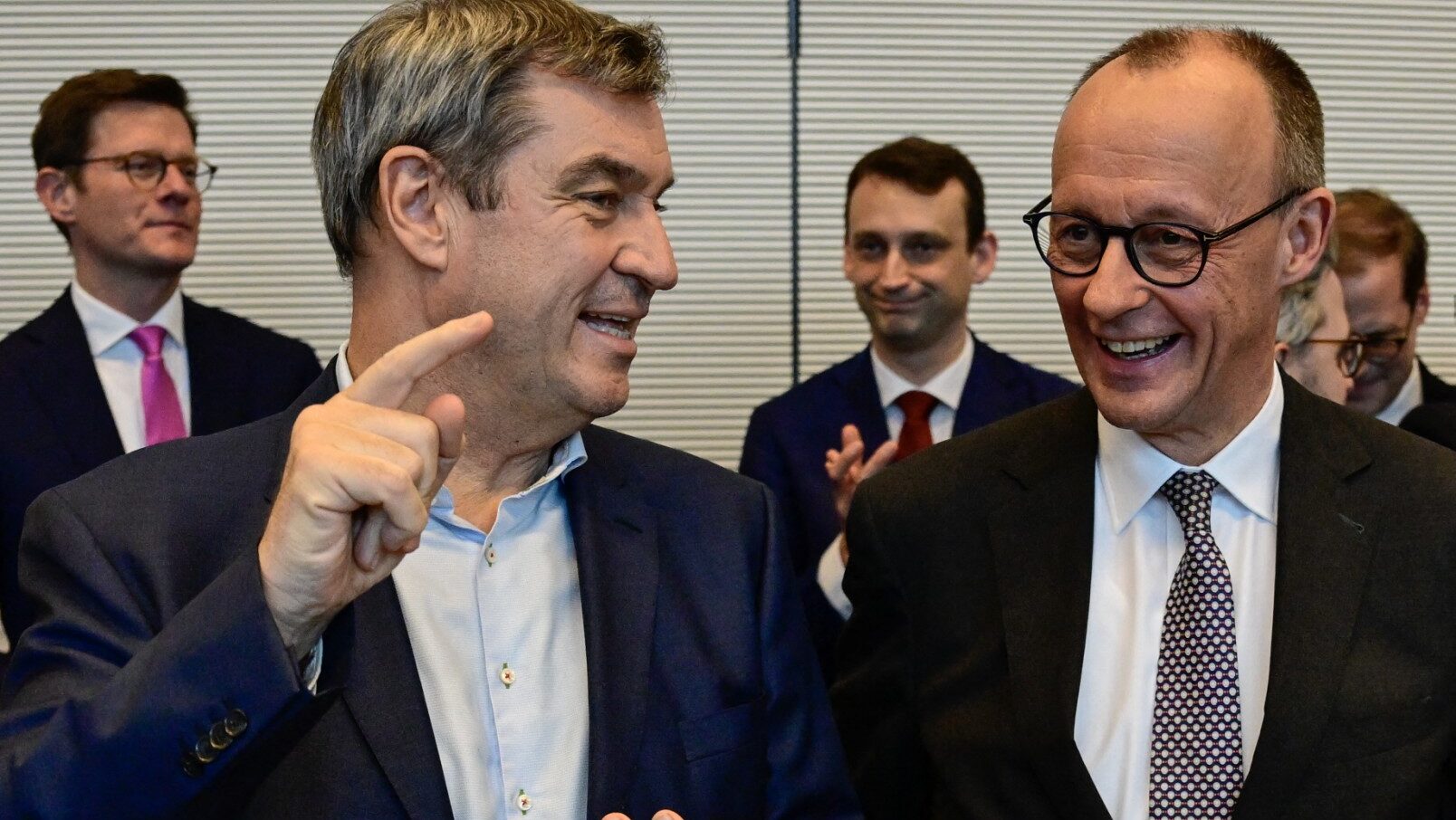
Markus Söder (L) with Friedrich Merz
John MACDOUGALL / AFP
Bavarian premier Markus Söder has sparked a backlash after telling Germans they should work longer hours to rescue the economy—adding his voice to a growing chorus of political leaders blaming ordinary workers for the country’s stagnation.
He said on Sunday evening that an extra hour of work per week per worker “is really not too much to ask,” and would have an “enormous” impact on the economy, which last month grew (by 0.2%) for the first time since 2022.
Chancellor Friedrich Merz has been peddling similar lines for some months now, prompting some mainstream commentators to argue that one solution could be to make mothers work more. As one pundit put it last August, the state should make greater use of the “untapped potential of mothers, who are still expected to forgo their careers for their kids.” (The suggestion here is that they should instead be expected to forgo their kids for their careers.)
German business groups have also proposed cutting Christian holidays—such as Easter Monday, Whit Monday, or Boxing Day—to help boost the economy.
AfD co-leader Alice Weidel said last week in the Bundestag that the political establishment is “plundering the working population, robbing them of their willingness to work, their future, and their trust in the welfare state, and on top of that they tell them they should work longer. That is infamous!”
She has also now criticised Söder for his “insults,” saying that officials should instead “reward performance, significantly reduce taxes and social contributions, [and] make overtime attractive.”