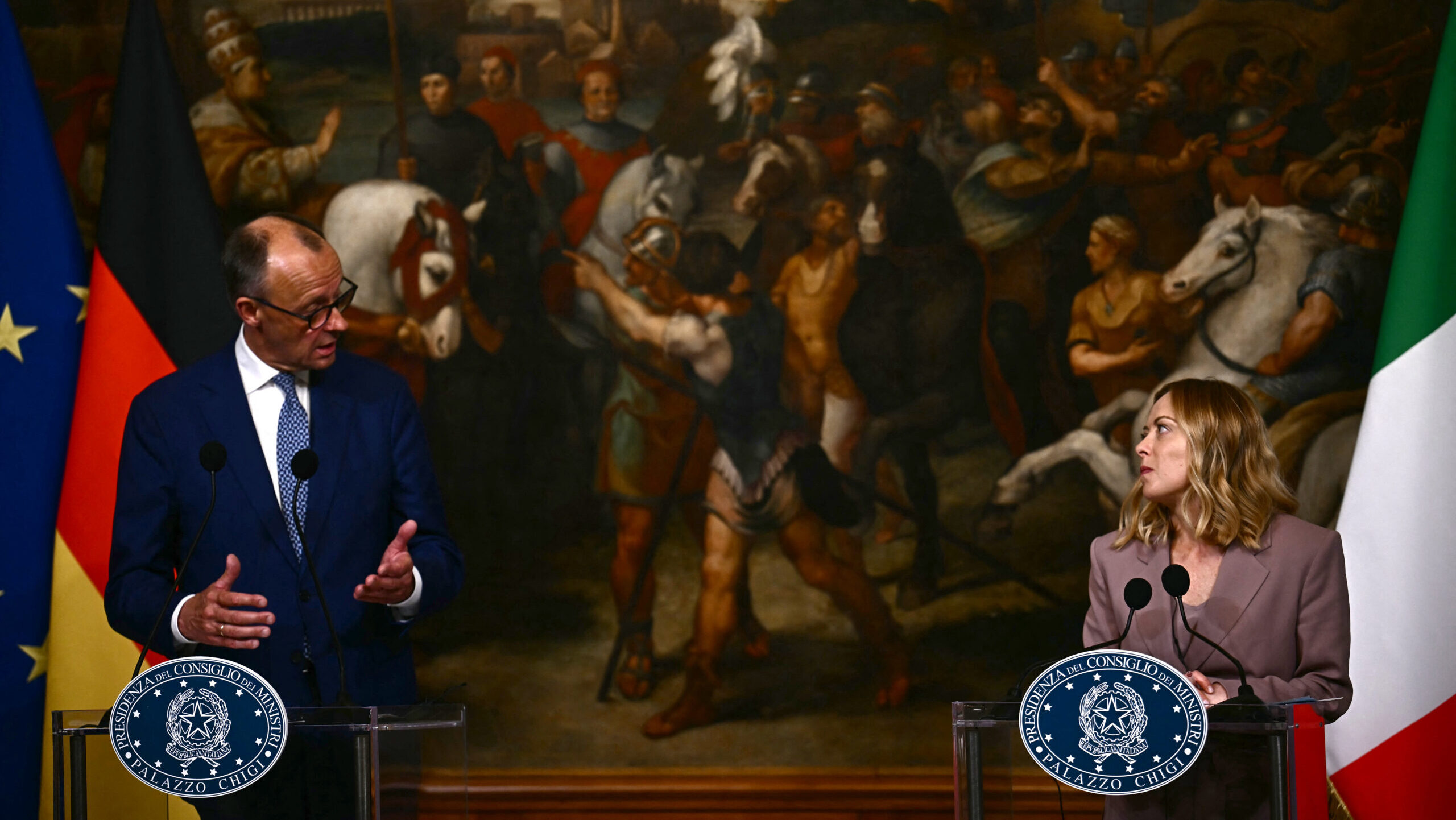
Filippo MONTEFORTE / AFP
Italy and Germany have co-signed a letter warning that the European Commission’s 2035 ban on combustion engine cars will result in “disproportionate penalties” for manufacturers.
They argue that the legislation should allow “the recognition of low- and zero-emission vehicles other than battery-electric vehicles,” which would permit the sale of cars running on biofuels past the mid-2030s deadline.
Reports note that Rome and Berlin have been arguing on similar lines for some time, but that this letter marks the beginning of a more coordinated effort to shift Brussels’ approach. However, it appears as though officials within Chancellor Friedrich Merz’s administration are not all on the same page regarding this proposal.
Even with this exemption, the ban would still do immense damage to Europe’s automotive industry, all to fulfil Brussels’ ideologically-motivated ‘green’ agenda.
MEPs from the national conservative Patriots for Europe group went further in May this year, arguing that the 2035 ban on new combustion engine cars should be scrapped altogether to save Europe’s car industry, which is already struggling. But the European Parliament’s biggest group, the centrist European People’s Party, ensured that this amendment—among others—was rejected.
French MPs also voted against the EU-wide ban in February, with one Rassemblement National MP stressing that “the European automotive sector, at this stage, is not ready for this transition.” However, Paris ultimately did not sign this latest letter, likely because its government is too preoccupied with internal divisions.
Merz may say more on the EU’s 2035 ban at a summit for top German automakers and suppliers on Thursday, October 9.