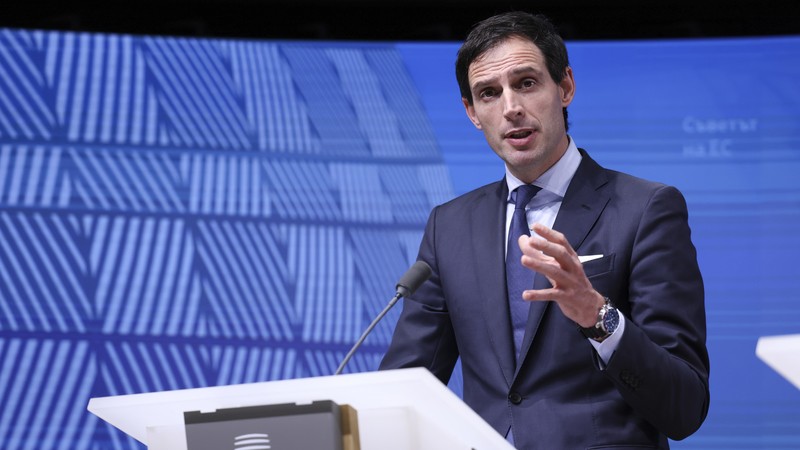
Wopke Hoekstra, EU Commissioner for Climate, Net Zero and Clean Growth
Photo: European Council, 2024
Following talks with EU Climate Commissioner Wopke Hoekstra, the German government coalition agreed to implement the EU’s upcoming ‘interim’ climate target for 2040, paving the way for its EU-wide adoption before it was even officially proposed.
The EU is expected to present its proposal in the coming weeks for a mandatory 90% CO2 emission reduction by 2040, compared to 1990 levels, meant as an interim target to bridge the already approved 55% target for 2030 and full climate neutrality by 2050.
However, Berlin seems to have already aligned itself with Brussels even before this proposal was officially unveiled, as the coalition agreement between the center-right CDU and the social democrat SPD, signed earlier this month, already outlined the unilateral implementation of the target.
According to sources familiar with the talks, the inclusion of the 90% target was decided after EU Climate chief Wopke Hoekstra conducted “several” talks with both coalition partners, suggesting that Brussels remains committed to seeing the proposal implemented at EU-level and considers Germany a key ally for pushing it through reluctant member states.
However, reaching an agreement on the controversial target may need some concessions from the EU as well, which has been considering allowing the government to use carbon capture technologies and to buy carbon credits based on “offsets” from third countries outside the EU.
These appear in the German coalition agreement as well, which states that the country may count “permanent and sustainable negative emissions to a limited extent” in Europe and “credible CO2 reduction … in non-European partner countries” toward reaching the goal.
However, foreign-bought carbon credits may only contribute a maximum of 3 percentage points to the 2040 target, meaning the country needs to reach at least an 87% reduction without them. They must also come from “highly qualified, certified, and permanent projects.”
According to Euractiv’s sources, the EU Commission will mirror this agreement in its upcoming proposal, which is why it sent Hoekstra to test the water beforehand. Getting Germany on board early also helps additional legitimacy to the legislation, while smaller member states may justly feel that they’ve been presented with a done deal, with little room for discussion.
This may very well be the strategy of Brussels, as countries that have previously signaled support for the plan have begun to withdraw it, expressing concerns for Europe’s competitiveness, which will inevitably get hurt by the decarbonization (and deindustrialization) push.