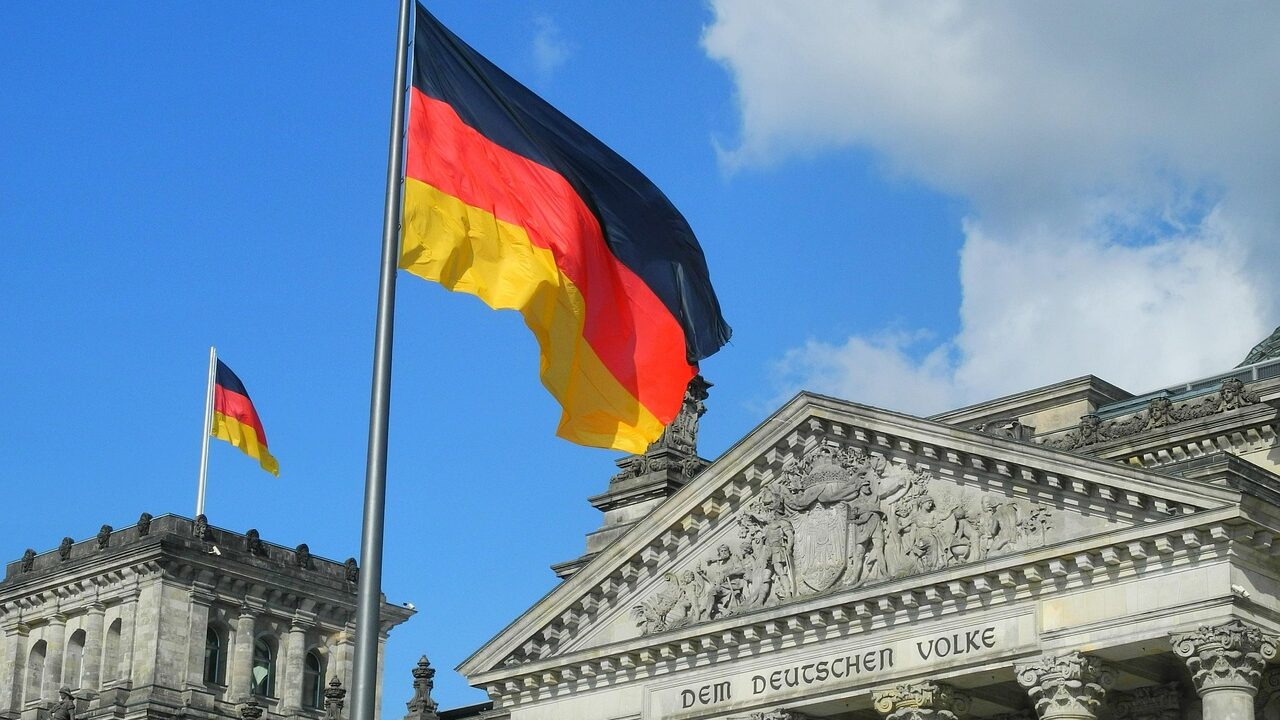
The Reichstag building in Berlin, housing the German Bundestag.
Karlheinz Pape from Pixabay
The German government is advancing legislation to implement new World Health Organization (WHO) health regulations, a move that has ignited a contentious debate over the potential erosion of constitutional freedoms in the name of global health security.
A draft bill, approved by the German Cabinet in July, seeks to codify the expanded International Health Regulations (IHR) that were adopted by the World Health Assembly by consensus, without a formal vote, in June 2024. The document contains just three articles, and while two are procedural, Article 2 delivers a strong and unambiguous declaration: the law will restrict the fundamental rights of Germans:
Through this law, in conjunction with the International Health Regulations (2005) (IHR), the following fundamental rights are restricted: the right to physical integrity (Article 2, Paragraph 2, Sentence 1 of the Basic Law), the freedom of the person (Article 2, Paragraph 2, Sentence 2 of the Basic Law), the secrecy of mail and telecommunications (Article 10 of the Basic Law), and the right to freedom of movement (Article 11, Paragraph 1 of the Basic Law).”
Article 2 has drawn sharp criticism from observers, as the draft offers no further explanation for these restrictions. The government merely points to a constitutional requirement to explicitly name any limited rights, concluding that the bill is compatible with both EU and international law.
Also concerning is the WHO regulation’s vague definition of the term “pandemic emergency of international concern.” This state can be declared when an “extraordinary event” is determined
(i) to constitute a public health risk to other States through the international spread of disease; and
(ii) to potentially require a coordinated international response
The criteria are broad, encompassing risks of international spread, overburdened healthcare systems, or even “severe social or economic disruption.”
Crucially, the WHO Director-General would be empowered to determine if an outbreak constitutes such a “pandemic emergency.” While subsequent recommendations on measures like vaccines are formally non-binding, member states are generally expected to comply.
Furthermore, the amendments to the IHR push for a digital transformation of health documentation, a lesson learned from the recent pandemic. Article 35 foresees the use of electronic health documents, such as digital vaccination certificates, alongside traditional paper formats. To improve global pathogen surveillance, a national coordination office would be established to report findings to the WHO, a provision that raises parallel questions about international data flow and citizen privacy.
Despite these controversies, the federal government has insisted that “Germany’s state sovereignty and national health protection measures remain unaffected.” The legislation is anticipated to pass smoothly through the Bundestag, with only the AfD party expected to voice formal opposition. Its approval in the Bundesrat is also considered likely.
Critics argue that the current German government may seek to curtail individual rights to increase their influence over the population while hiding behind broadly worded regulations such as this one. Fears are growing that the declaration is the newest tool for pushing the government’s agenda, rather than a law focusing on the health and safety of German citizens.
The IHR is separate from the WHO’s equally controversial Pandemic Treaty, a new separate international agreement currently being negotiated by WHO member states.
AfD MEP Christine Anderson said in an interview about the Pandemic Treaty earlier this summer that “the WHO is about as interested in public health as the arms industry is in world peace: not at all.”