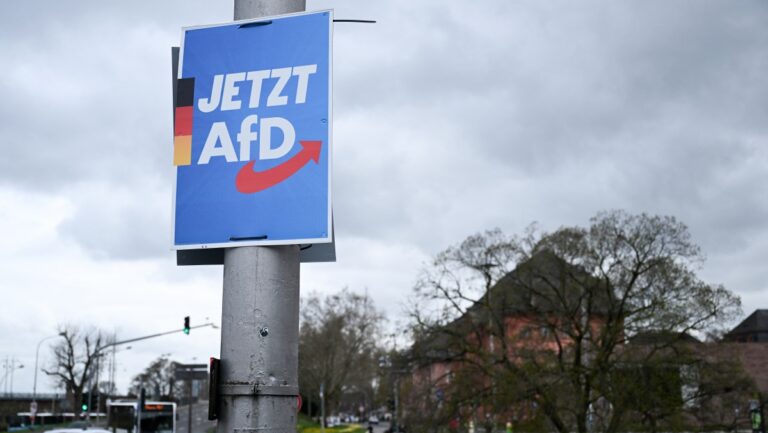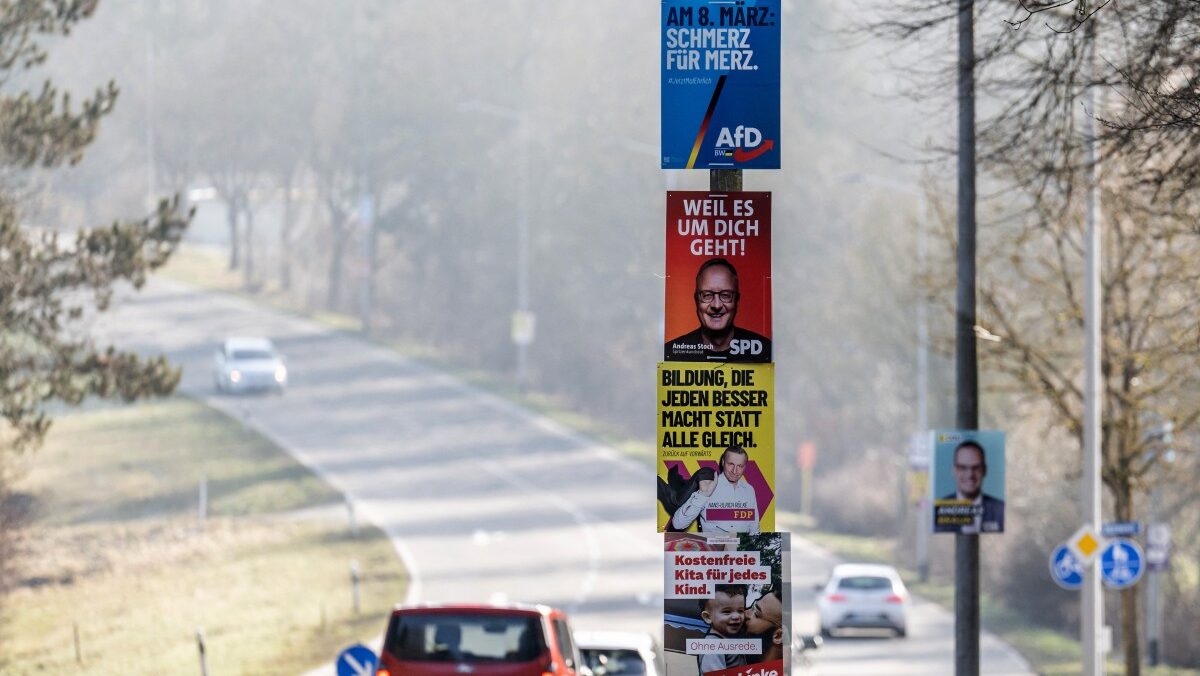
Silas Stein / AFP
Germany returns to the polls on March 8 in a round of regional and local elections that could offer a fresh measure of how far Alternative für Deutschland (AfD) has reshaped the country’s political landscape.
Municipal elections will take place across Bavaria, while voters in Baden-Württemberg—one of Germany’s most economically important Länder—will elect a new regional parliament. Although these contests are local in scope, their outcome is being watched closely nationwide as a political test for the main parties.
Baden-Württemberg is drawing particular attention. As one of Germany’s industrial engines, its elections often carry symbolic weight in federal politics.
Polls suggest a competitive but fragmented race. The CDU leads with just under 30% of the vote, followed by the Greens, who have governed the Land in recent years. AfD is clearly the third force, polling around 18–20%, while the SPD, FDP, and Die Linke trail well behind.
Those numbers point to complicated coalition talks after the vote. The regional parliament would likely be divided among six parties, making a majority government possible only through alliances.
The majority threshold stands at roughly 61 seats. The simplest option would be a coalition between the CDU and the Greens. The Land is already governed by such an alliance, though currently under Green leadership. If the CDU finishes ahead, the same formula could continue with the Christian Democrats leading the government.
Another possibility would be a three-party coalition between the CDU, SPD, and FDP. It is not the most natural political combination, but it could emerge if negotiations with the Greens stall or if the final numbers require a broader majority.
Left-wing alliances appear far less likely. Even if the Greens, SPD, and Die Linke joined forces, current polling suggests they would still fall short of a majority.
One of the few clear majorities suggested by polling would be a coalition between the CDU and AfD. However, that option remains firmly ruled out by the Christian Democratic leadership and by all other mainstream parties. For years, German politics has operated under the so-called Brandmauer—a political “firewall” designed to prevent any cooperation with AfD.
The policy has become increasingly controversial as the party’s vote share has grown. A party polling around 20% in several regions is automatically excluded from governing negotiations. Supporters of the firewall say the exclusion is necessary to preserve Germany’s democratic consensus. Opponents argue it exposes the limits of a system where millions of voters back a party that is automatically locked out of power.
The other electoral focus on March 8 lies in Bavaria, where municipal elections will take place in thousands of town halls and local councils. While these contests do not determine the regional government, they offer a snapshot of the political mood in one of Germany’s traditionally conservative regions.
The CSU remains the dominant force, but AfD has consolidated itself as the second option in many rural areas and smaller cities, expanding its foothold in local institutions.
Amid Germany’s economic, social, and security challenges, AfD has captured a protest vote that is no longer confined to the eastern Länder. In some national polls, the party now appears tied with—or even slightly ahead of—the CDU/CSU, a shift that would have seemed almost unimaginable only a few years ago.