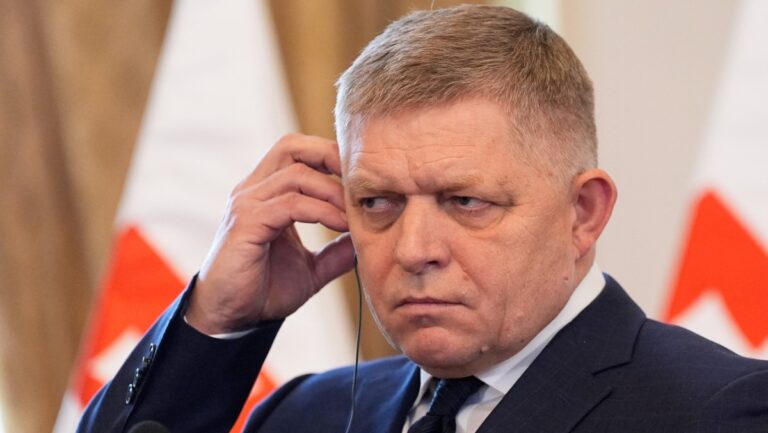
Friedrich Merz (L) and Markus Söder (R) agree on the course Germany needs to take on military conscription.
Armin Weigel / AFP
A political dispute over reinstating conscription is intensifying within Germany’s governing coalition, pitting the centrist CDU/CSU against the leftist Social Democrats (SPD). The conflict centers on whether current legislation—making military service voluntary—or whether conscription is called for.
Markus Söder, leader of the CSU, called for the urgent reintroduction of military conscription in Germany, citing rising security concerns. “Half measures aren’t enough. … In times of great threat, we need more than a questionnaire-based army,” Söder said in an interview with Bild am Sonntag.
Chancellor Friedrich Merz somewhat reluctantly agreed with Söder. “I’m in favor of doing what we agreed to in the coalition agreement, namely making it voluntary for the time being. But I suspect it won’t remain voluntary,” Merz stated.
Germany’s Basic Law enshrines the framework for conscription in Article 12a, which mandates that men who have attained the age of 18 may be required to serve in the armed forces, the Federal Border Guard, or civil defense. Women are constitutionally exempt from compulsory armed service, though they can volunteer. Conscription was suspended in 2011, shifting the Bundeswehr to an all-volunteer force.
Following a Bundestag decision, which took effect on September 15th, men, when they turn 18, now have to fill out a questionnaire about willingness, fitness, and availability to serve in the military. Service remains voluntary, although if recruitment falls short of targets, the government can reinstate full conscription with Bundestag approval.
Söder called the voluntary model “Wischi-Waschi-Wehrpflicht” (wishy-washy conscription) that isn’t helping anyone. “The sooner and more clearly conscription is implemented, the better,” he said.
The SPD strongly opposes a return to conscription, and defense minister Boris Pistorius has raised concerns about the Bundeswehr’s capacity to handle it, citing a lack of infrastructure and instructors.
Pistorius is, however, acutely aware of the need for more manpower, and has said the Bundeswehr must grow from 180,000 to 260,000 troops by the early 2030s to meet NATO requirements.
The CDU/CSU initially pushed to include automatic conscription triggers in the new volunteer law, but after backlash from the SPD, the law was passed without it. The CDU/CSU then halted the initial October debate on the issue. The law is now scheduled for debate in the Bundestag the week after next.
Looking beyond the immediate legislative fight, Chancellor Merz proposed a long-term solution: a universal ‘German Year’ of social service for all young people, which would require a constitutional amendment. He argued this would promote fairness and national cohesion.