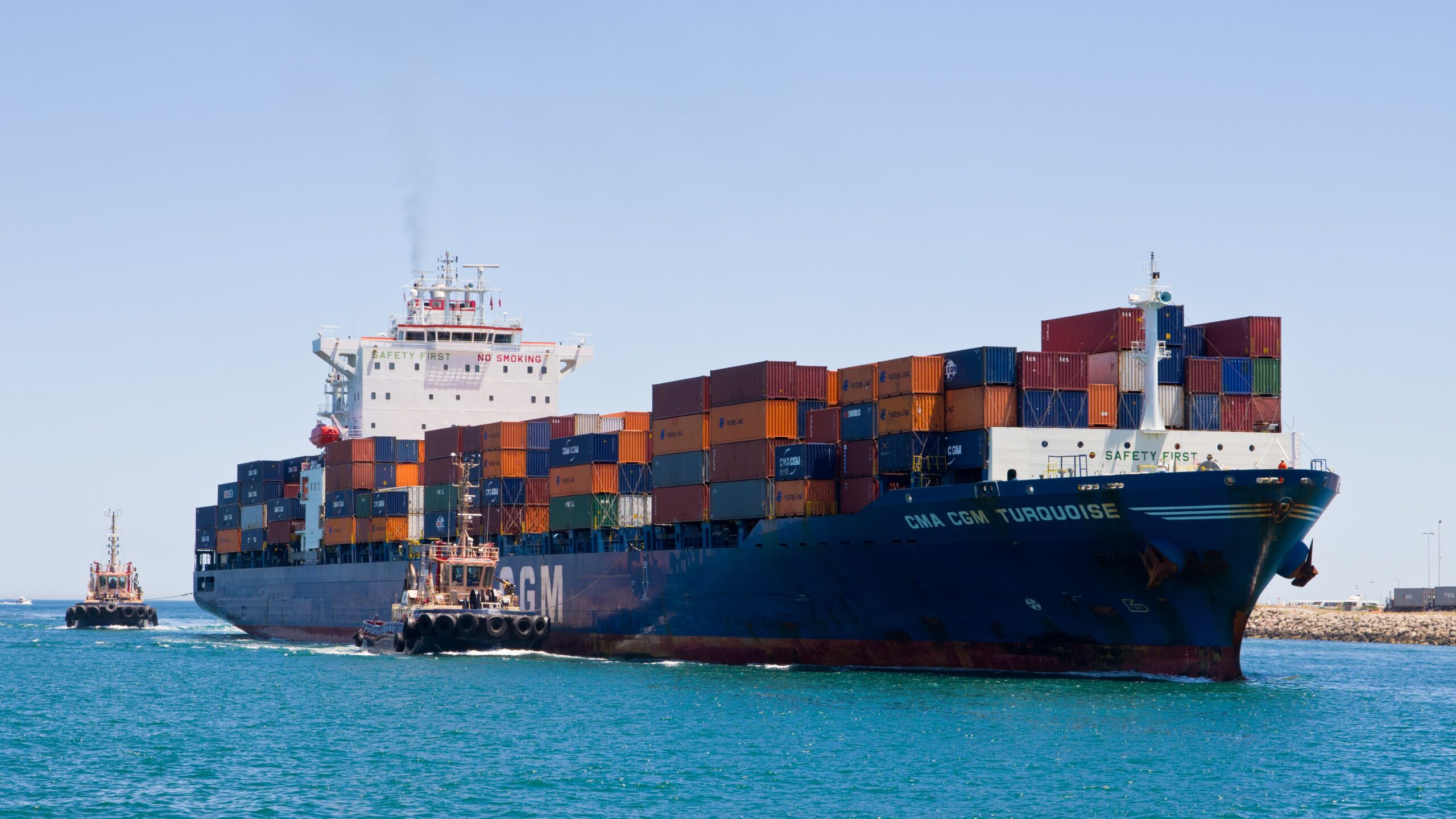
The Greek container ship CMA CGM Turquoise
By Photographs by Gnangarra…commons.wikimedia.org, CC BY 2.5 au, https://commons.wikimedia.org/w/index.php?curid=24439909
Greece’s decision to block the European Union’s COP30 position paper signals a pushback against an increasingly ideological climate agenda that undermines Europe’s competitiveness and economic pragmatism.
At the Luxembourg ministerial meeting, Athens refused to sign off on the EU’s formal position for this year’s UN climate conference in Brazil, objecting to the inclusion of language that “welcomes” the international shipping net-zero framework deal struck in April—a deal Greece, a maritime nation, refused to endorse.
Three diplomats confirmed the blockage, with one stating that Athens is holding the deal “hostage.”
The Greek shipping sector is a cornerstone of national prosperity for a country that is a global leader in maritime trade. Protecting its competitiveness has therefore become a matter of national interest, handled directly by Prime Minister Kyriakos Mitsotakis.
Athens insists that the line in the EU’s COP30 document referring to the net-zero deal is “irrelevant,” emphasizing that the framework had already been “frozen” and that the text should be “re-visited.”
The Greeks suspect the reference to the net-zero deal is an attempt to push it forward under the guise of the COP30 preparations.The net-zero framework, put forward last April, aimed to favor green hydrogen-derived fuels such as green ammonia and methanol over LNG. However, this approach disregards the operational realities and technological readiness of the maritime industry. The deal’s approval faltered after U.S. intervention, and its ideological nature drew criticism for prioritizing political virtue signaling over feasible implementation.
“A compromise on the text has yet to be found,” one senior EU diplomat admitted, noting that any change must be cleared by Athens.
By resisting the attempt to enshrine a defunct, politically charged framework into the EU’s climate position, Greece is highlighting a broader problem: the substitution of evidence-based economic strategy with ideological environmentalism.