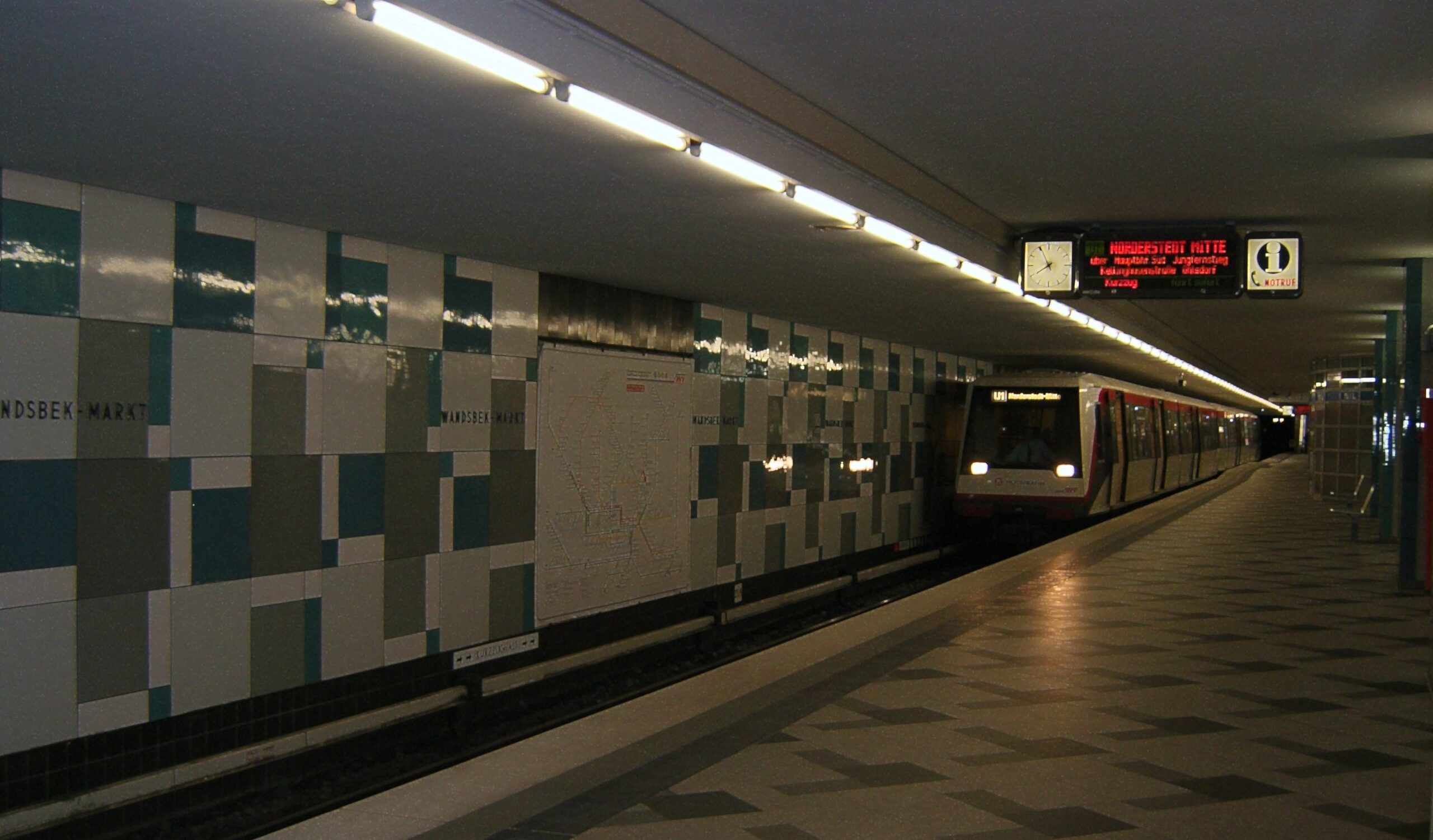
Wandsbek-Markt station
Staro1, CC BY-SA 3.0, via Wikimedia Commons
Serious failures in Germany’s refugee admission and security screening procedures have come into focus following a fatal subway attack at Hamburg’s Wandsbek Markt station last month.
On January 29th, a 25-year-old South Sudanese man, identified as Ariop A., grabbed an 18-year-old woman, Fatemeh “Asal” Z., and dragged her onto the track bed in front of an oncoming train. Both died at the scene. German police are treating the case as a suspected homicide.
Multiple German media investigations report that Ariop A. entered Germany in mid-2024 through the UNHCR resettlement program, a scheme intended to transfer refugees deemed particularly in need of protection from first host countries to states willing to receive them.
In Ariop A.’s case, however, a key safeguard appears to have been bypassed. No personal security interview—normally a mandatory part of the procedure—was conducted prior to his entry, according to those reports.
The Federal Office for Migration and Refugees (BAMF) reportedly registered Ariop A. for resettlement at the beginning of 2024. He later flew from Kenya to Germany on a charter flight in June 2024, holding an entry permit and a D visa issued by the German Embassy in Nairobi.
Despite applicable security standards, authorities allegedly failed to carry out a comprehensive background and security assessment. At the time, responsibility for oversight lay with then Interior Minister Nancy Faeser (SPD), while the issuance of visas fell under the authority of Foreign Minister Annalena Baerbock (the Greens).
It remains unclear why Ariop A. was considered in need of protection while already residing in Kenya, a country regarded as safe, after his flight from South Sudan—a designation that normally limits eligibility for resettlement under humanitarian protection schemes.
After arriving in Germany, Ariop A. reportedly accumulated a long record of violent incidents. According to media reports, he was known to police and had been noticed multiple times for aggressive and violent behavior while living in a refugee shelter in Hamburg. Just two days before the fatal attack, he allegedly assaulted police officers after rioting in a brothel.
Although criminal proceedings were initiated for resistance and dangerous bodily injury, he was released after a brief detention. Roughly 48 hours later, the deadly subway attack occurred.
The Alternative für Deutschland (AfD) party has sharply criticized the handling of the case, arguing that the murderer was “actively flown in under the responsibility of the traffic-light government.” The party noted that between January 2024 and June 2025, 6,912 people were brought to Germany via resettlement programs, including 514 from South Sudan, with Germany pledging more places than any other EU country.
The case, the AfD argues, demonstrates a failure of the mandatory security interview process—raising broader questions about whether Germany’s resettlement system is capable of guaranteeing public safety.