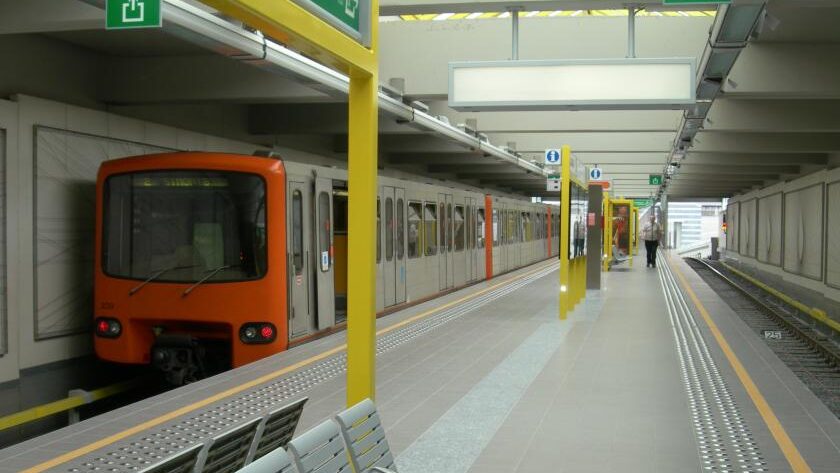
Brussels metro Delacroix.
bsubway.net, CC BY-SA 3.0, via Wikimedia Commons
After many recent hardships, Brussels is now caught in a spiraling financial and political crisis. A Brussels Times investigation has uncovered what appears to be large-scale budgetary fraud, as regional officials allegedly misused €250 million in EU loans earmarked for metro expansion to cover old debts and general expenses.
The Brussels Region borrowed €175 million from the European Investment Bank (EIB) and €75 million from the Council of Europe Development Bank earlier this year, officially for expanding its metro system and improving transport infrastructure.
However, instead of transferring the funds to the public transport operator STIB/MIVB, the Brussels Debt Agency pooled them with other cash reserves for use in general treasury operations. The Brussels Debt Agency later admitted the loans were “integrated into the overall financial management for reasons of operational optimisation.”
The scheme allegedly began as Brussels faced a severe cash crunch earlier this year, with banks reluctant to extend credit and a looming risk of liquidity shortfalls. The diversion of EU funds reportedly helped mask the Region’s financial weaknesses, especially ahead of a credit rating review.
The European Investment Bank protested this use of its loans. “The loan agreements clearly state that the loan facilities are exclusively earmarked for use on the metro expansion and other transport infrastructure projects, and on those projects only,” said an EIB spokesperson. “Their use in general cash management is not allowed.”
Parliamentarians also raised alarms. Gilles Verstraeten, a Brussels MP with the center-right N-VA party, warned: “If money earmarked for a specific project like the metro was diverted to cover unrelated expenses without a formal parliamentary reallocation, it violates the budgetary law itself.”
On top of everything, the city’s tangled bureaucracy makes oversight nearly impossible. The Brussels Region operates through a web of government bodies and 22 semi-autonomous agencies, many of which have their own budgets and debts. Control, oversight, and proper checks and balances system is unrealistic, that allows corruption and fraud to prosper and remain undetected.
The Belgian Court of Auditors has not certified Brussels’ accounts since 2017. It has been eight years since a comprehensive audit has checked their accounts, which is not usual in this practice. Critics say, going this many years without any oversight raises alarms of possible corruption cases.
As Brussels approaches its summer recess, it has now gone 395 days without a functioning government. Former regional finance minister Guy Vanhengel sees no end in sight: “The Brussels state apparatus, with all its tentacles and dependencies, is creaking and cracking under the strain of cash shortages and soaring debt.”