International Energy Agency (IEA) Executive Director Fatih Birol, European Commission President Ursula Von der Leyen and EU Commissioner for Energy and Housing Dan Jørgensen during their press confrence in Brussels on December 3, 2025.
Nicolas Tucat / AFP
Strong criticism has been formulated by right-wing voices of the European Union’s newly announced plan to ban all imports of Russian gas by autumn 2027, warning of severe economic and energy-security consequences.
The objections emerged immediately after EU lawmakers and member governments on Wednesday, December 3rd reached the agreement framed as a major step toward cutting off key revenues financing Moscow’s war effort. Opponents of the measure, however, argue that it may in fact delay a resolution of the conflict in Ukraine.
European Commission President Ursula von der Leyen welcomed the deal, calling it a historic turning point:
This is the dawn of a new era, the era of Europe’s full energy independence from Russia.
It's decided.
— Ursula von der Leyen (@vonderleyen) December 3, 2025
Europe is closing the tap on Russian fossil fuels once and for all.
Energy independence starts now ↓ https://t.co/GZGLIKWeXk
In Germany, the right-wing Alternative für Deutschland (AfD) issued a strong statement on X condemning the move. According to the party, rather than seizing a historic opportunity to ease tensions, Brussels is intensifying an economic confrontation and “erecting new ideological walls” within Europe. “The ban does not serve energy security, but only a misleading, centrally planned ideology… An AfD-led federal government would push for genuine peace talks and the lifting of sanctions in order to guarantee energy security and competitiveness,” the right-wing populist party that currently leads the polls in Germany said.
AfD leaders further claimed that the Commission’s proposal represents a direct assault on the German economy and undermines ongoing peace efforts supported by U.S. mediation.
The EU also decided on Wednesday that Hungary and Slovakia would be subject to the same conditions as other member states.
Hungarian Prime Minister Viktor Orbán has previously made it clear that Budapest has no intention of giving up Russian natural gas–a stance underscored by his recent high-profile visit to Moscow.
Just days ago, Orbán traveled to the Russian capital to secure “reliable and affordable energy” for Hungary for the coming winter and the year ahead. According to the prime minister, maintaining this partnership is essential for Hungary’s energy security, shielding households and industries from volatility and rising prices.
Hungarian Foreign Minister Péter Szijjártó sharply criticized the EU’s plan, calling it a politically and ideologically motivated decision that would be impossible for Hungary to implement. He emphasized that Brussels’ “diktat” undermines Hungary’s energy security, arguing that the country cannot be safely supplied without Russian energy sources.
According to Szijjártó, the measure would place certain market actors and countries in a monopolistic position over Hungary, potentially tripling household energy costs. He reiterated that Brussels appears determined to dismantle Hungary’s energy security and its utility-cost reduction policy, placing the country in a vulnerable position.
He also announced in a press conference that once the decision is formally published, Hungary will challenge it before the European Court of Justice.
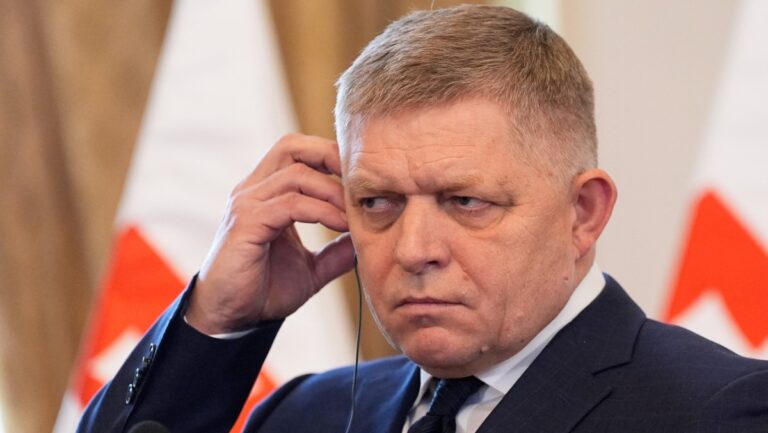
Slovakia’s government is also expected to oppose the measure, although it remains unclear what steps Prime Minister Robert Fico intends to take in response.
Moscow responded by insisting it would ultimately harm Europe more than Russia by driving up costs and accelerating the EU’s economic decline. According to Kremlin spokesman Dmitry Peskov “This will only accelerate the process that has been underway in recent years of the European economy losing its leading potential.”
Lukács Fux is currently a law student at Pázmány Péter Catholic University in Budapest. He served as an intern during the Hungarian Council Presidency and completed a separate internship in the European Parliament.