Hungarian foreign minister Peter Szijjartó
Peter Szijjartó on Facebook, 23 June 2025
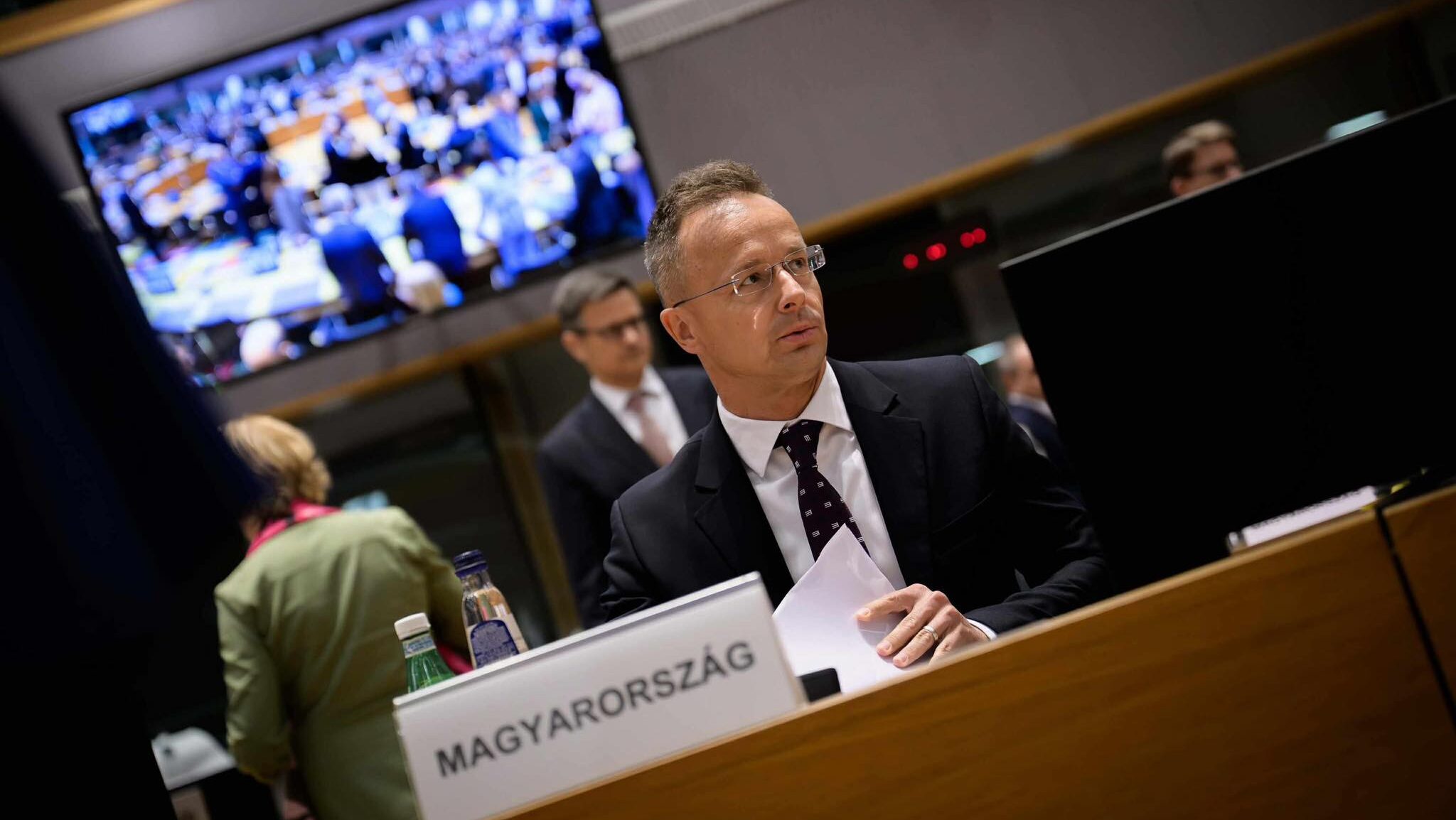
Hungary and Slovakia have vetoed the EU’s 18th sanctions package against Russia, Hungarian Foreign Minister Péter Szijjártó announced on Monday, June 23rd, following a foreign ministerial meeting in Brussels.
This newest sanctions package, proposed as soon as the 17th was adopted last month, would penalize resuming gas imports through the Nord Stream pipelines and outlaw importing fuel refined from Russian crude oil in third countries such as India, China, or Turkey.
But since any new sanctions need unanimous support, the 18th package remains blocked until Hungary and Slovakia agree as well. According to Szijjártó, the two countries want to use their vetoes as leverage to be granted opt-outs from a separate energy proposal under ‘RepowerEU’ that seeks to ban all Russian energy sources in the EU by the end of 2027.
W/ Slovakia, we blocked the 18th sanctions package as Brussels is pushing the REPowerEU plan, which would ban member states from buying Russian gas & oil. This would undermine Hungary’s energy security & violate the Council decision granting us exemption from the Russian oil ban. pic.twitter.com/2NX17vJVl3
— Péter Szijjártó (@FM_Szijjarto) June 23, 2025
As we wrote before, the proposed phase-out of Russian oil and gas would seriously undermine the energy security of the landlocked Central European countries by making them dependent on a single source of overpriced Western LNG via a Croatian terminal and would violate the opt-out they were granted by the Commission from a previous Russian oil ban two years ago.
The proposal would also violate their sovereignty to choose their own energy imports, as guaranteed by the EU treaties, which makes it questionable whether the proposal is even legal in the first place.
On the other hand, Hungary and Slovakia have no skin in the game for the 18th sanction package, and made clear during Monday’s meeting that they would drop their veto as soon as they were given guarantees that the RepowerEU would not be applied to them.
It’s unlikely that this issue will be solved in a few days, but officials still think that the majority will be able to bully the two countries into submission on the sanctions during the EU Council summit later this week.
EU Foreign Affairs chief Kaja Kallas also shares this opinion, expressing hope at a press conference on Monday evening that the summit will end with an agreement on the sanctions package, one way or another.
“Hungary blocking a package is nothing new. We’ve seen this before, and we’re already working on how to get this through,” Kallas said, adding that it will all depend on “what kind of compromises we’ll have to make in order to get everyone on board.”