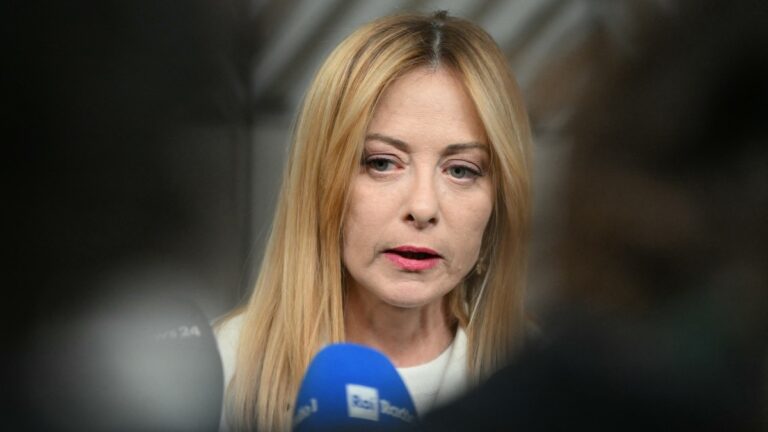
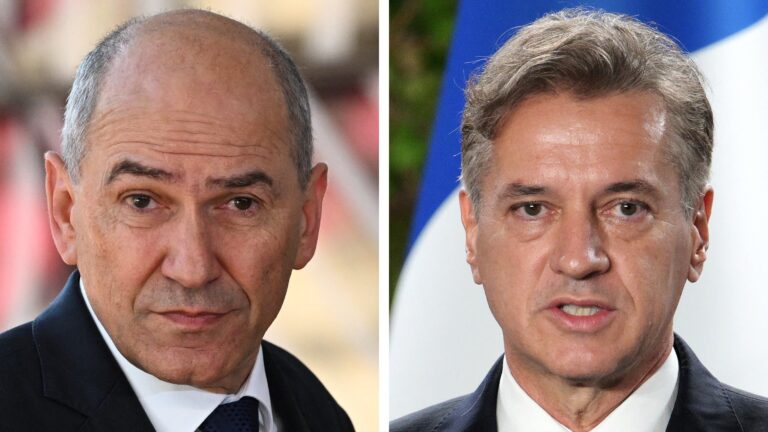
European Commission President Ursula von der Leyen takes the oath of office, on January 13, 2020, at the Court of Justice of the European Union in Luxembourg.
John Thys / AFP
Hungary has formally launched legal action against the European Union over a decision to channel billions of euros in interest from frozen Russian central bank assets into military aid for Ukraine.
The case underscores growing tensions between Budapest and Brussels, and raises questions over how far the EU is willing to bend its own rules in pursuit of its policy aims.
At the heart of the dispute lies the European Council’s decision last year, which redirected 99.7% of the profits generated from frozen Russian central bank assets to Ukraine via the European Peace Facility (EPF)—a fund that is supposed to “enhance the EU’s ability to prevent conflicts, build and preserve peace,” but which has provided billions of euros in military aid to Ukraine.
Following Russia’s invasion of Ukraine in 2022, Western countries froze Russian bank accounts, real estate properties, stocks, bonds, luxury assets, and various investments held by Russian entities and oligarchs. The funds also involve around €275 billion in central bank assets across the EU, the United States, Japan, and Canada.
The profits generated from these assets are expected to provide a revenue stream of €3–5 billion annually for Ukraine’s war effort. The EPF has already disbursed more than €11 billion to Kyiv.
Budapest argues that the decision violated EU law because Hungary was denied its right to vote. The EPF’s governing body deemed Hungary not to be a “contributing Member State” and therefore excluded it from the process.
In its filing, the Hungarian government stated:
The principle of equality between Member States and the principle of the democratic functioning of the European Union were infringed because a Member State was deprived, unjustifiably and without a legal basis, of its right to vote.
Hungary’s Foreign Minister Péter Szijjártó strongly criticised the EU for this “unprecedented violation of common European rules.”
Hungary has consistently resisted efforts to deepen military support for Ukraine, blocking several aid packages. These obstructions have infuriated other EU capitals, which increasingly seek ways to work around Budapest’s vetoes.
The Orbán government has maintained that arming Ukraine is fuelling the war, and the EU should be looking to broker a peace deal instead. Hungary has also rejected giving Ukraine fast-track accession to the EU, arguing it would ruin Europe’ economy.
The court case could set a significant precedent. If Hungary prevails, the ruling would reinforce the veto powers of individual member states in sensitive areas of foreign and security policy. If it fails, however, the EU would be emboldened to pursue similar arrangements in future—effectively sidelining dissenting governments.
The EU has frequently accused member states, such as Hungary, of flouting democratic norms and the rule of law, yet it appears willing to stretch its own legal framework to achieve a desired outcome.
The legal proceedings could last several years. In the meantime, funding to Ukraine will continue.