JOHN THYS / AFP
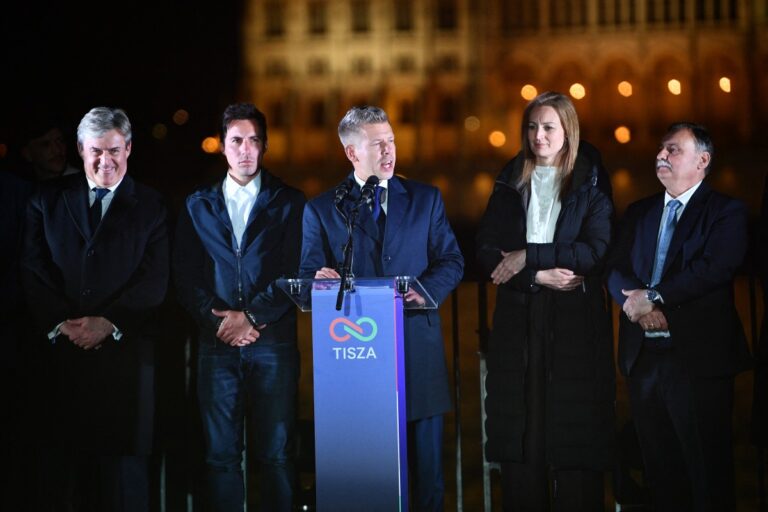
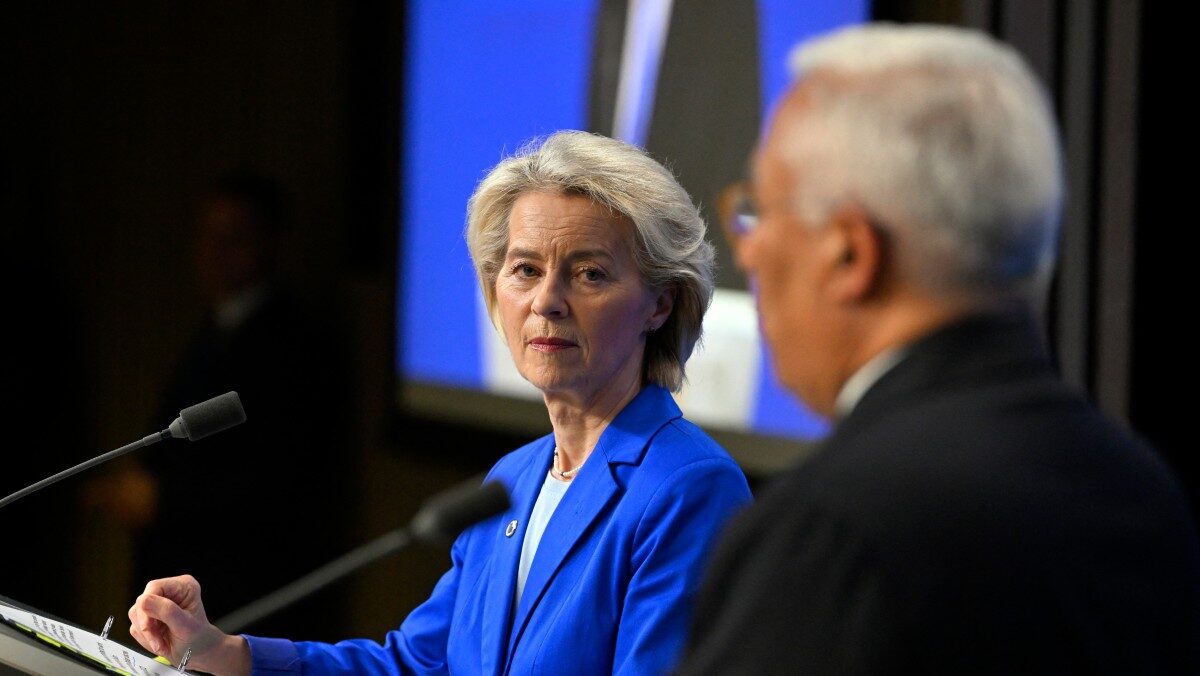
The transformation of the European Union into an increasingly centralized structure—what many describe as the “United States of Europe”—is now closer than ever after Fidesz’s defeat in Hungary. As soon as the new Hungarian government’s victory was confirmed, Ursula von der Leyen declared that Hungary was “returning to its European path.”
It sounded like a congratulatory remark. In reality, it signaled that the EU’s main sovereigntist stronghold has fallen.
For years, Viktor Orbán turned Hungary into the firmest obstacle to the political integration project that the Commission, much of the European Parliament, and several major member states have long sought to advance. Budapest blocked sanctions, challenged the rule-of-law conditionality mechanism, rejected mandatory migrant quotas, and, above all, used unanimity as a tool to defend national interests. That is now over.
The first consequence will be political. Without Budapest, the governments that still defend greater national sovereignty lose the country most willing to stop decisions in the Council. There will be less resistance and, above all, less fear in Brussels about moving forward.
That advance already has several clear directions. The most important thing is the gradual end of unanimity. For months, the Commission and several Western governments have argued that a Union expanded to more than thirty members cannot function if any single country can block decisions. The official argument is efficiency. The real outcome would be a transfer of power from national capitals to Brussels.
The proposal is to extend qualified majority voting to areas that have until now remained under the control of member states: foreign policy, sanctions, taxation, industrial policy, and some security matters. Orbán was the leader most opposed to this because he understood exactly what it would mean.
Without unanimity, smaller states would lose their real ability to prevent decisions that run against their national interests. Governments could be forced to accept policies rejected at the ballot box.
The second major change will come through the budget. The Commission is preparing the 2028–2034 framework with an approach that goes far beyond distributing funds. The model increasingly resembles NextGenerationEU: common debt, centrally managed transfers, and more direct EU resources.
In practice, that means greater power for the Union to borrow on behalf of all member states and to make access to EU money conditional on political objectives set in Brussels.
Hungary had long denounced that system as a form of political pressure. Not without reason. The freezing of billions of euros in EU funds for Budapest showed to what extent European money has become a mechanism of political discipline. With a Hungarian government now aligned with Brussels, that logic will not disappear. It may become the norm.
The third transformation concerns the so-called rule of law. What was until now presented as an exceptional response to a “problematic” country risks becoming a permanent system of supervision over domestic affairs. Justice, media, education, family legislation and even constitutional arrangements are becoming increasingly exposed to intervention by the Commission and the European Court of Justice.
There will be no need for a dramatic formal treaty change. Brussels has learned to move in a different way: by using existing clauses, extending qualified majority voting, relying on ECJ case law, and passing secondary legislation. It is integration by accumulation.
Added to this is economic centralization. The EU’s largest powers are already pushing for more European supervision of financial markets, investment platforms, and crypto-assets. The old ambition of creating a true capital markets union directed from Brussels is also returning.
That is why the phrase “United States of Europe” is returning with force. Not because a formal European superstate will appear tomorrow, but because the pieces increasingly fit together in that direction: less national veto power, more common debt, more authority for the Commission, greater weight for the Court, and less room for a national path of one’s own.
Hungary had been the main political brake on that process. Its shift changes the balance inside Europe. Brussels sees it as a window of opportunity to move faster before a future enlargement toward the Balkans and perhaps Ukraine.
What will come next?