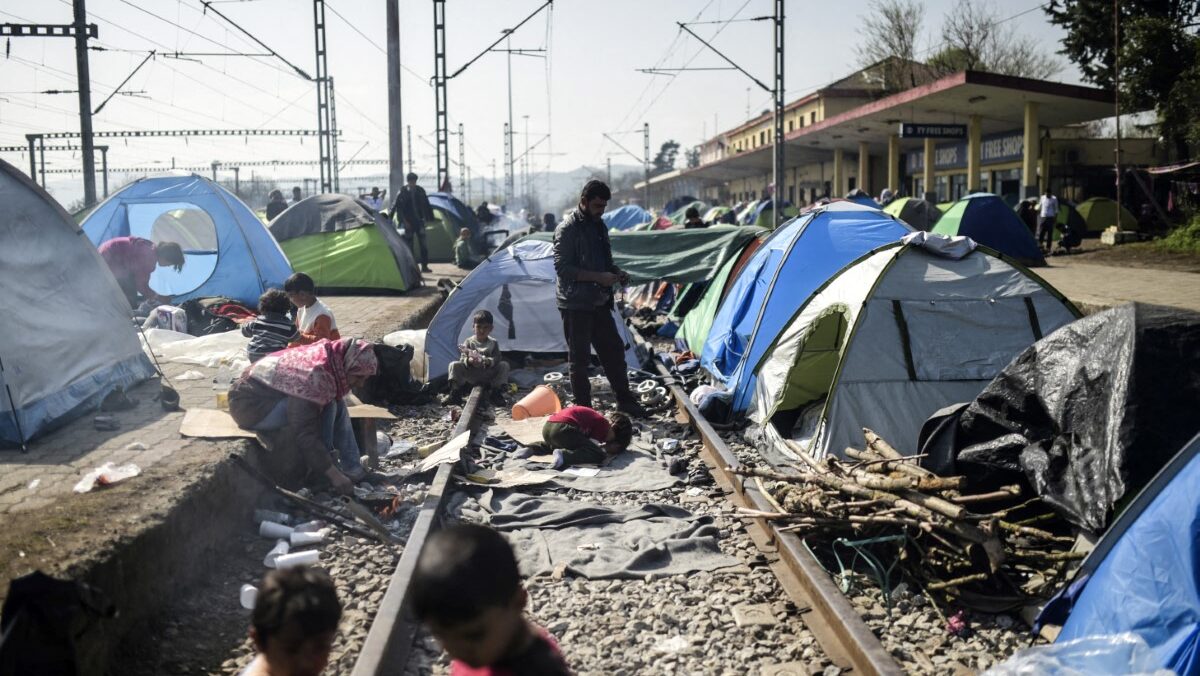
BULENT KILIC / AFP
The war in Iran has not yet triggered a mass exodus toward Europe. There are, for now, no images comparable to those of 2015. However, concern in Brussels is evident.
Experience shows that large-scale displacements do not begin with spectacular figures, but with a steady trickle that, if the conflict drags on, can turn into a wave that is difficult to contain.
Iran is not a minor country in demographic terms. With nearly 90 million inhabitants, any destabilization could trigger a wave of migrants far greater than those seen in recent conflicts. Even if only a relatively small fraction of the population decided to leave, the impact would be considerable.
Economic deterioration already preceded the war: sanctions, high inflation and loss of purchasing power had eroded social stability. If this is compounded by bombings, energy cuts, internal clashes or institutional collapse, leaving the country may become a matter of survival.
Unlike the first phase of the Syrian war, the profile of those who might leave Iran would include urban sectors and middle classes with resources, education, and contacts abroad.
Ethnic or religious minorities could also feel particularly exposed in a scenario of repression or state fragmentation. This qualified component does not reduce migratory pressure; it simply changes its composition.
There is also an additional factor. Iran has hosted millions of Afghans for decades. In recent years, Iranian authorities have already intensified expulsions. If the conflict forces the regime to prioritize internal security and cut costs, those deportations are likely to accelerate.
Many of those Afghans would not find stable conditions in their country of origin and could choose to continue their route toward Turkey. Thus, a crisis centered on Iran could quickly turn into a mixed flow of Iranians and Afghans heading toward Europe.
As in 2015, Turkey would be the first major recipient and filter. Its eastern border has been reinforced, but recent history shows that sustained migratory pressure ultimately tests any control system.
The precedent of the 2016 EU-Turkey migration agreement is unavoidable. A significant increase in arrivals from Iran would give Ankara renewed negotiating leverage with Brussels. If controls were relaxed, pressure would fall on Greece, Bulgaria, and the Western Balkan route, reactivating a corridor that shaped European politics a decade ago.
The 2015 crisis brought more than one million asylum seekers to the Union in just a few months and caused a deep political fracture among member states. Today, the institutional context is different. The EU has a new Pact on Migration and Asylum, with faster border procedures and financial solidarity mechanisms. Or at least that is what is outlined on paper. If something similar were to occur, the system would be tested immediately.
However, the political climate is more rigid. Many governments have hardened their rhetoric and prioritized external containment, agreements with third countries and reinforced borders. There is greater technical preparation, but less political room to absorb a massive influx without internal tensions.
Moreover, classifying Iran as a ‘safe country’ would be difficult in a scenario of open war and documented repression. This would imply high recognition rates for international protection and prolonged stays, with the resulting impact on housing, public services, and integration.
European institutions have activated monitoring and coordination mechanisms with international agencies. On paper, contingency planning exists. But there are no visible significant expansions of reception capacity nor specific agreements for an Iranian scenario.
The prevailing strategy seems focused on preventing pressure from reaching the Union’s external borders, rather than managing a potential increase within them. That approach may work if the conflict is contained. If the war spreads or the Iranian state destabilizes, Europe could once again find itself reacting to a migration crisis rather than preventing one.