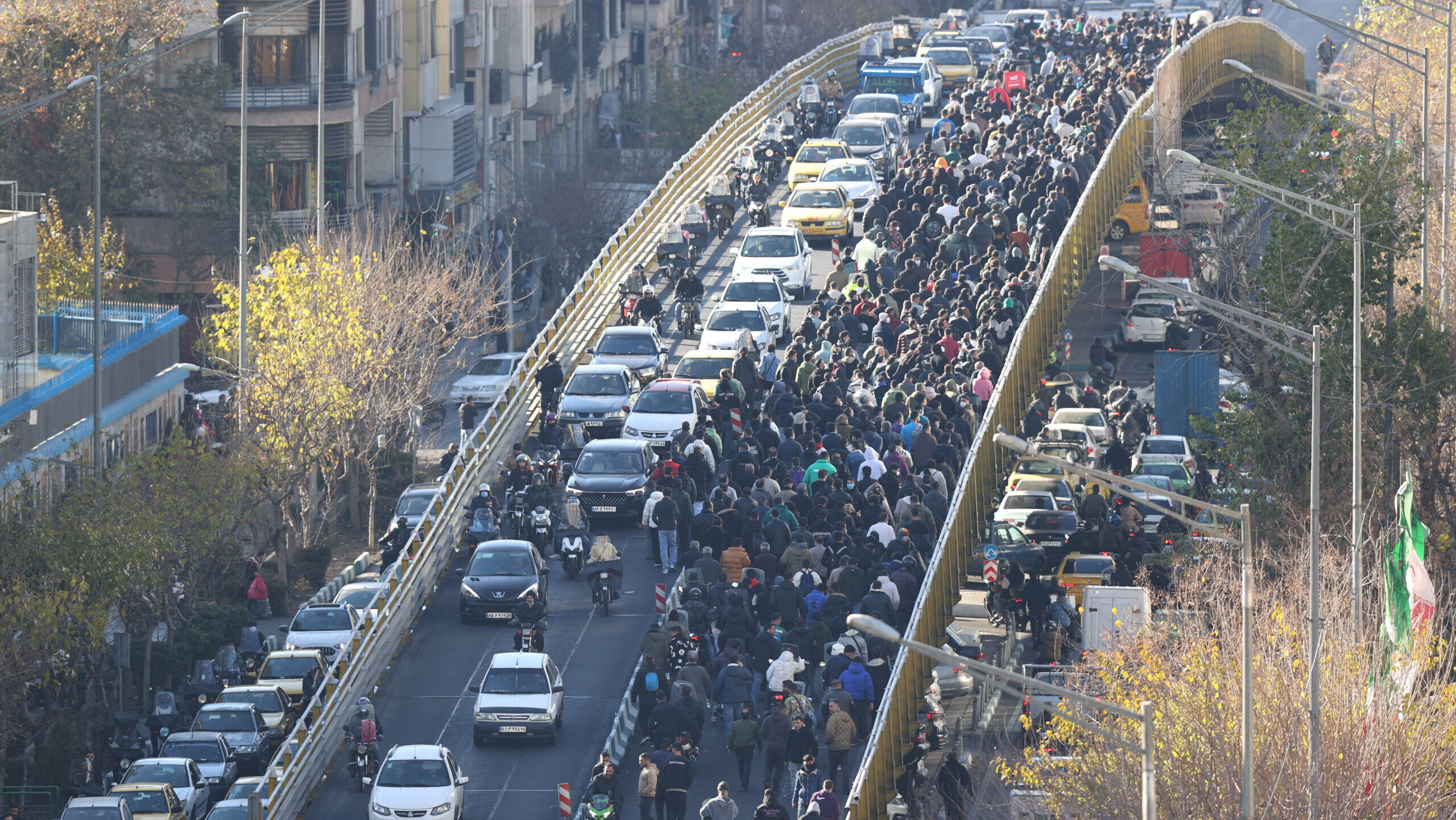
Shopkeepers and traders walk over a bridge during a protest against the economic conditions and Iran’s embattled currency in Tehran on December 29, 2025.
HANDOUT / FARS NEWS AGENCY / AFP
Iran is facing escalating unrest as protests spread nationwide, internet blackouts disrupt communications, and reports of deaths and mass arrests continue to emerge. Demonstrations began on December 28th after shopkeepers shut down Tehran’s Grand Bazaar in response to the rial currency plunging to record lows. Since then, protests have expanded across the country, reaching all 31 provinces, including areas traditionally considered loyal to the regime.
Analysts say the current unrest combines multiple pressures simultaneously: a near-collapse of the economy, overstretched security forces, ongoing foreign pressure, and, for the first time in years, visible rivalry among opposition figures preparing for a potential power vacuum.
The U.S.-based Human Rights Activists News Agency (HRANA) reported that at least 34 protesters and four members of the security forces have been killed, with approximately 2,200 arrests recorded nationwide. Meanwhile, the Norway-based NGO Iran Human Rights said security forces had killed at least 45 protesters, including eight minors. The group described Wednesday as the bloodiest day so far, with 13 confirmed deaths.
As protests spread across cities nationwide, online watchdog Netblocks said on Thursday that “live metrics show Iran is now in the midst of a nationwide internet blackout.” The blackout coincided with calls from Reza Pahlavi, the son of Iran’s last shah, urging further protests from abroad.
Pahlavi, who has been exiled in the United States for more than 40 years, has positioned himself as an alternative to the current leadership and has repeatedly called for regime change. Videos circulating online show demonstrators in Tehran chanting his name, with slogans such as “Long live the Shah!” and “This is the final battle, Pahlavi will return.” He has urged protesters to maintain pressure, erect roadblocks, and continue demonstrations, announcing coordinated actions for January 8th and 9th.
International reactions followed the events swiftly. U.S. president Donald Trump warned Iran’s authorities: “If they start killing people like they have in the past, I think they’re going to get hit very hard by the United States,” while Israeli prime minister Benjamin Netanyahu praised the demonstrations, calling them “a decisive moment in which the Iranian people take their futures into their hands.” He told his cabinet that Israel stands with the Iranian people.
Iran’s military chief warned that the country will not tolerate threats from outside powers.
The unrest has also disrupted travel. Turkish Airlines cancelled five scheduled flights between Istanbul and Tehran, according to the Istanbul Airport app, while several flights operated by Iranian airlines were also cancelled.