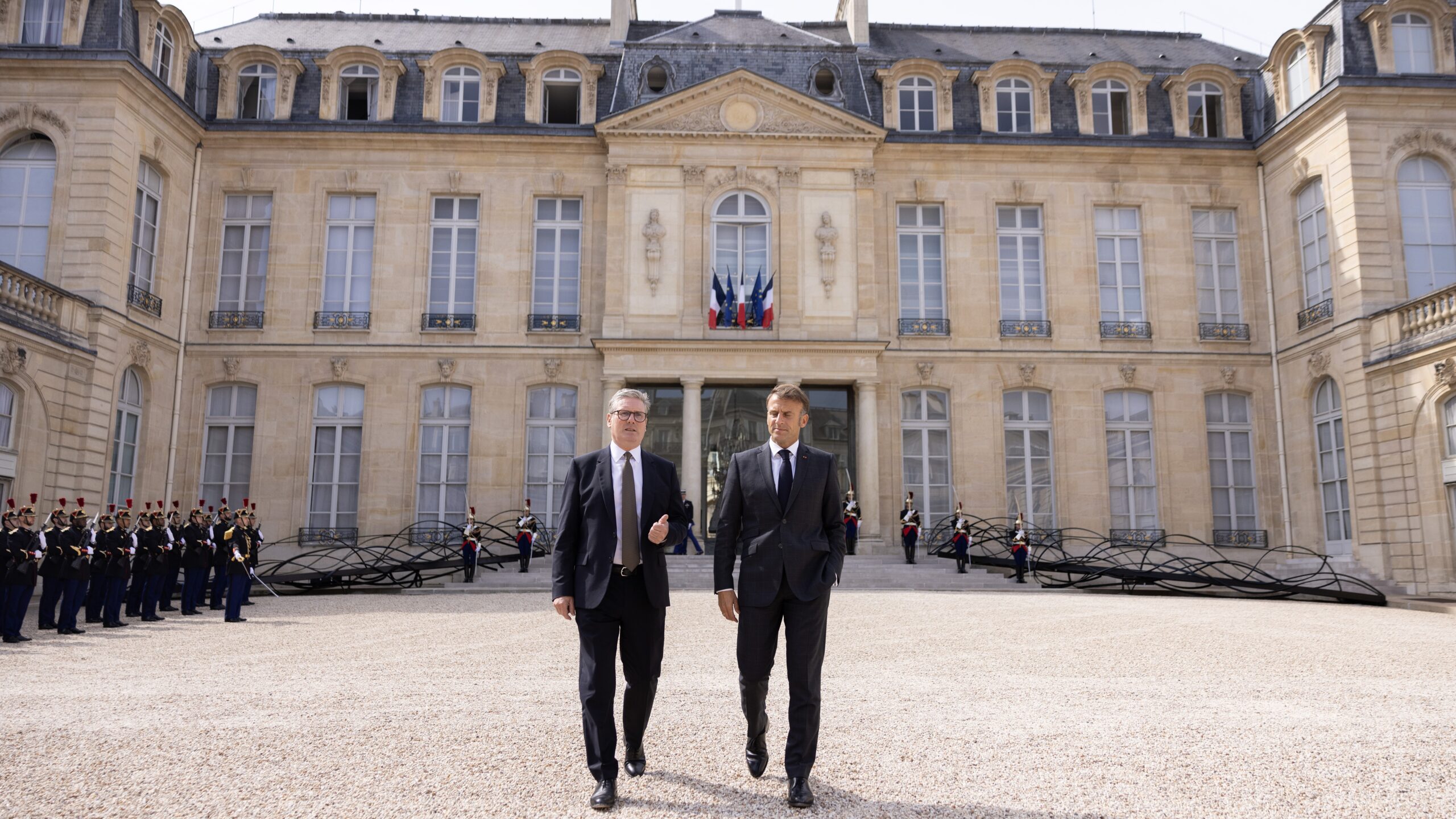
Prime Minister Keir Starmer meets French President Emmanuel Macron in Paris on August 29, 2024
Number 10 – Prime Minister Keir Starmer meets President Emmanuel Macron, OGL 3, https://commons.wikimedia.org/w/index.php?curid=151952500
Israel isn’t cowing by the increasingly aggressive tone from European governments. Responding on Wednesday to leaders proposing—or, in some cases, threatening—to recognise a Palestinian state, Israeli lawyer and politician Amir Ohana jibed: “If you wish for that … put it up in London, Paris, in your countries.”
In Britain, Prime Minister Keir Starmer’s warning that he will pursue recognition—though not in London—if Israel does not end its war against Hamas terrorists really backfired when a UK-Israeli citizen held as a hostage in Gaza for over 15 months accused him of potentially “rewarding terror.’
Emily Damari said Labour was “prolonging the conflict,” adding that
Recognition under these conditions emboldens extremists and undermines any hope for genuine peace. Shame on you.
Some of Britain’s most prominent lawyers have also suggested that Starmer’s course of action could break international law, which businessman and military historian Michael Keegan said was “the inevitable consequence of electing a student union government of uniquely stupid and inexperienced people solely focused on gesture politics.”
But however harsh the rebukes, Europe appears determined to advance its anti-Israel agenda to the next level. In Germany, opposition is growing to the government’s current refusal to back a suspension of Israel’s Horizon research and development programme participation. In Brussels too, College of Commissioners Executive Vice President Teresa Ribera is having a pop at Commission boss Ursula von der Leyen for not responding more firmly to the “intolerable” situation in Gaza.
The Swedish government also called on Thursday for the European Union to suspend the trade part of its association agreement with Israel because “the situation in Gaza is absolutely appalling, and Israel is failing to fulfil its most basic obligations and agreements on emergency aid.”
Meanwhile, U.S. President Donald Trump’s Middle East envoy Steve Witkoff has arrived in Israel to monitor the situation and more seriously discuss how to end the conflict.