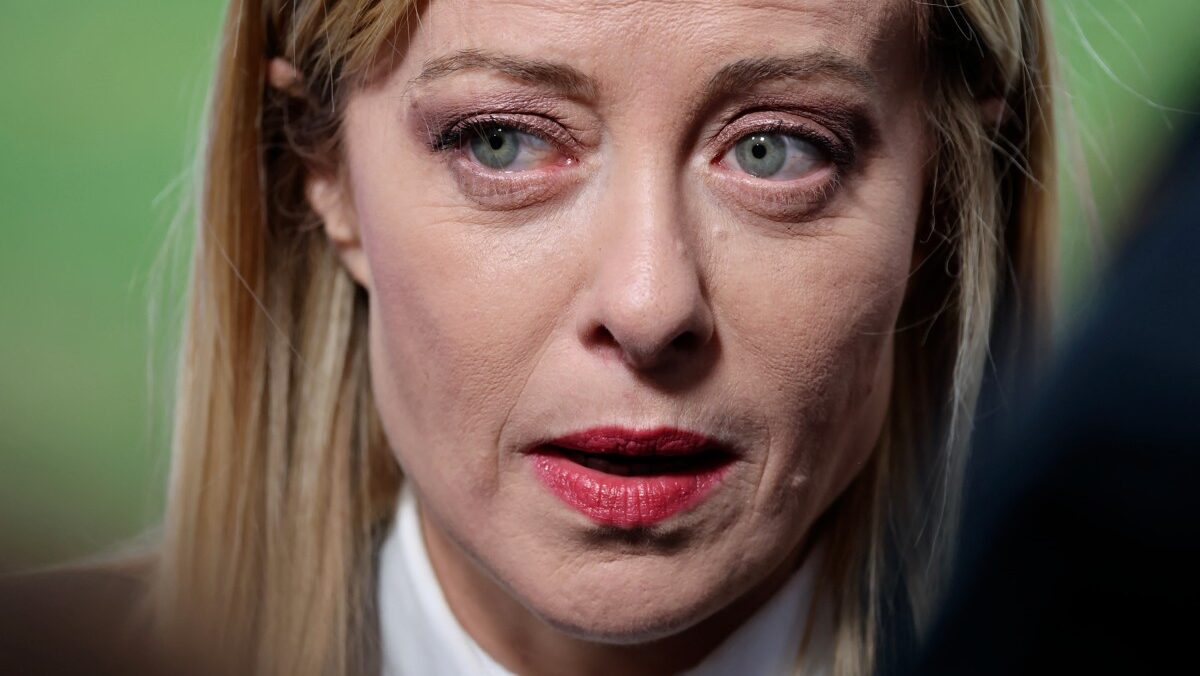
Italian PM Giorgia Meloni
Ludovic MARIN / AFP
Italy’s migration debate reignited this week after judges blocked the deportation of a Moroccan migrant with multiple convictions, including participation in a gang rape, prompting a sharp response from Prime Minister Giorgia Meloni and opening a new chapter in the government’s confrontation with parts of the judiciary.
The controversy erupted after the Rome Court of Appeal suspended the repatriation of Fathalla Ouardi, a 39-year-old Moroccan national who had been transferred to a migrant facility in Albania while awaiting expulsion from Italy.
According to the government, Ouardi’s criminal record includes drug trafficking, theft, illegal immigration, resisting a public official, conspiracy to commit sexual assault, and involvement in a gang rape.
Despite this record, the repatriation process was halted after Ouardi applied for international protection. Under current rules, the request automatically triggers a legal safeguard that prevents deportation while the asylum claim is examined.
For Meloni, the case illustrates how the existing system can block measures related to public security.
“Someone who entered Italy illegally, started dealing drugs and gang-raped a woman; we cannot detain him, we cannot send him to Albania and we cannot repatriate him,” she said during an interview with RTL 102.5 radio.
Ouardi had been transferred on February 17th from the detention centre of Palazzo San Gervasio, in southern Italy, to the migrant centre in Gjader, Albania.
The facility forms part of the agreement reached by Rome to process certain illegal migrants outside Italian territory while their deportation procedures are prepared. The initiative is one of the central pillars of Meloni’s migration policy and is intended to accelerate expulsions while easing pressure on Italy’s detention system.
Since its announcement, however, the project has faced legal and political challenges. Several organisations have questioned its compatibility with European asylum law, and courts have already reviewed a number of procedures linked to the mechanism.
The Ouardi case has once again placed the system under scrutiny.
Meloni also used the case to criticise activist groups that regularly mobilise against sexual violence.
“Where are the feminists?” she asked publicly, referring to the activist movement Non Una di Meno.
The prime minister linked the episode to another recent incident in Florence in which a woman was allegedly raped by two migrants. According to Meloni, decisions such as the one taken by the judges risk deepening the gap between the justice system and public concerns.
“What confidence can a woman who has been gang-raped have in the system if her attacker cannot even be deported?” she asked.
The episode forms part of a broader confrontation between the government and sections of the judiciary. Since Meloni came to power in 2022, migration policy has been a recurring source of friction.
The government argues that some judicial rulings effectively neutralise the tools designed to control illegal immigration. Judges, for their part, maintain that they are applying national and European law, including the legal guarantees attached to the right to asylum.
“It is difficult to defend Italy with certain judges,” Meloni said, reiterating her call for reforms to the judicial system.