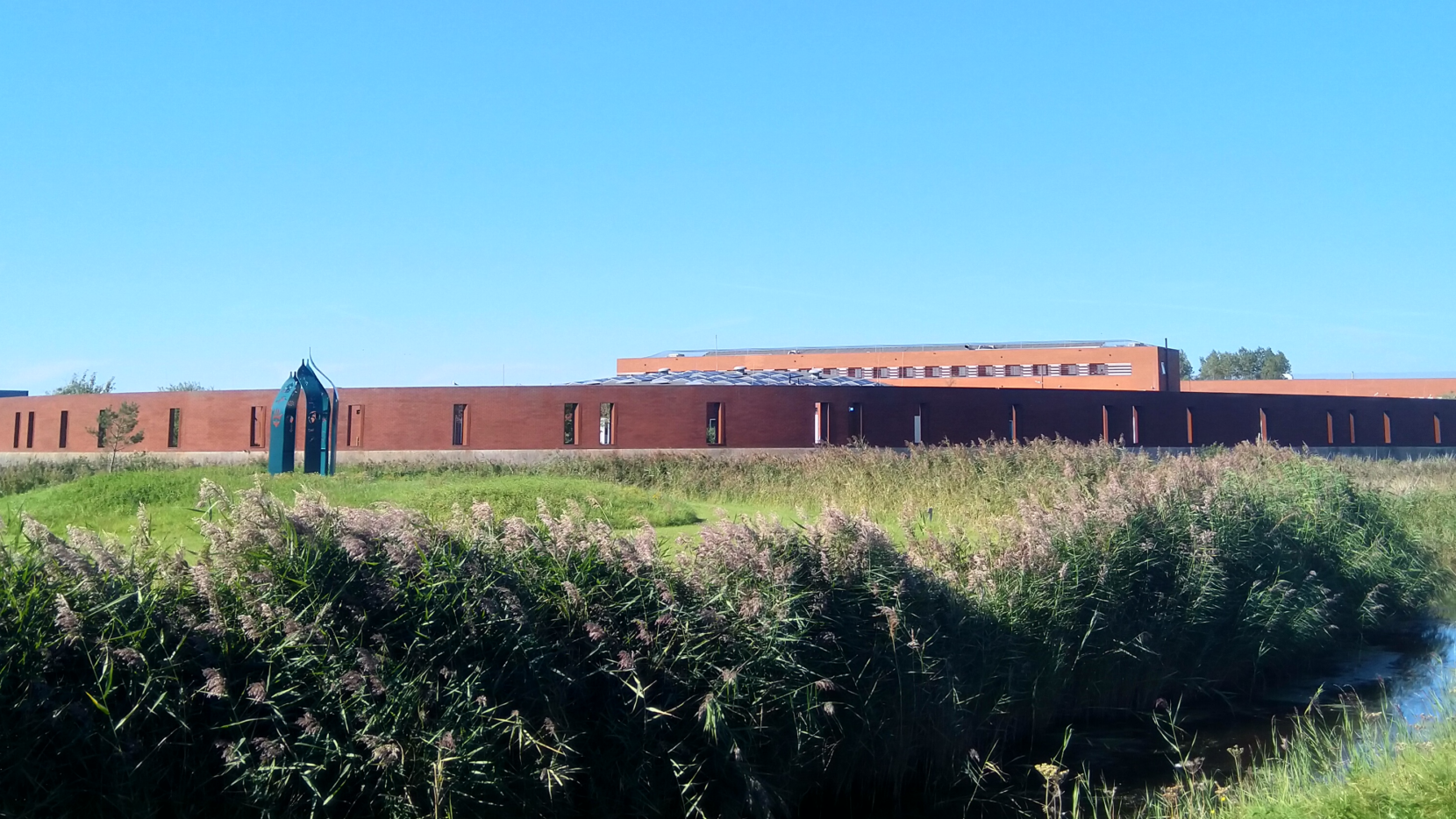
Former juvenile detention facility De Doggershoek in Den Helder, the Netherlands, repurposed in 2015 as an asylum reception center with the capacity to hold around 575 asylum seekers.
Lars van der Heide, CC BY-SA 4.0, via Wikimedia Commons
Hundreds of residents in Nieuw-Lekkerland, a Dutch town of around 10,000, demonstrated on Monday evening against the potential establishment of an asylum seekers’ housing center in their community.
The march culminated at the town’s community center, where a residents’ meeting was held and locals were given the opportunity to ask questions regarding the proposed shelter. The protesters presented the results of an online petition to Mayor Theo Segers—a petition that had garnered over 10,000 signatures from people opposing the center.
The organizers said they wanted to peacefully send a message to the municipal government to highlight concerns regarding the potential impact of an asylum center on the livability, safety, and strain on amenities in their community as the Netherlands continues to struggle with a lack of housing for asylum seekers.
As of late January 2026, roughly 80,000 asylum beds were available nationwide—far below the national target of nearly 103,000. According to official figures, only four in ten municipalities currently meet their legal requirements for housing.
The Dutch Dispersal Law (Spreidingswet), which came into effect in February 2024, requires municipalities to take in asylum seekers based on set quotas. These quotas depend on factors such as population size and are meant to spread asylum reception more ‘fairly’ across the country instead of relying on municipalities to volunteer.
In the past months, several municipalities have postponed or withdrawn plans to open asylum centers as a response to backlash from local residents. Mark Boumans, mayor of Doetinchem and chairman of the asylum committee of the Association of Dutch Municipalities, told NL Times, “I have been in local politics since 1995. I cannot remember mass protests against municipal decision-making like this.”
There’s a shortage of housing in general across the Netherlands, and the fact that a large number of large migrant families are arriving in the country poses yet another problem—one that municipalities are legally obligated to solve. Apartments, and even regular-size homes, simply are not big enough to accommodate families with eight, nine, or more children. The Hague is reportedly looking for housing for 19 large migrant families, while the city of Zwolle is trying to find accommodation for a family of 16. Last summer, one municipality decided to purchase a home—with a price tag of €469,000—so that a family of at least ten could move in. Other municipalities are reportedly also pursuing this solution, with the city of Delft announcing their intent to appeal to the central government for additional subsidies to purchase homes.
PVV leader Geert Wilders said municipalities are “rolling out the red carpet” for asylum-seeking families and thundered on X:
Families of 14 people in our homes! Insane. … Borders remain open, coercive legislation remains in place. The Netherlands is rapidly becoming Islamized. … Resistance to national suicide policy is desperately needed.”
Families van 14 mensen in onze huizen! Krankzinnig.
— Geert Wilders (@geertwilderspvv) February 9, 2026
Grenzen blijven open, dwangwet blijft bestaan. Nederland islamiseert snel. Jetten en Yesilgőz laten iedereen binnen.
Verzet tegen nationaal zelfmoordbeleid is hard nodig.#AZCNEE #grenzendicht #PVV #StemPVV pic.twitter.com/KxOsrLG8gJ