Dmitri Medvedev
Actualités Géopolitiques on Facebook, July 29, 2025
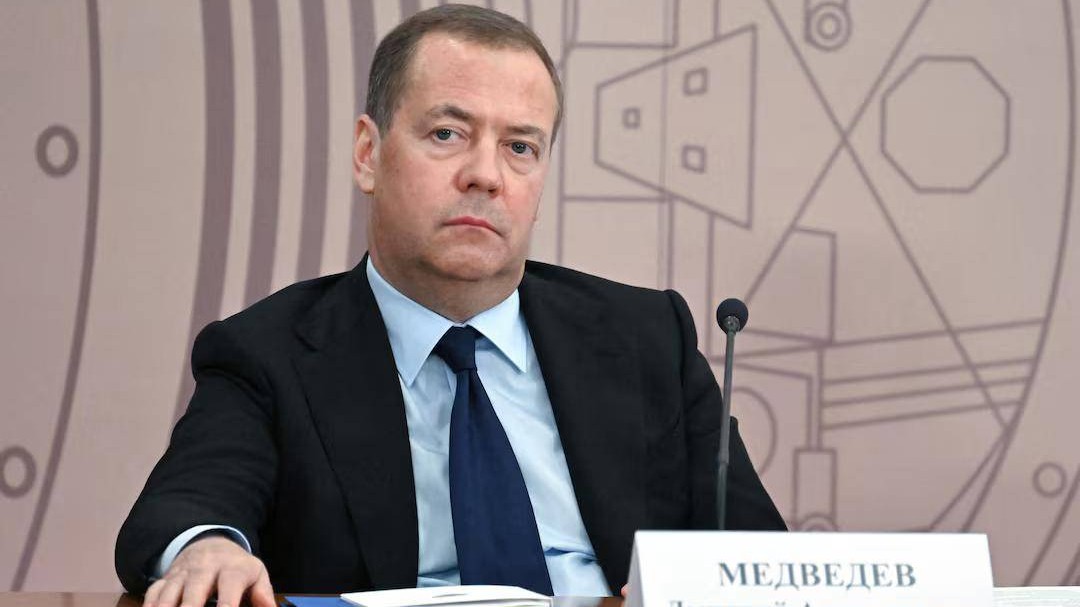
The war of words between former U.S. President Donald Trump and former Russian President Dmitri Medvedev escalated this week, with nuclear threats and heightened tensions over the Ukraine conflict. The exchange began when Medvedev dismissed Trump’s newly shortened ultimatum demanding that Russia secure a peace deal in Ukraine within 10 to 12 days.
Trump took to Truth Social in the morning of Thursday, July 31st, lashing out at Medvedev by calling him a “failed former President of Russia” and warning him to “watch his words,” stating that he was “entering very dangerous territory.”
Medvedev responded hours later with a Cold War reference, invoking the infamous ‘Dead Hand’ system, which is a Soviet-era nuclear command mechanism designed to ensure automatic retaliation in the event of a decapitation strike.
“Let him remember his favorite movies about ‘The Walking Dead,’ as well as how dangerous the non-existent in nature ‘Dead Hand’ can be,” Medvedev wrote. Though never officially confirmed by Moscow, the existence of this doomsday protocol was acknowledged in 2011 by a retired Russian Strategic Missile Forces commander, who said it could be reactivated if necessary.
Medvedev, who has become known for his inflammatory online commentary, had already brushed off Trump’s ultimatum earlier in the week. “Trump’s playing the ultimatum game with Russia … Each new ultimatum is a threat and a step towards war,” he wrote on X.
Trump's playing the ultimatum game with Russia: 50 days or 10… He should remember 2 things:
— Dmitry Medvedev (@MedvedevRussiaE) July 28, 2025
1. Russia isn't Israel or even Iran.
2. Each new ultimatum is a threat and a step towards war. Not between Russia and Ukraine, but with his own country. Don't go down the Sleepy Joe road!
While Putin himself has not publicly addressed Trump’s ultimatum, the Kremlin has indicated it is closely monitoring the situation. Medvedev, despite holding a largely ceremonial role as deputy chairman of Russia’s Security Council, has taken the lead in publicly confronting Trump, a shift from his earlier image as a moderate reformer during his presidency from 2008 to 2012. Since then, he has reinvented himself as one of Moscow’s most aggressive hardliners, frequently invoking nuclear war and existential conflict with the West.