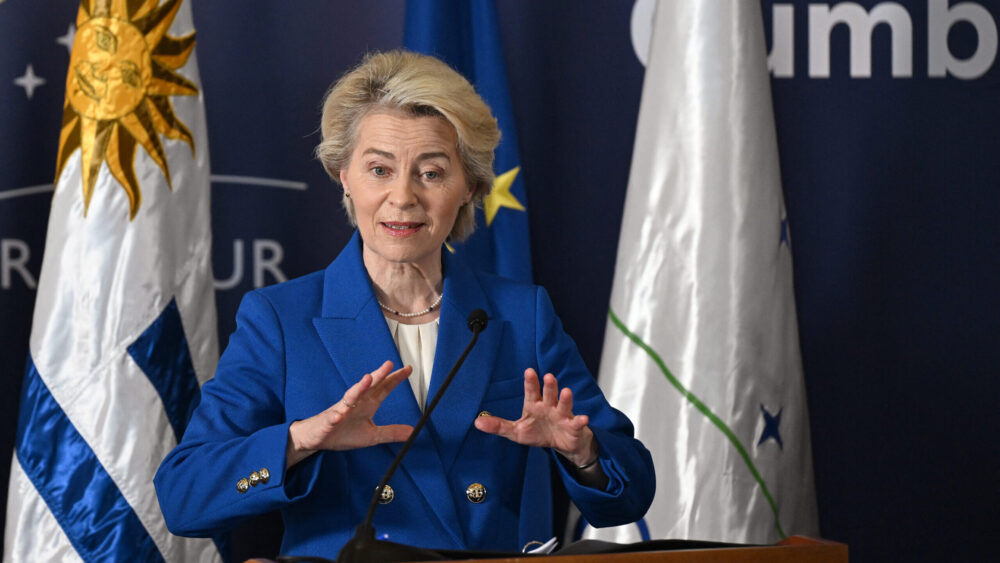
Ursula von der Leyen delivers a speech during the LXV Mercosur Summit in Montevideo
Eitan ABRAMOVICH / AFP
The European Union’s treaty with Mercosur countries—intended to create the world’s largest free-trade area—has ignited fury among indigenous people who say it will lead to the destruction of their ancestral lands.
Representatives of Brazil’s indigenous peoples recently protested in Brussels, pointing in particular at the likely expansion of farming in lands inhabited by pre-colonisation populations because of the reduction—or, in some cases, complete removal—of duties on agri-food products exported from South American countries to Europe. These products also would not have to abide by the same EU standards and environmental regulations that European producers are bound by, prompting fears of unaffordable competition on the Continent.
Dinamam Tuxá, coordinator of the Association of Indigenous Peoples of Brazil, told Euronews that the pact reached in December “will increase deforestation and socio-environmental conflicts.”
It does not guarantee the rights of indigenous peoples, on the contrary, it creates instability and legal uncertainty for us, as economic interests that want to further exploit indigenous territories will benefit from this agreement.
The agreement, hated on both sides of the Atlantic—by indigenous peoples in South America and farmers in Europe—must be ratified by the European Parliament and EU member states before it comes into effect.
Groups of MEPs have long been vocal about the threat to South American communities because of the deal, and are bound to be moved to action by recent protests. France’s Rassemblement National vice president, Louis Aliot, also early this year launched a national campaign against the “catastrophic” free trade agreement, telling reporters that “we will be there to support our farmers.”
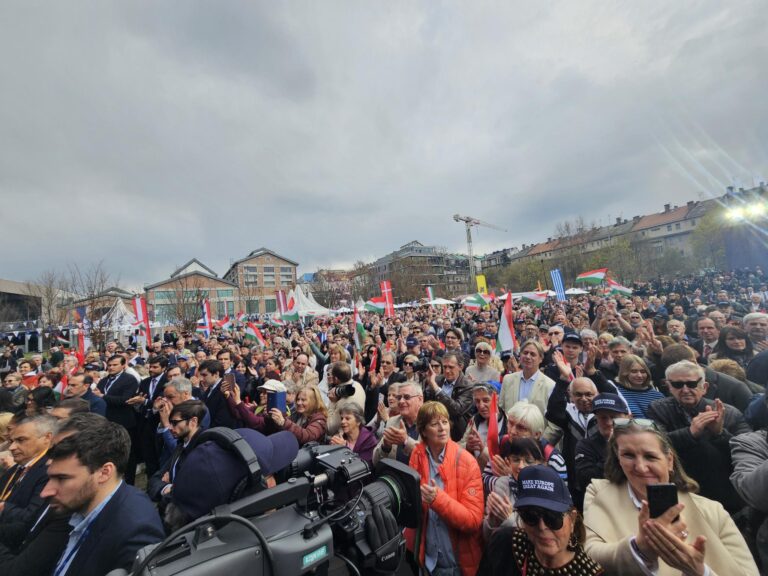
The Hungarian government also last week confirmed its opposition to the Mercosur agreement, which officials said “would open the door to an inflow of agricultural products from producers who are unfamiliar with and do not adhere to European quality and regulatory standards.”
Common position, common interests
— Dr Nagy István (@DrNagyIstvn1) May 18, 2025
⁰I had a meeting with Annie Genevard, France's Minister of Agriculture and Food Sovereignty.
We agree that the EU-Mercosur agreement is unacceptable in its current form. France is taking a leading role in opposing this trade agreement, which… pic.twitter.com/w2aIemNdAv