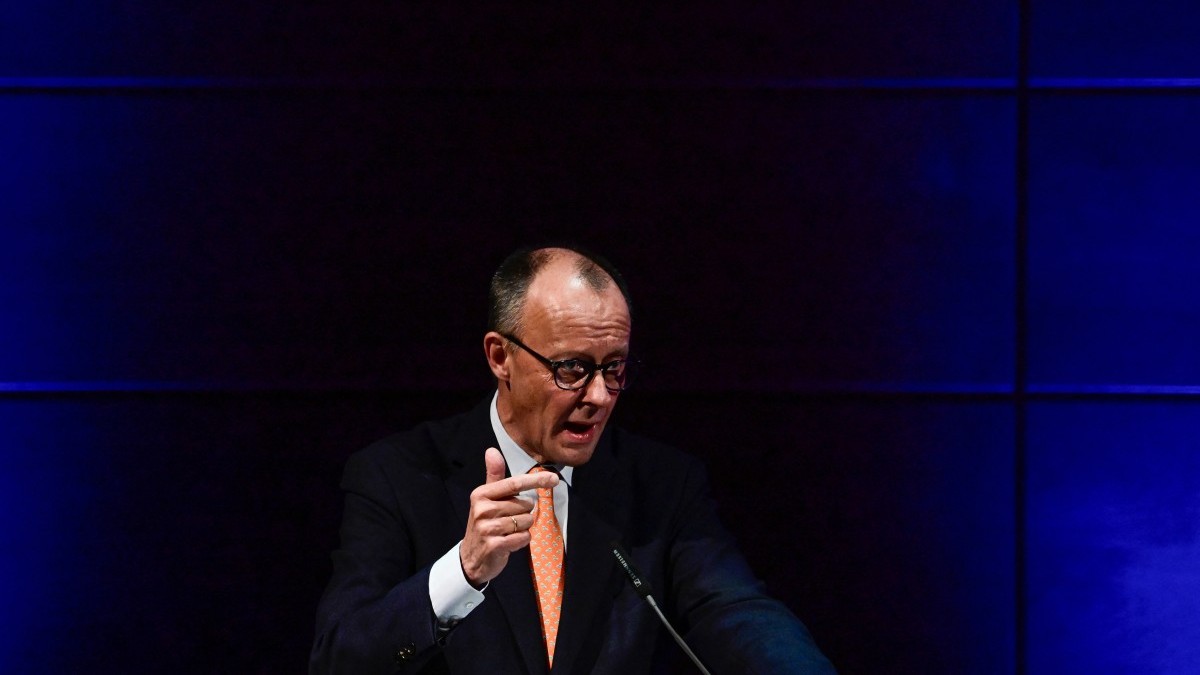
German Chancellor Friedrich Merz addresses the New Year’s reception of Halle’s Chamber of Commerce and Industry in Halle on January 14, 2026.
John MacDougall / AFP
The German government removed the post of ‘migration commissioner’ less than a year ago, along with a list of other commissioners. Now, desperate to improve the public’s low view of its approach to border control in 2026, Chancellor Friedrich Merz’s team has appointed a ‘migration ambassador.’
If the previous role is anything to go by, voters would be unwise to get their hopes up. Commissioner Joachim Stamp failed to conclude repatriation agreements with any more than three countries, two of which don’t contribute much to Germany’s migration total, anyway. National daily Frankfurter Allgemeine Zeitung perhaps quite kindly put it that while Stamp’s work was “arduous … he could point to few successes.”
With this in mind, journalist Thomas Jansen suggested “the appointment of a migration ambassador is likely more of a diversionary tactic,” and that the position is simply “intended to distract from the truth.”
The role, which is set to begin on Monday, January 19th, has gone to Ludwig Jung. Jung most recently worked at the Federal Foreign Office and overall appears fairly inexperienced, which is quite telling in itself. Reports say his work will focus on implementing “innovative solutions” for the return of non-EU migrants without the right to remain.
Even if Jung wanted to act tough, it is not at all unlikely that Merz’s coalition partners would prevent him from doing so. Responding to the appointment, pro-migration SPD MP Hakan Demir said “it doesn’t seem particularly sensible to rely on a deportation ambassador,” asking: “Who will drive the buses? Who will work in the hospitals?”
AfD co-leader Alice Weidel stressed earlier this month that tinkerings with migrant policy will not go far enough—that “the asylum system is broken” and needs reform “from the ground up.”