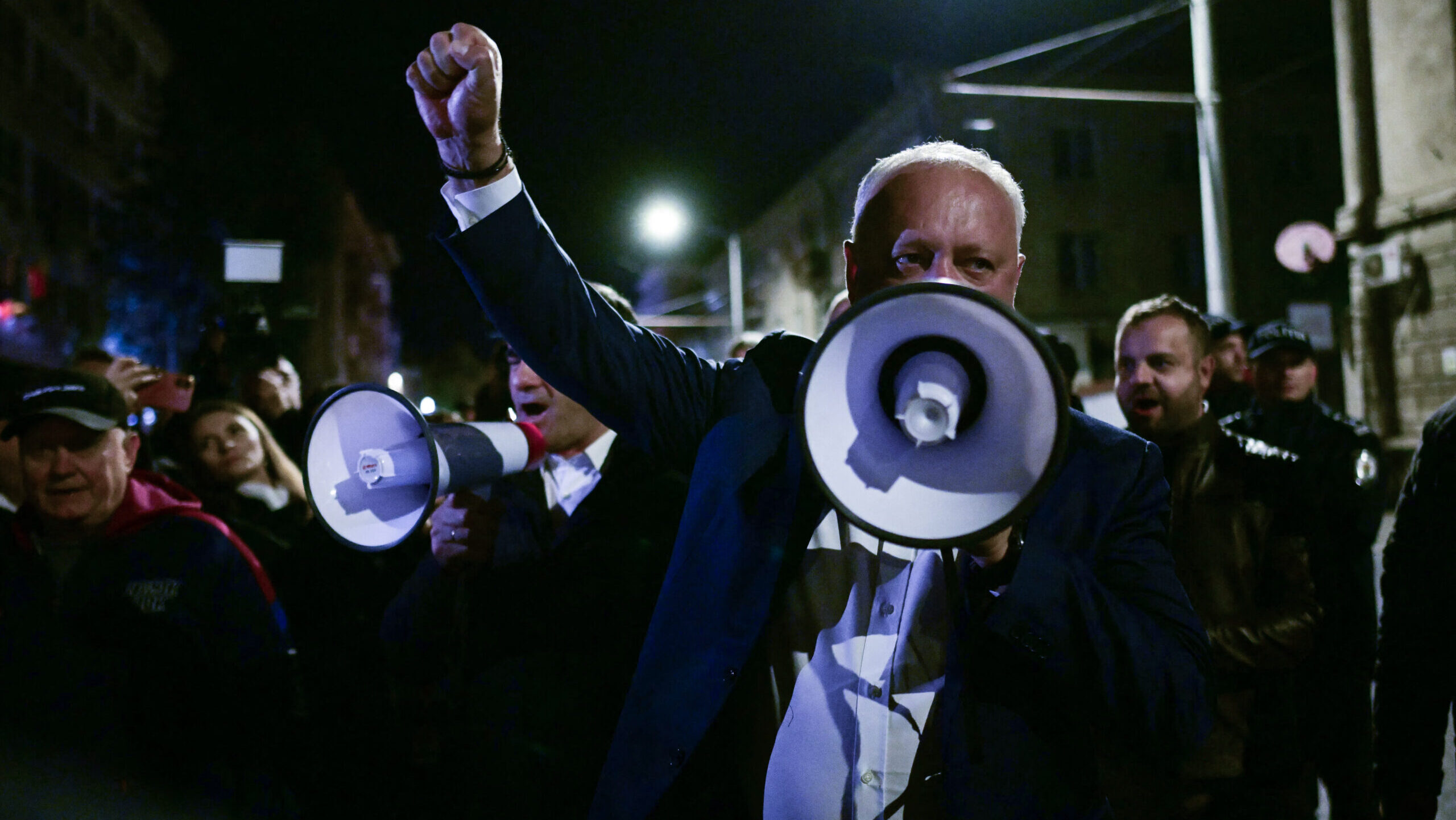
Igor Dodon addresses protesters outside the Central Electoral Commission (CEC) in Chisinau, Moldova, on September 28, 2025.
Daniel MIHAILESCU / AFP
The Party of Action and Solidarity (PAS), led by President Maia Sandu, secured victory in Sunday’s parliamentary elections in Moldova, consolidating—according to preliminary results—the country’s pro-Brussels trajectory. Yet the vote was clouded by allegations of fraud, claims of foreign interference, and growing doubts about the transparency of the electoral process.
With 96% of ballots counted, PAS stood at 48% of the vote, enough to maintain its majority in Parliament and keep Moldova on the path toward European Union integration. Its main rival, the pro-Russian Patriotic Electoral Bloc (BEP), trailed with 25%. They were followed by the Alternative Bloc (8%) and Our Party (6%), among other minor forces.
The result strengthens Sandu’s position, who has been in power since 2020. However, Moldova remains deeply split. While the ruling party insists that EU integration is the only path to stability, the pro-Russian opposition calls for restoring closer ties with Moscow.
“We are in danger of losing what we have achieved. Russia wants to destabilize Moldova and endanger the entire region,” Sandu warned after casting her ballot. Still, her repeated claims of “massive Russian interference” have been met with skepticism by the opposition and some analysts, who see them as a pre-emptive tactic to deflect criticism over the fairness of the vote.
The electoral process was tense. The Central Electoral Commission reported cyberattacks on its systems, which were allegedly neutralized, while in pro-Russian strongholds—such as the separatist region of Transnistria—restrictions on access to polling stations were denounced. Voter turnout stood at 51.9%, slightly below the 2021 figure.
While the president blamed Moscow for an “unprecedented disinformation campaign,” pro-Russian leader Igor Dodon accused the government of “stealing the vote” and called on his supporters to demonstrate outside the Electoral Commission. “The people voted for change, and we will not allow it to be stolen from us,” declared Dodon, who served as Moldova’s president between 2016 and 2020.
Amid these clashes, statements by Telegram founder Pavel Durov poured more fuel on the fire. In a message posted on X, the entrepreneur claimed that French intelligence services, in coordination with Moldovan authorities, pressured him to censor channels critical of Chișinău’s government during the electoral campaign last year.
🇲🇩 About a year ago, while I was stuck in Paris, the French intelligence services reached out to me through an intermediary, asking me to help the Moldovan government censor certain Telegram channels ahead of the presidential elections in Moldova.
— Pavel Durov (@durov) September 28, 2025
After reviewing the channels…
According to Durov, after removing some channels that clearly violated platform rules, he was handed a second list almost entirely made up of legitimate accounts whose only common feature was that they voiced political opinions against PAS. The Russian-born tech magnate denounced the request as an attempt at political manipulation from Europe, the same interference Brussels claims from Moscow. “Telegram will not remove content for political reasons,” he stressed.
The mix of accusations—Russian interference, European-backed censorship, and doubts about electoral transparency—deepens polarization in the country of just 2.4 million people.
For the EU, PAS’s victory is crucial to securing a strategic ally on Ukraine’s border. For the opposition, however, the win was achieved through an unbalanced campaign and political control practices that undermine the legitimacy of the results.
The key question now is whether BEP-led protests will sustain public resistance in the streets or if Sandu’s renewed mandate will allow her government to weather the storm.