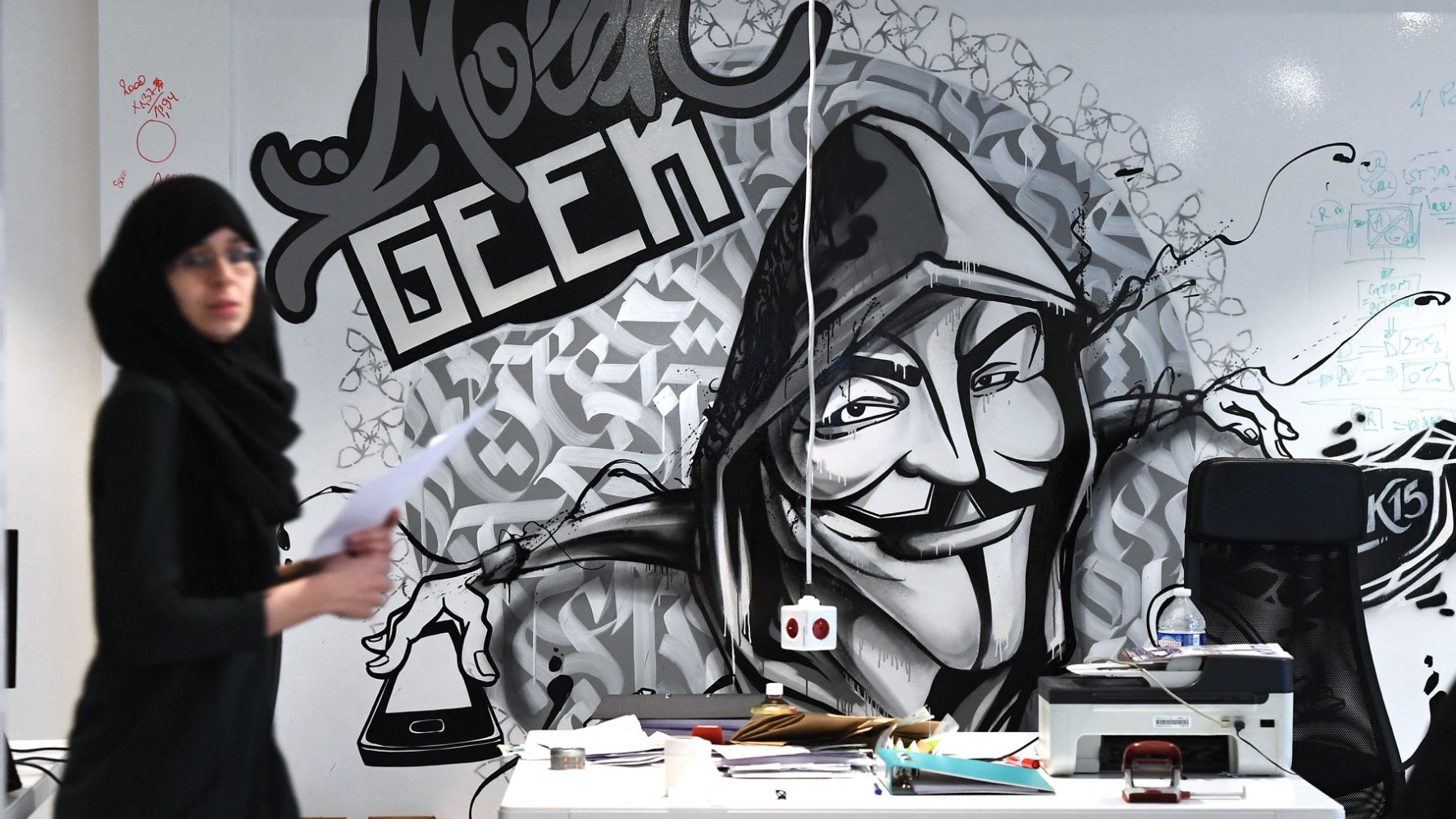
A woman walks past a mural at the Molengeek centre in the Brussels commune of Molenbeek on January 16, 2018.
Emmanuel Dunand / AFP
The Belgian municipality of Molenbeek, a town in the greater Brussels area, is organizing Molenfest 2025 as a run-up for their bid to become one of the EU’s cultural capitals in 2030 (ECOC30).
The festival celebrates the diversity of the town’s population (140 nationalities make up the almost 100 thousand inhabitants), but many now dare ask the question whether that is a good thing.
Fatima Zibouh, member of the organizing commission of Molenfest2025, said the dream of becoming a cultural capital in the future started to improve the image people have in their minds about Molenbeek.
“Molenbeek symbolises all the challenges you face in other European cities in terms of diversity, youth, climate change, freedom, and security,” added Fatima Zibouh.
Europeans indeed face plenty of challenges, but the truth is many of those challenges result from precisely the ‘diversity’ Molenbeek embodies.
In 2016, Molenbeek became known to the world because of the tragic terror attacks in Paris and Brussels, with several of the terrorists hailing from the town. The town is in fact notorious for being an area where many Islamists reside. Reacting to concerns expressed online about this at a recent council meeting, Saliha Raïs, a Socialist councillor of Moroccan origin suggested those who don’t like the ‘diversity’ should just leave.
And it is this very same town that is now considered to be a serious contender in the race to become an EUs cultural capital in five years’ time.
The “charm offensive,” as it has been described in the press, may prove to be effective, but it will hardly mask the fact that what such festivals do not celebrate is Belgians and Belgian culture.
Two other Belgian cities, Namur and Leuven are in competition to become the Belgian candidate for ECOC30. The winner will be announced on September 24th.