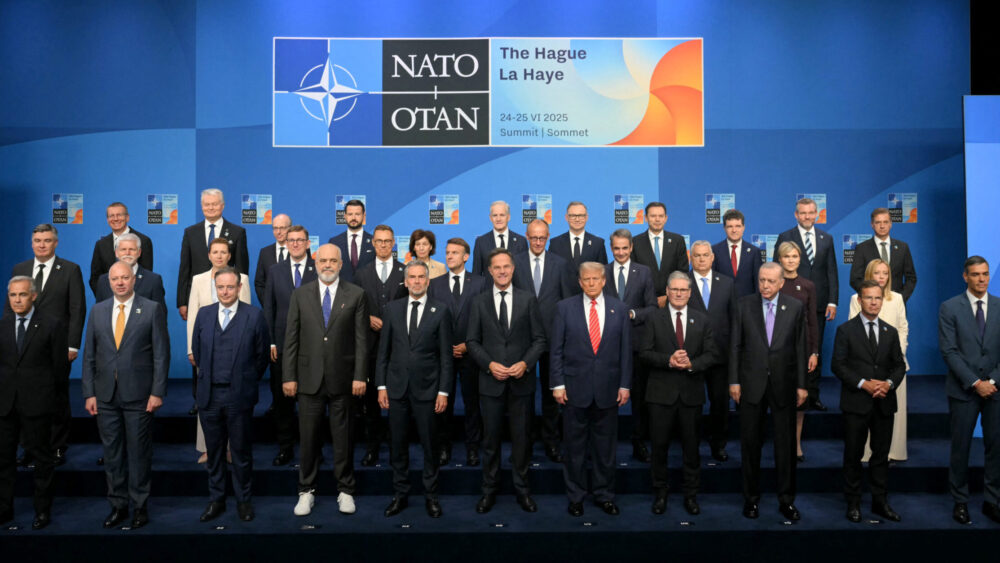
NATO leaders
NICOLAS TUCAT / AFP
The NATO summit held in The Hague left Europe with a bitter aftertaste. What was meant to be an exercise in reaffirming Atlantic unity in the face of global challenges laid bare the continent’s deference to U.S. power, its deep splits over policy, and a dangerous drift toward militarism that is increasingly troubling to Europe’s more clear-eyed leaders.
Hungarian Prime Minister Viktor Orbán, among the realists, cast doubt on the viability of NATO’s 5% defence spending target—formally agreed upon for 2035—warning that no EU country could meet it under current Brussels budget rules. “If we keep the regulations as they are, no one will be able to meet the 5%. We must recalculate everything differently; in that case, we could do it,” he stated. The pledge itself has also faced criticism, with some calling it “smoke and mirrors” due to vague definitions and creative accounting. But beyond accounting, Orbán pointed to the issue’s core: “The real danger is not military, but economic: we are losing competitiveness.”
Hungary’s leader stood out as the only head of government openly pointing out that neither Ukraine nor Russia is a NATO member—and that the main priority should be to stop the war from spreading. “My job is to keep it that way,” he told the press. His message stood in sharp contrast to the vague, evasive—or at times outright submissive—tone adopted by other European leaders during the summit.
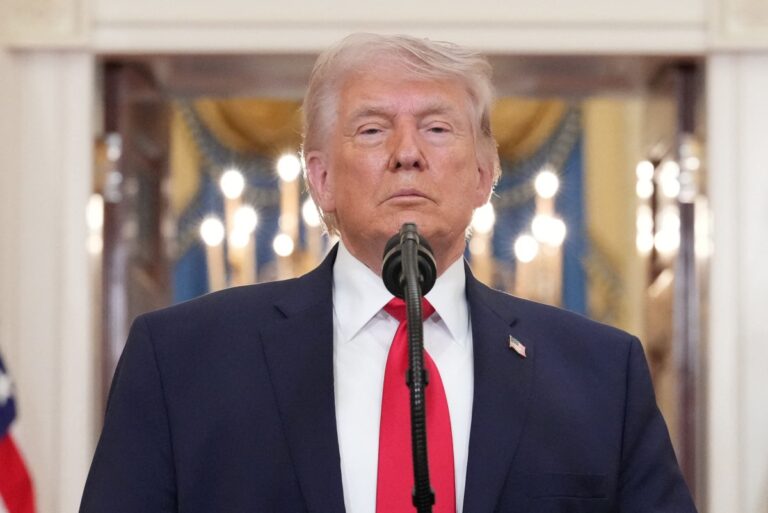
One of the leading figures at the event was NATO Secretary General Mark Rutte. His role, however, left more questions than answers. The former Dutch PM’s appeasement strategy toward Donald Trump—through flattery, awkward photo-ops, and policy concessions—has raised concerns among several allied delegations. The summit was designed around the preferences of the U.S. president, relegating even Volodymyr Zelensky to a nearly decorative role.
Rutte’s phrase—“Daddy sometimes has to use tough language”—uttered to justify Trump’s outbursts, caused discomfort among European diplomats who see in this attitude a dangerous precedent: the risk of building a NATO malleable to Washington’s impulses, devoid of strategic substance and disconnected from the priorities of the Old Continent.
Meanwhile, Spanish Prime Minister Pedro Sánchez endured a summit to forget. His attempt to appear tough on Trump while avoiding financial commitments backfired: he signed the document committing countries to the 5%, but then announced that Spain would not comply with it. Trump’s reaction was immediate: a direct threat of trade tariffs on Spanish products. Sánchez’s team, which had tried to avoid a face-to-face with the president, was caught off guard by such a forceful response.
This episode led to an unprecedented situation: a potential U.S. trade war against a single EU member state, despite trade policy being a shared European competence. The rest of the European leaders, including Orbán, signed the same document as Sánchez without creating the same confusion.
Ultimately, the summit in The Hague leaves behind more questions than answers. A NATO far from strengthened seems to be entering an unpredictable phase. A Europe divided between those who prefer to look the other way and those who, like Orbán, raise their voices to prevent irreversible mistakes. And a Spain that, trying to please everyone, has ended up in the crosshairs of its most powerful ally.