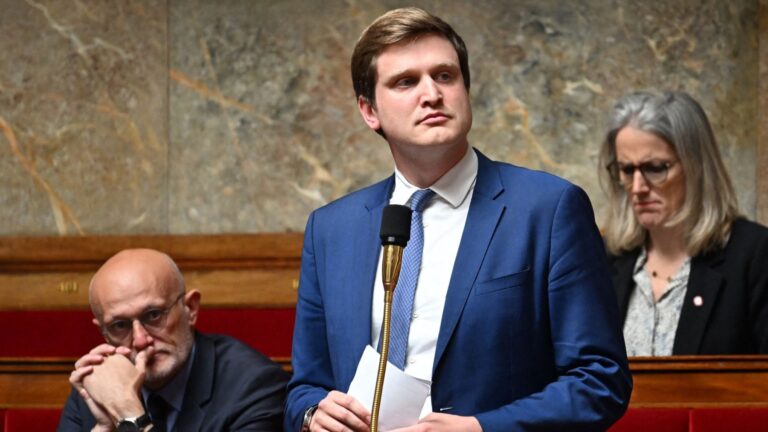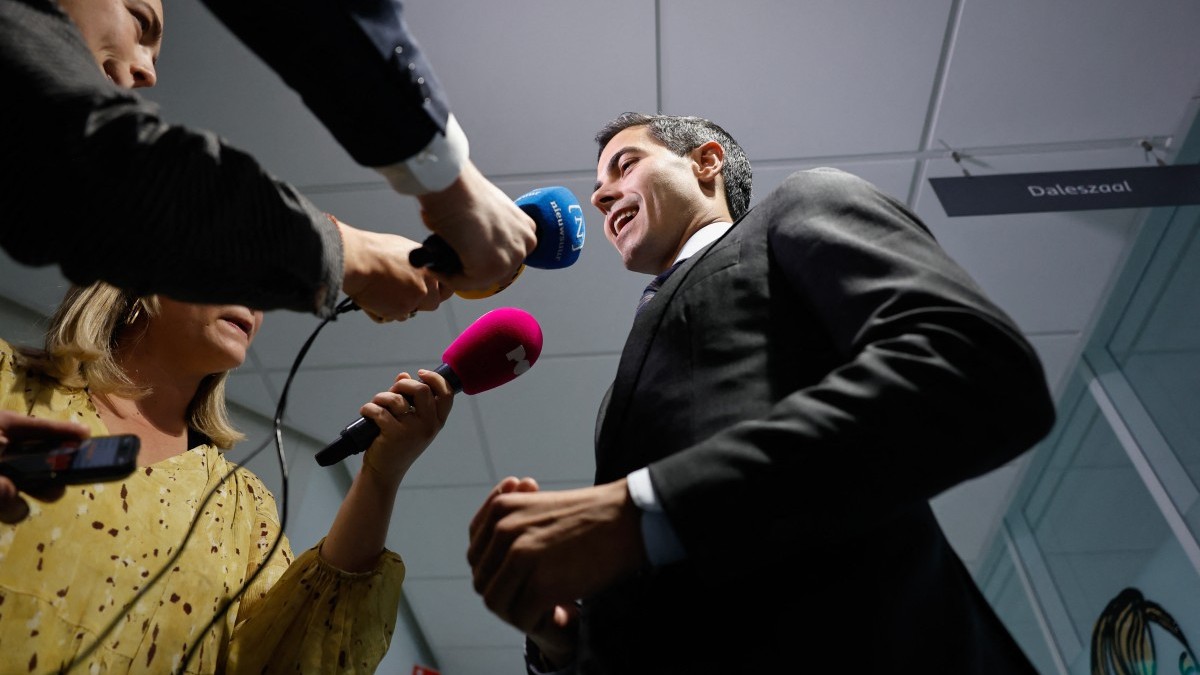
Leader of D66 (Democrats 66) Rob Jetten speaks to journalists at the Lower House, the day after the Dutch parliamentary election vote, in The Hague, on October 30, 2025.
Simon Wohlfahrt / AFP
The Dutch right has been shut out of the next government, after three parties—the progressive-liberal D66, Christian-democratic CDA and liberal VVD—last night agreed on a coalition deal.
So too, at least, has the merged GreenLeft–Labour Party. Yet conservatives are still fearful that the Netherlands’ next political chapter will be a negative one.
Rob Jetten (D66) is likely to be the next prime minister after securing this deal. Upon (just) overtaking Geert Wilders’ PVV in last year’s national election, he hailed that “it is possible to beat the populist movements.” Yet his coalition hardly represents a total victory over the right.
His, quite unusually in Dutch politics, is to be a minority coalition, meaning it will have to work with opposition parties to pass legislation. It also lacks a majority in the Senate, which will no doubt create difficulties in getting laws approved there, too.
Wilders is not currently in the strongest position to push back against liberal policies, his party having just lost seven MPs. But other parties, including the Forum for Democracy—which gained four seats in the October election—and JA21—which almost secured a seat in the new cabinet, before being blocked by Jetten—will continue to apply pressure, especially on the issue of migration.
The coalition last night earmarked migration as one of its priority issues, as well as affordable housing. But, writing for europeanconservative.com in December, NieuwRechts editor Daniel de Liever stressed that its three parties “were central in shaping the policies that produced the crises now dominating Dutch politics: mass migration, the farmer and nitrogen crisis, the housing shortage, and accelerating climate regulation,” adding:
The document produced by CDA and D66 also does not strengthen confidence that these parties are willing to break with the [Mark] Rutte-era status quo.
Wilders also said on Tuesday that he will not be “playing along with Jetten’s gang,” and will instead be offering “resistance against the destruction of the Netherlands.”