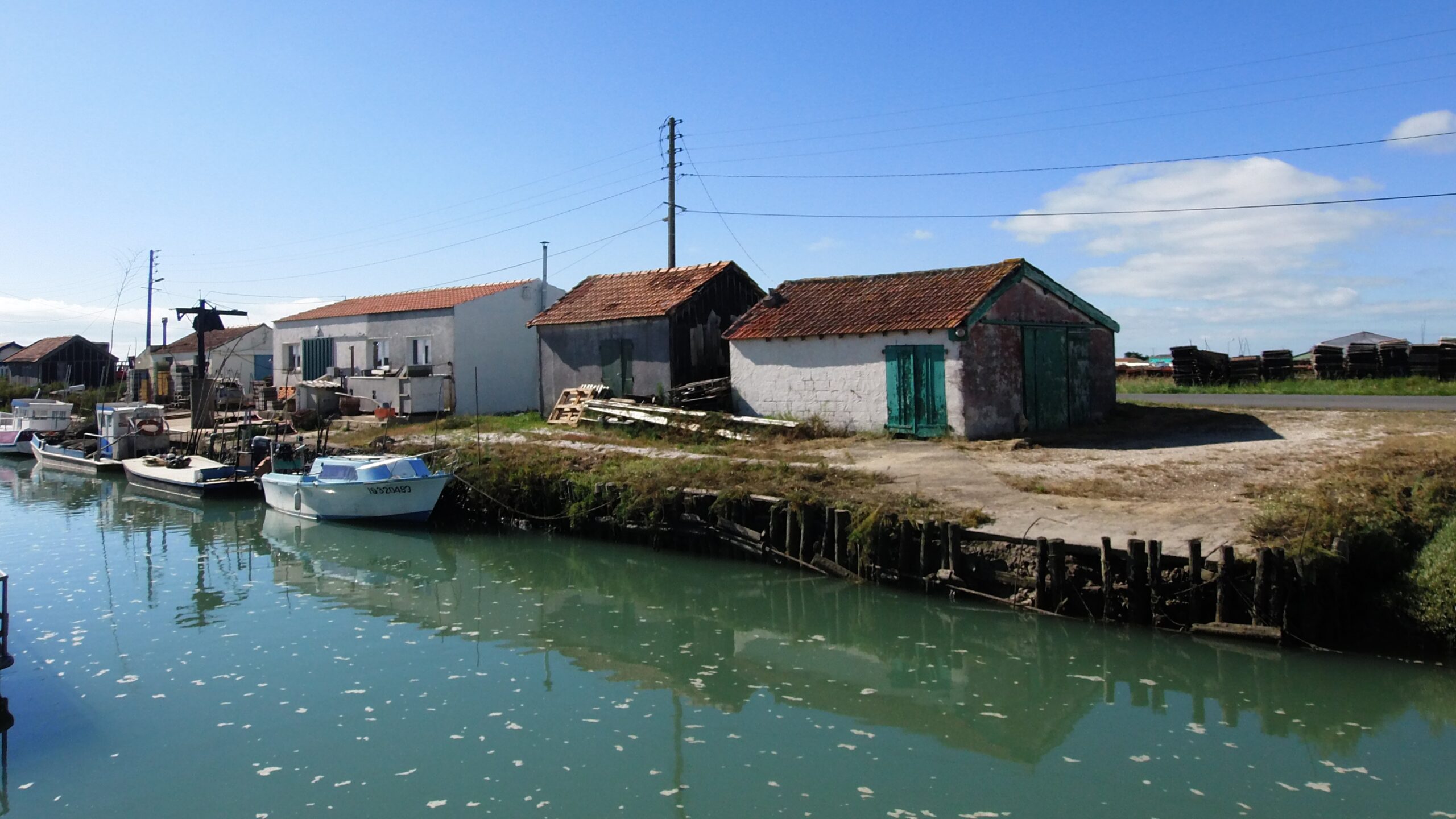
Dolus d’Oléron, Charente-Maritime, France
By Nataloche – Own work, CC BY-SA 4.0, https://commons.wikimedia.org/w/index.php?curid=50186305
President Macron said he was “shocked” by the November 5th vehicle-ramming attack on the island of Oléron, off the Atlantic coast. As evidence mounts against the perpetrator, the authorities are increasingly embarrassed by the suspect’s ‘religious’ motives.
On Wednesday, at around 9:30 a.m., a man in his thirties injured ten people by deliberately crashing his vehicle into them in an incident that lasted around 35 minutes. He was eventually arrested and taken into custody after setting fire to his car and opening a gas cylinder.
This time, the press was quick to point out that the suspect was “of Caucasian origin”—a description that has no particular legal significance in France, but which serves to dispel any suspicion of ‘racism’ regarding the attacker’s possible foreign origin. He is indeed a French national, goes by the name of Jean Guillot and has a ‘European’ profile: he is tall, white and blond.
According to several witnesses, the man shouted “Allahu Akbar” as he charged at his victims. For the time being, it has not been deemed necessary to refer the case to the national terrorism prosecutor’s office. However, there are clear signs of Islamist radicalisation, according to the initial findings of the investigation. Although the man is not known to the authorities as a potential terrorist, he claims to have radicalised himself on the Internet. According to Le Figaro, the suspect explained during his arrest that he had been searching for spiritual answers. In police custody, he stated that he had recently discovered Islam and that Allah had entrusted him with a mission. The circumstances of this radicalisation and the motivation behind his actions remain to be determined, but at this stage, the modus operandi is reminiscent of the Nice attacks.
He was also “known for his alcohol and drug-fuelled escapades” and lived alone and in isolation, according to Christophe Sueur, mayor of Saint-Pierre-d’Oléron, one of the towns affected by the attacker’s rampage.
As expected, investigators are also looking into the possibility of mental illness, which Sueur, who met him, denies.
The case could well take a political turn. Among the ten victims—none of whom died, although four are in serious condition—is the 21-year-old parliamentary assistant to Rassemblement National (RN) MP Pascal Markowsky, who was out jogging. She is very seriously injured, suffering from multiple fractures and a head injury.
The inhabitants of the island of Oléron are still in shock. The quiet, elegant resort, very popular with a section of the Parisian upper middle class, had until now seemed immune to the turmoil and atmosphere of violence that prevails elsewhere in France. “We no longer feel safe anywhere,” said one resident.