Viktor Orbán
Peter Kohalmi / AFP
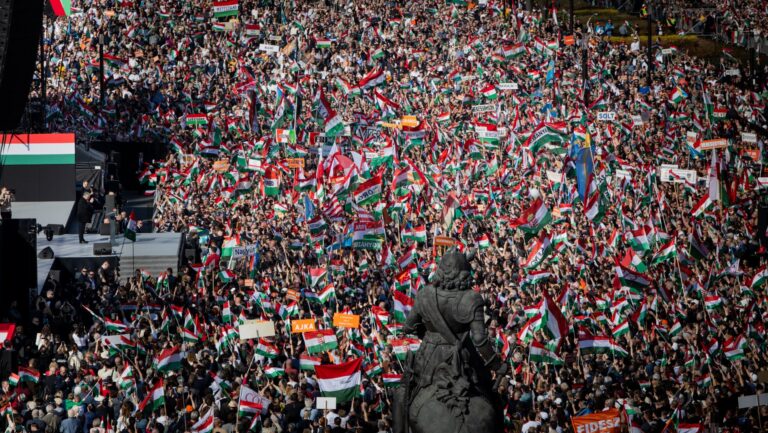
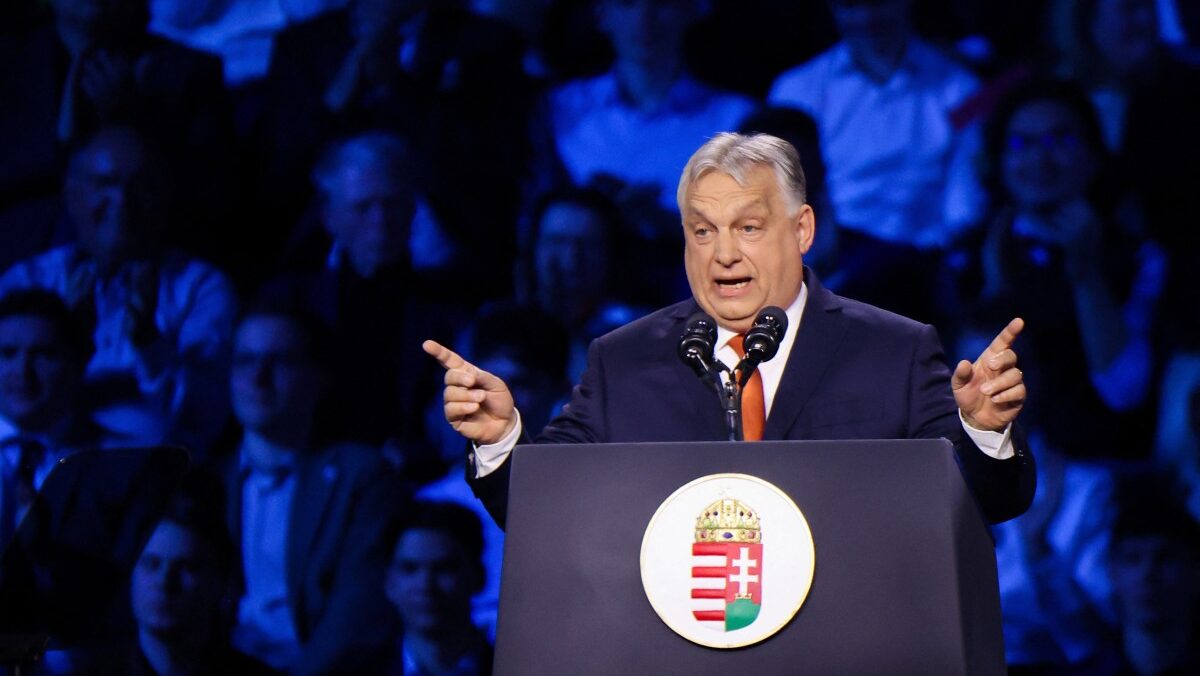
Hungary’s election campaign is now dominated by claims of foreign interference, with Viktor Orbán’s government accusing Kyiv, Brussels, and parts of Germany’s political class of trying to force a change of power in Budapest.
Fidesz has made the accusation the central claim of its final campaign push. Máté Kocsis, the parliamentary leader of the ruling party, says Hungarians face a simple choice: either keep a government that defends “national sovereignty” or elect one prepared to follow what he calls Brussels’ “war policy.”
Kocsis accuses Ukraine, the European Commission, and governments such as Germany’s of trying to bring Péter Magyar and his Tisza party to power. He says that a change of government would mean backing Ukraine’s accession to the European Union, increasing military aid to Kyiv, and abandoning the energy policy that has allowed Hungary to keep exemptions from sanctions and continue buying cheaper Russian gas and oil.
🇭🇺 Máté Kocsis: The stakes of the election are high, there are efforts from abroad to change the government in Hungary, with actors in Kyiv, Berlin and Brussels seeking a pro-Ukraine leadership.
— Zoltan Kovacs (@zoltanspox) April 9, 2026
🌍 The @Fideszfrakcio leader said Ukraine supports a change in government to secure… pic.twitter.com/20ZzyiKFDq
The dispute follows more than two years of conflict with Brussels over Ukraine. Orbán has blocked or delayed several aid packages, opposes letting Ukraine join the EU, and accuses the Commission of trying to isolate Hungary politically within the bloc.
The government reinforced that stance with a 2025 national consultation opposing Ukraine’s EU membership, followed by a parliamentary vote rejecting further aid and accession talks. The dispute is now central to the campaign.
Recent weeks have also seen leaks and media campaigns targeting Foreign Minister Péter Szijjártó, including recordings of calls with Russian Foreign Minister Sergei Lavrov, presented by some in Brussels as evidence of coordination with Moscow.
The material released so far, however, shows little beyond routine diplomatic exchanges, with Szijjártó outlining Hungary’s position on sanctions and Ukraine.
The most cited passage is a remark in which Szijjártó offers to send Moscow a European document related to Ukraine’s accession process. But there is still no evidence that the document was secret, classified, or different from material routinely shared between governments. Nor is there any proof that Budapest handed over sensitive information capable of affecting EU decisions.
The focus on the calls also serves a political purpose. It reinforces a view increasingly common in Brussels: that Orbán is acting as an outsider within the EU and that Hungary should be isolated if it refuses to change its position on Ukraine.
The European Commission is already looking for ways to move ahead with Ukraine’s accession without Budapest. Several governments have signalled a preference for a Hungarian administration more aligned with the EU line.
The pressure is not only coming from Brussels. The Hungarian government claims that a network of social media accounts linked to Ukraine is operating in support of the opposition. In recent months, there have also been leaks of Szijjártó’s private conversations and accusations of espionage linked to Ukraine. Budapest insists that all of this is part of the same effort to weaken the government before the election.
The result on the 12th will decide whether Hungary deepens its clash with Brussels or moves back into line on Ukraine. If Orbán wins, the confrontation is likely to intensify. If he loses, the next government will have to balance EU and Ukrainian pressure against an electorate that still treats national sovereignty as a red line.