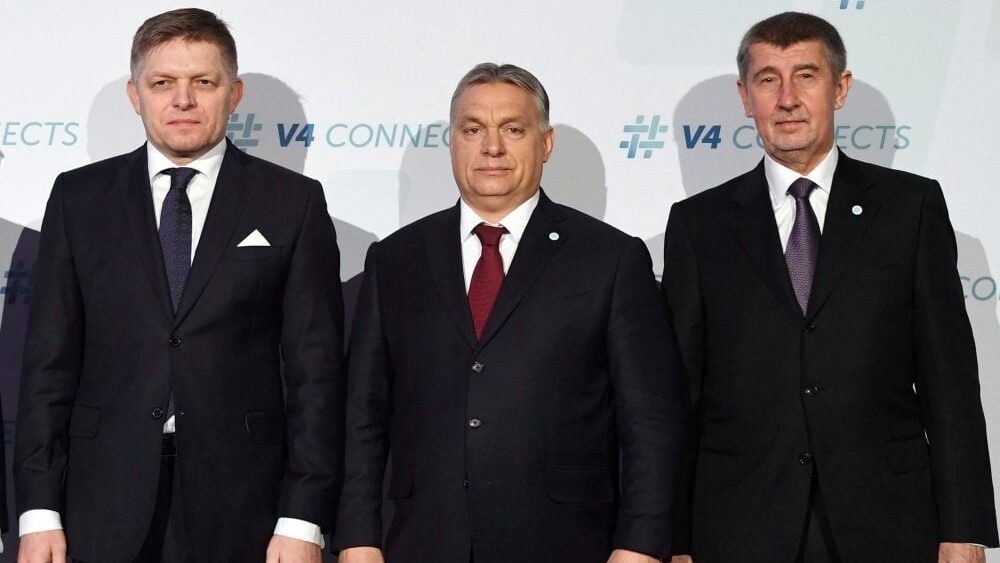
Slovakian PM Robert Fico, Hungarian PM Viktor Orbán, and Czech election winner and likely next PM Andrej Babiš
@IvoTONIUT on X, 5 October 2025
Hungary is seeking to forge a new political alliance within the European Union alongside Czechia and Slovakia that would challenge Brussels’ pro-Ukraine stance, according to Balázs Orbán, senior advisor to the Hungarian Prime Minister. The goal is to slow the EU’s multi-billion-euro policy in favor of Ukraine and give a stronger common voice to the skeptical states within the bloc.
PM Viktor Orbán’s political director confirmed that Budapest wants to “join forces” with its regional partners to create a “stronger common voice” in Brussels. “I think it will come—and be more and more visible,” he said, adding that the group hopes to revive the spirit of the “Visegrad 4,” which once united Hungary, Czechia, Slovakia, and Poland in opposition to mandatory EU migration quotas during the 2015 migrant crisis, which worked very well.
A change of government in Prague is expected to strengthen this cooperation. Following early October’s parliamentary election, Andrej Babiš’s ANO party won decisively, paving the way for the former Czech prime minister—a political ally of PM Orbán—to return to power. Babiš is considered sympathetic to Hungary’s approach in Brussels and could back Orbán’s course in future EU councils. Slovak Prime Minister Robert Fico also aligns with Orbán’s position, advocating fewer sanctions and more dialogue with Moscow rather than additional economic pressure.
If the emerging “Visegrad 3” bloc takes shape, it could become a serious obstacle to future EU aid packages for Ukraine. Orbán has already earned a reputation in Brussels as a persistent brake on sanctions on Russia and financial assistance to Kyiv. With the support of Prague and Bratislava, his influence in EU decision-making could grow substantially.
EU foreign policy chief Kaja Kallas rejects any form of concession to Moscow. “Our message to Russia is simple: The war is unwinnable,” she recently told the European Parliament. Calling for increased political, economic, and military pressure on the Kremlin, she has repeatedly warned against what she terms a “false peace.” Despite considerable effort by President Trump and the “peace-camp” headed by Viktor Orbán, Kallas called for the EU to aim for a long conflict and resist the peace negotiations in the making.
Beyond cooperation in the European Council, Balázs Orbán said Hungary also seeks to expand alliances in the European Parliament. The Patriots for Europe group is exploring cooperation with the European Conservatives and Reformists and the Europe of Sovereign Nations. He suggested that the centrist European People’s Party (EPP) may eventually turn against Commission President Ursula von der Leyen, potentially breaking the left-centrist majority that backed her reelection.