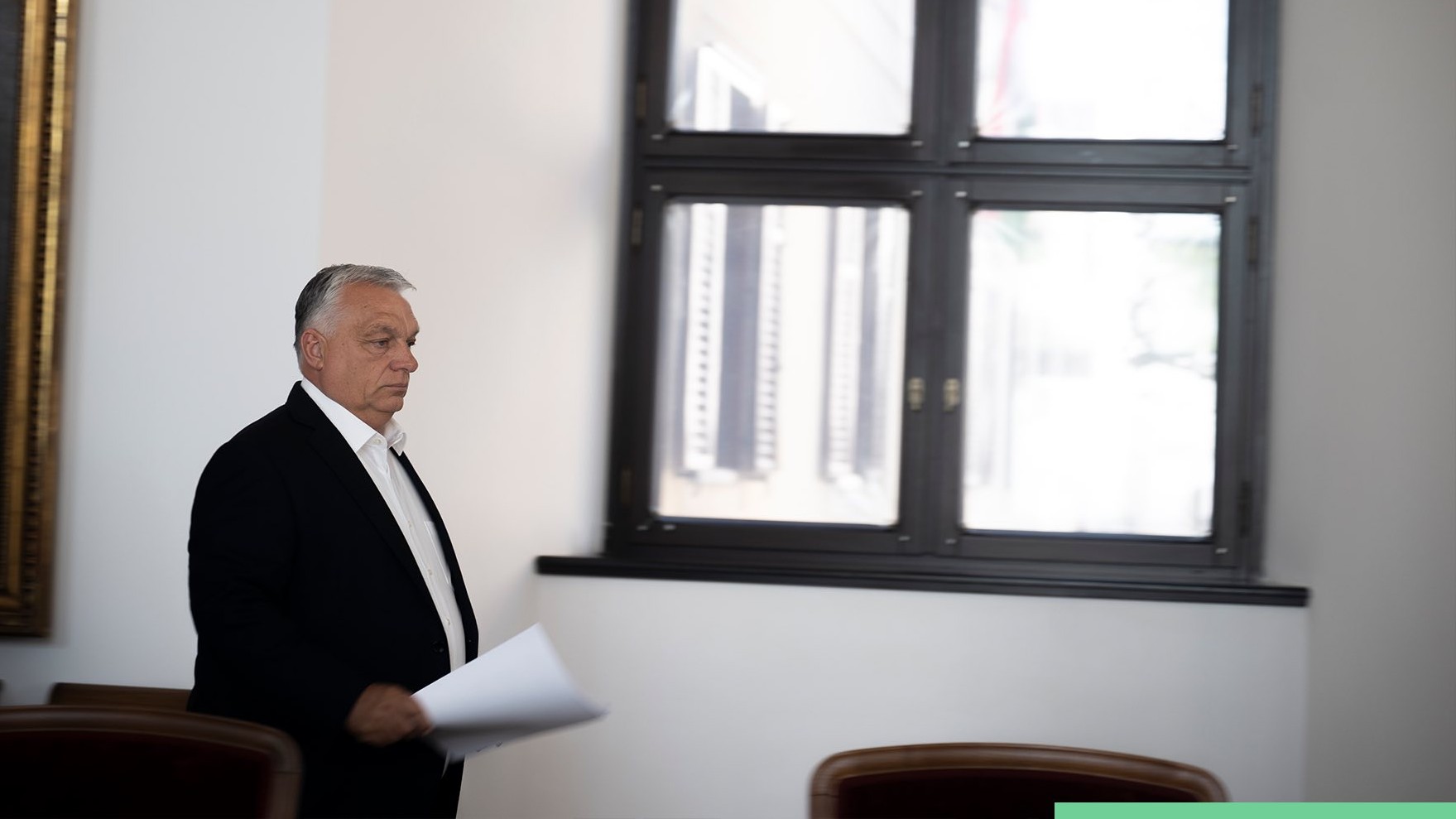
Hungarian Prime Minister Viktor Orbán
Orbán Viktor on Facebook, July 30, 2025
Hungarian Prime Minister Viktor Orbán has accused the European Union of being reduced to a powerless spectator in efforts to end the war in Ukraine, calling instead for a direct EU-Russia summit.
“The only sensible action for EU leaders is to initiate an EU-Russia summit, based on the example of the U.S.-Russia meeting. Let’s give peace a chance!” Orbán declared on his X account on Tuesday, August 12th, just three days before U.S. President Donald Trump and Russian President Vladimir Putin meet in Alaska.
Just four days ahead of the historic summit between President Trump and President Putin, the European Council sought to issue a statement in the name of all EU heads of state and government.
— Orbán Viktor (@PM_ViktorOrban) August 12, 2025
Before the liberal-mainstream chorus begins its newest rendition of their favourite…
The upcoming U.S.-Russia talks—the first between their presidents since the 2022 Russian invasion of Ukraine—will take place without any EU participation.
For Orbán, that is the crux of the problem. Referring to a joint declaration issued on Tuesday and backed by the other 26 EU member states, but rejected by Hungary, the prime minister stressed that “the statement attempts to set conditions for a meeting to which leaders of the EU were not invited.”
The fact that the EU was left on the sidelines is sad enough as it is. The only thing that could make things worse is if we started providing instructions from the bench.
Though the EU statement welcomed the efforts of Donald Trump to end the war, it also insisted that “the path for peace cannot be decided without Ukraine” and that “international borders must not be changed by force.”
The text referred to the fact that Trump and Putin will meet without the participation of Ukrainian leader Volodymyr Zelensky, and that the U.S. president has talked of Russia and Ukraine “swapping” territories as part of a deal.
For much of the war, the EU has lacked any independent strategy to end the conflict, focusing almost entirely on arming Ukraine while relying on Washington for broader diplomatic initiatives.
Now, with Trump—unlike his predecessor Joe Biden—openly seeking a negotiated settlement, the EU is scrambling to react but has been left watching from the sidelines, reduced to commenting on talks in which it has no part.
Hungary has consistently rejected military assistance to Ukraine which it believes only fuels the war. Orbán’s government has also opposed Kyiv’s EU accession ambitions, arguing that admitting Ukraine would pose both an economic and security threat to the EU.
Meanwhile, Trump has downplayed expectations for a breakthrough in Alaska, calling it “really a feel-out meeting a little bit” to see “what he [Putin] has in mind and if it’s a fair deal.”
Trump insisted land swaps would need to take place, but that he would also tell Putin that “you’ve got to end this war.”
Russia currently has full control of the Luhansk region as well as the Crimean peninsula, which it annexed in 2014. Three other regions, Donetsk, Kherson, and Zaporizhzhia are under partial Russian occupation.
The U.S. president said he would share any proposal “with the European Union leaders and to NATO leaders and also to President Zelensky,” adding: “I may say—lots of luck, keep fighting. Or I may say, we can make a deal.”
European leaders plan to speak separately on Wednesday with both Zelensky and Trump.
Ukrainian President Volodymyr Zelensky has rejected any territorial concessions, and stated on Tuesday that Russia was not seeking peace in Ukraine but is instead preparing new attacks.
We see that the Russian army is not preparing to end the war. On the contrary, they are making movements that indicate preparations for new offensive operations.