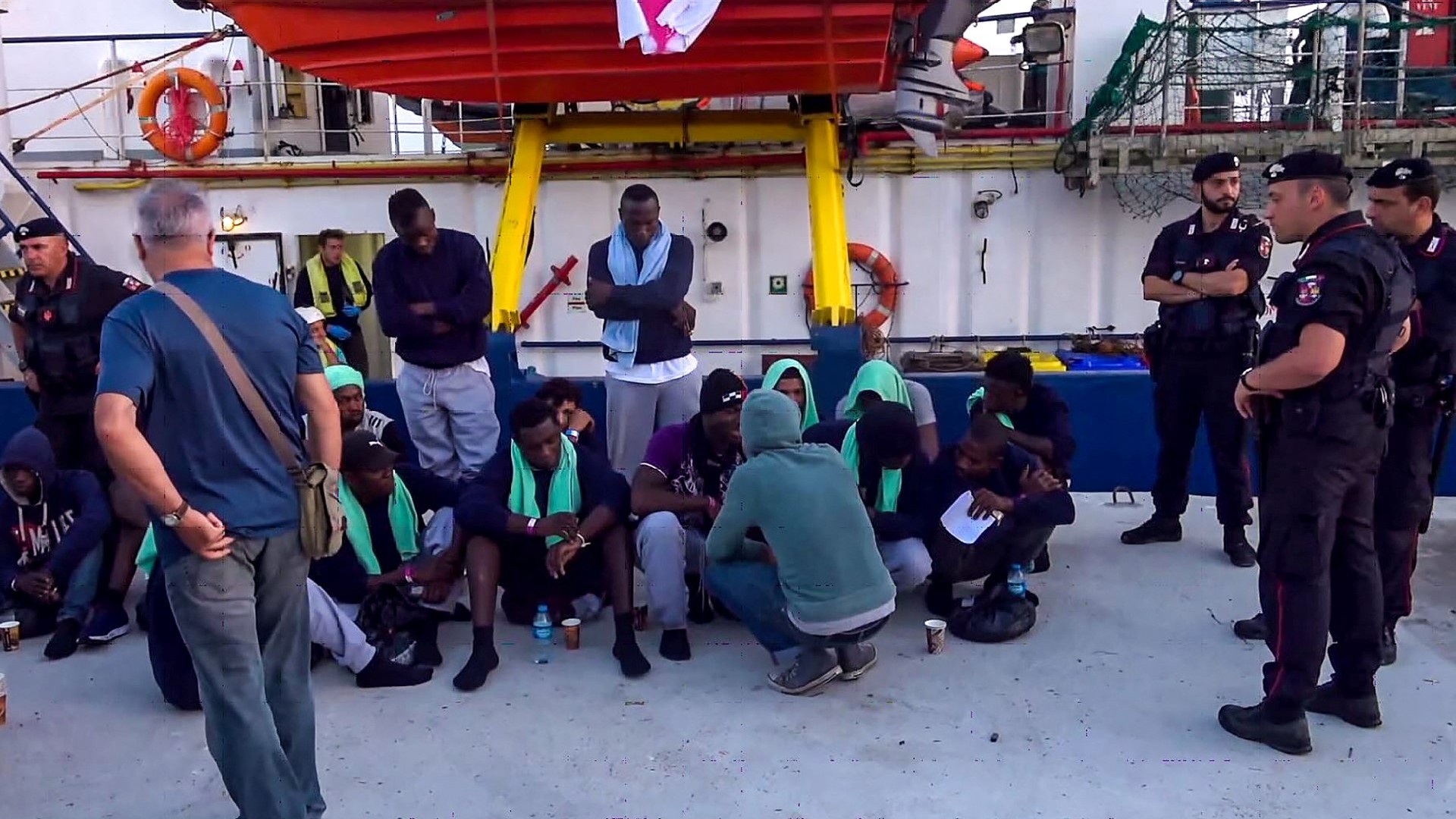
Migrants disembarking from a Sea-Watch ship at the Italian port of Lampedusa in Sicily on June 29, 2019
SCREENSHOT OF A VIDEO RELEASED BY LOCAL TEAM VIA AFP
A court in Palermo has ordered the Italian state to pay €76,000 in compensation to the German NGO Sea-Watch for the 2019 seizure of its vessel, the Sea-Watch 3, prompting fury from Prime Minister Giorgia Meloni and reigniting tensions over migration policy and judicial activism.
The ruling concerns the dramatic events of June 2019, when the Sea-Watch 3 docked at Lampedusa in defiance of a government ban after spending two weeks at sea with dozens of migrants on board.
During the manoeuvre, the vessel knocked aside a police boat. The ship was subsequently impounded for five months, and its captain, Carola Rackete, was arrested. Proceedings against her were later dropped in 2021.
The ministries of interior, transport, and economy, along with Sicilian authorities, have now been ordered to pay damages and legal costs for what the court deemed an “unjust blockade.”
Sea-Watch celebrated the decision, declaring, “The law once again sides with civil disobedience.”
Meloni, who was not in office at the time of the incident but has since made border security a central plank of her premiership, said in a video statement that the ruling left her “literally speechless.”
She questioned whether judges were tasked with upholding the law “or rewarding those who boast about breaking it,” adding that her government would continue to defend “the borders and the safety of citizens.”
Deputy Prime Minister Matteo Salvini also condemned the judgement, telling supporters on social media that Italians were being forced to pay “€76,000 of your money” to Sea-Watch. “Is this normal?” he asked, calling for a reform of the justice system.
The case has sharpened concerns within government circles that sections of the judiciary are sabotaging efforts to curb irregular migration.
In recent days ministers approved draft legislation allowing for a potential ‘naval blockade’ in cases of serious threats to public order or exceptional migratory pressure. The proposal would enable authorities to prevent migrant boats from entering Italian waters and transfer those on board to third countries.
NGO vessels frequently operate in sensitive search-and-rescue zones, including areas designated to Libya, while failing to coordinate with local authorities. Many of the ships active in the central Mediterranean sail under the German flag and have received funding from Berlin in recent years.