Photo: Lukas Plewnia from Berlin, Deutschland, CC BY-SA 2.0, via Wikimedia Commons
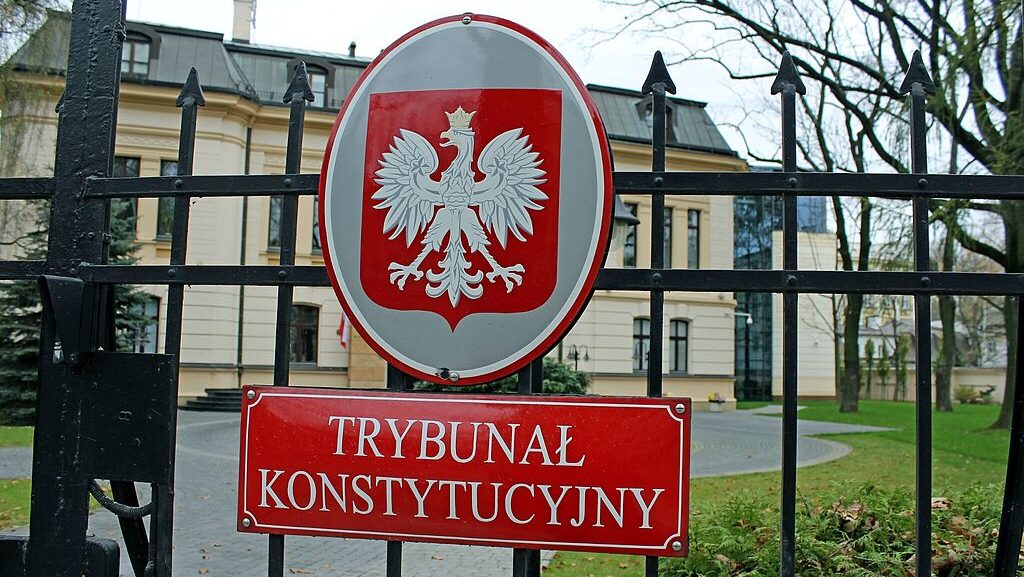
Sovereigntist forces were celebrating in Poland and beyond yesterday, as the country’s constitutional court said European Union energy and climate regulations are incompatible with the Polish constitution and breach national sovereignty in determining energy policy.
The landmark ruling on Tuesday, June 10th, is a victory not only for the conservative lawmakers who had turned to the Constitutional Tribunal over the imposition on Poland of the European Union’s Green Deal policies, but for the whole country, and indirectly, for all those European countries that are resisting the federalist, centralizing push of the Brussels institutions.
It is certainly a win for Polish citizens because, as PiS MP Sebastian Kaleta pointed out on X, it will (potentially) result in “hundreds of billions in savings for the Polish economy.” But it is also important for all sovereigntist Europeans because it sent the message that EU law cannot supersede the constitutions of the member states, and that the EU has not been given the competence under the treaties to decide, without a member state’s consent, which energy sources it can use and “what fiscal burdens may be imposed on individual sources.”
The ruling is unlikely to have any real effect for now, considering that the current government, a coalition led by liberal pro-EU prime minister Donald Tusk, does not recognise the Constitutional Tribunal’s legitimacy, as it claims that some of the judges sitting on the court were unlawfully appointed by the former Law and Justice (PiS) administration. The government will therefore not publish the ruling—which enters into force upon its publication—nor will it implement it.
However, as Notes from Poland pointed out, the ruling could still have an effect in Polish politics, thanks to president-elect Karol Nawrocki, who takes office in August. PiS-backed conservative Nawrocki has said that the Tribunal’s decision on this case could pave the way for lower electricity prices by as much as 33%, which was one of his campaign promises. In addition, Nawrocki also pledged to hold a referendum on withdrawing from the EU’s Green Deal, and has reaffirmed his support for coal, Poland’s main source of electricity generation, which is widely used for heating homes.
Poland is not the only country where patriotic politicians have fought Brussels over energy policy diktats. Hungary’s Orbán government has been in a dispute with the European Commission for years over its energy policy, in particular with regard to its gas imports from Russia as well as its utility costs reduction programme that has kept Hungarian household energy prices the lowest in the EU. The Commission took the Hungarian government to court, but in 2020, the European Court of Justice (ECJ) ruled that Hungary’s law on utility fees does not violate European Union regulations in prohibiting energy companies from transferring special taxes and transaction fees to private consumers.
But besides Budapest and Warsaw, more and more countries in Europe are waking up from the ‘net zero’ fever dream as the European Union continues to shoot itself in the foot with the expansion of the Emissions Trading Scheme (ETS), which functions as a de facto climate tax, and is so high that it exceeds the entire price of natural gas in the United States. Starting in 2027, the European Union will expand its emissions trading system into new territory with the launch of ETS2, which will directly impact ordinary citizens as Brussels, under the guise of ‘saving the climate,’ as it will steadily make gasoline, diesel, and gas for heating more expensive. Pushing back against this madness, patriotic politicians, from Spain to Italy and beyond, are stepping up their efforts to reclaim their energy sovereignty.