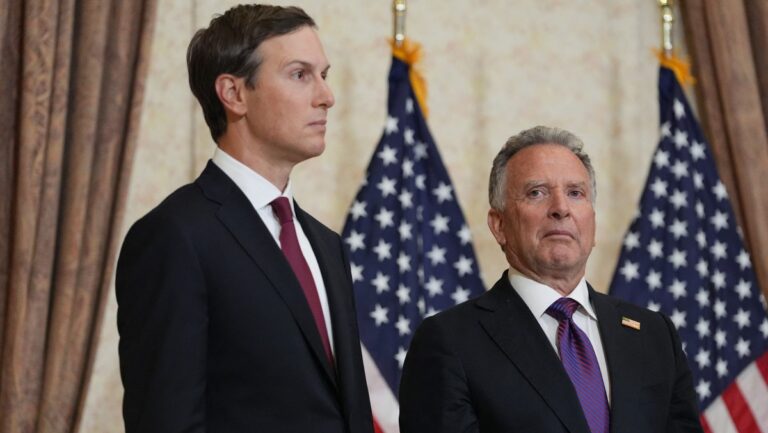
Food stalls in Little Market Square in Kraków, Poland, 2019.
Kgbo, CC BY-SA 4.0, via Wikimedia Commons
A nationwide inspection has uncovered alarming levels of non-compliance among Ukrainian food products sold in Poland, fuelling growing criticism of the European Union’s decision to further liberalise trade with Ukraine.
According to a report by the Agricultural and Food Quality Inspection (IJHARS), checks carried out in September across 52 shops—42 physical and 10 online—found that 41 of them were selling products in breach of Polish regulations.
Out of 359 batches examined, the majority failed to meet labelling or quality requirements. Inspectors most frequently identified “a lack of labelling in Polish, incomplete ingredient lists, incorrect expiration dates, and missing allergen information.”
The most serious violations were found in fish preserves, 77.8% of which did not comply with Polish standards. Confectionery followed with 71.2%, while fruit and vegetable preserves showed irregularities in 57.9% of cases.
Even meat products—where nearly 59% of samples failed inspection—were often missing proper expiry information. Non-alcoholic drinks also performed poorly, with problems found in 64% of cases.
These revelations have intensified political criticism of Brussels’ trade stance.
Just days earlier, the European Council approved new measures lowering tariffs on dozens of Ukrainian agricultural goods, including meat, dairy, fruit, and vegetables. The move was hailed in Brussels as a gesture of solidarity with Kyiv but condemned in Poland as a blow to domestic agriculture and consumer safety.
“This delivers another powerful blow to Polish agriculture. … This is not Ukrainian family farming; it is large international corporations cultivating hundreds of thousands of hectares. No country in Europe can compete with that,” conservative opposition MP Zbigniew Kuźmiuk said.
Krzysztof Bosak, co-leader of the right-wing Konfederacja party, accused both the current and previous Polish governments of “betraying the interests of Polish farmers” by supporting the EU’s trade policies.
Speaking at a press conference on Monday, October 20th, Bosak pointed to drastic quota increases—such as a fivefold rise in sugar imports (from 2,000 to 10,000 tonnes) and a sixfold increase in honey (from 6,000 to 35,000 tonnes).
“These agreements allow goods containing banned pesticides and failing to meet EU quality standards to enter our market,” Bosak warned. MEP Tomasz Buczek added that the new trade terms threaten Poland’s “food security,” stressing that domestic farmers should be the ones supplying Polish shops.
Po zmianach wprowadzonych do umowy handlowej UE-Ukraina przez organy unijne następuje drastyczny wzrost kwot kontyngentów:
— Tomasz Buczek (@buczek_tomasz) October 20, 2025
-cukier z 20 tys. ton do 100 tys ton (5x)
-miód z 6 tys. ton do 35 tys ton. (blisko 6x)
-jaja z 6 tys. ton do 18 tys ton (3x)
-sok jabłkowy z 10 tys. ton do… https://t.co/wSLI8kVPSD pic.twitter.com/K37fGFo4PU
The controversy echoes wider concerns in Central Europe about the EU’s handling of Ukraine’s integration.
Hungarian Prime Minister Viktor Orbán has repeatedly warned against fast-tracking Ukraine’s accession to the bloc, arguing that doing so without proper economic alignment would “seriously damage the EU’s economy” and place an unbearable financial burden on existing member states.