Chancellor Christian Stocker
Ludovic MARIN / AFP
Austria’s governing centre-right People’s Party (ÖVP) has plunged to a historic low in the latest opinion survey, intensifying pressure on Chancellor Christian Stocker and his fragile coalition.
The poll, published on the news website oe24, shows the ÖVP at just 20%—a one-point drop on the previous week. That places the party almost level with their coalition partner, the Social Democrats (SPÖ), who remain stuck on 19%.
Both parties are now polling far below the levels they achieved in last year’s election (26% and 21%), and are far away from the numbers they received when they dominated Austria’s party political scene decades ago.
Sonntagsfrage NR Wahl. Lazarsfeld für OE24TV. Desaströs für ÖVP und SPÖ. #glaskugel https://t.co/Nm65Av9a0i pic.twitter.com/cxLsoMuAGz
— Heimo Lepuschitz (@heimolepuschitz) October 3, 2025
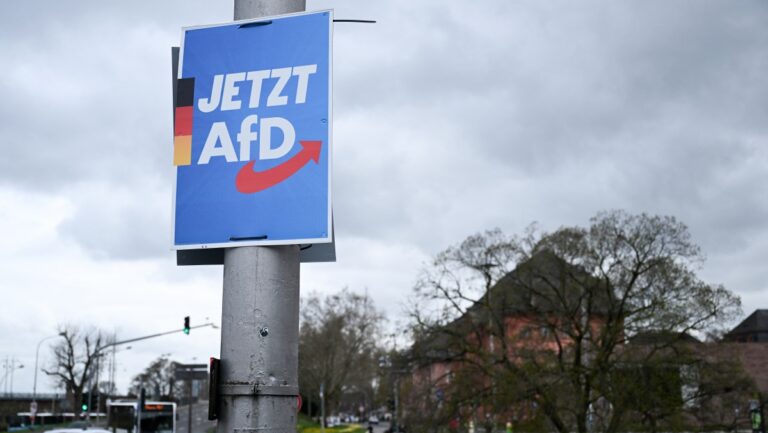
The political landscape is shifting dramatically as the main opposition right-wing Freedom Party (FPÖ) continues to dominate. Led by Herbert Kickl, the party stands at 36%, only slightly below its recent high of 38%. That makes it by far the strongest political force in the country, with momentum firmly on its side.
Other parties are faring little better. The liberal NEOS—the most junior partner in the current coalition government—has slipped to 9%, falling behind the Greens on 10%.
Taken together, the governing coalition of ÖVP, SPÖ, and NEOS could still scrape a majority of 93 seats if an election were held today. However, any further losses for either the centre-right or NEOS would threaten the survival of the alliance.
Underlying the political turbulence are multiple crises weighing on the government. Inflation remains stubbornly high, Austria is running a record budget deficit, and economic growth has slowed to a crawl.
Meanwhile, tensions with Russia and wider European instability are compounding the sense of insecurity among voters.
The personal popularity of party leaders reflects the same trends. In the so-called “chancellor question,” Kickl commands the support of 29% of respondents—far ahead of Stocker on 11% and SPÖ leader Andreas Babler on 10%.
The figures point to a dramatic erosion of trust in Austria’s traditional mainstream parties, with oe24 calling the poll results an “embarrassment.”
For the ÖVP, the poll marks a symbolic low point in its post-war history. Once the dominant force in Austrian politics, the party is now fighting to maintain relevance.