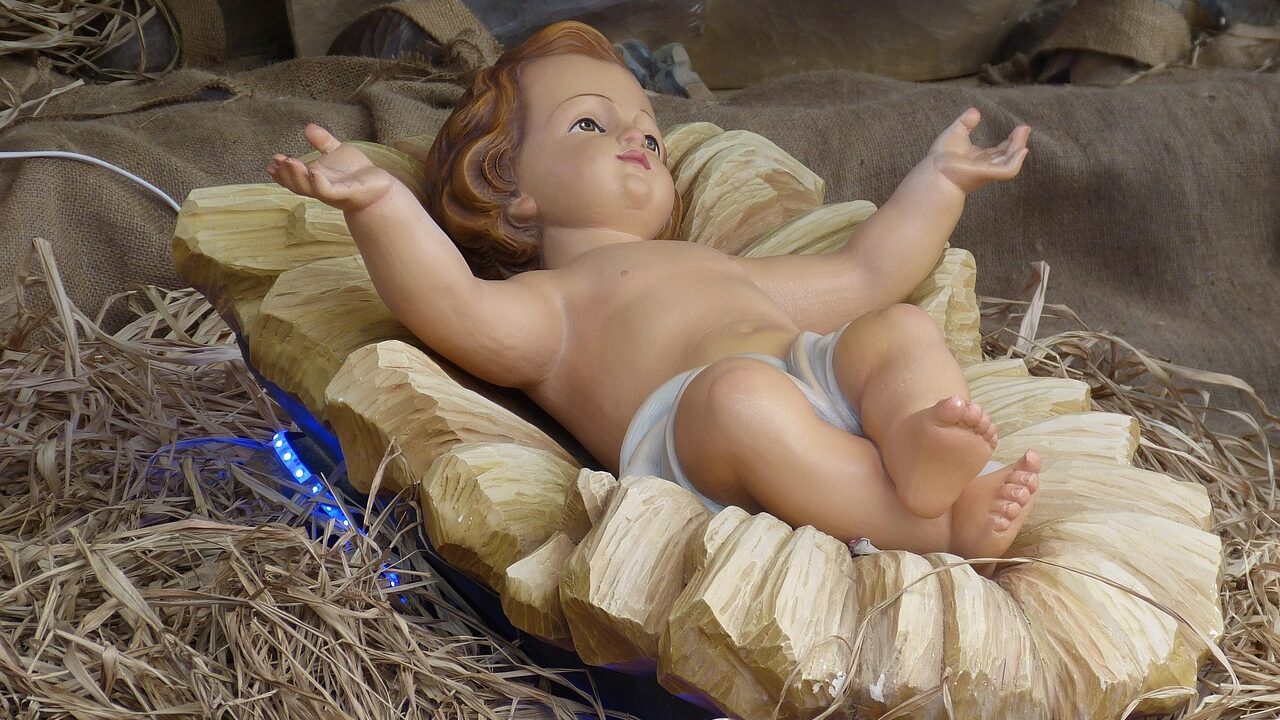
A nativity scene from Latin America was given to Pope Leo XIV to be displayed throughout the Christmas season at the Vatican, carrying a special message that particularly touched the pope: it represents the victory of life and invites us to pray for all abortions perpetrated throughout the world.
Traditionally, the Vatican receives nativity scenes and Christmas trees as gifts to be displayed in the buildings occupied by the pope and in St. Peter’s Square. The nativity scene decorating the Paul VI Hall in the Pope’s residence this year comes from Costa Rica and is entitled Nacimiento Gaudium.
The work combines Byzantine iconography and Franciscan figurines. Until Christmas morning, the Virgin Mary will be depicted as pregnant. On December 25th, she will be replaced by a traditional statue of Our Lady adoring the Baby Jesus.

The Costa-Rican artist Paula Senoto, who oversaw its creation, conceived it as a pro-life message: “Each of the twenty-eight thousand coloured ribbons decorating the nativity scene represents a life saved from abortion thanks to the prayers and support provided by Catholic organisations to many mothers in difficulty,” explained the pope in his speech to the delegations who came to present the nativity scene, showing particular personal interest in its installation. Originally planned for 2027 under the previous pontificate, the exhibition of the nativity scene was brought forward to 2025 by Pope Leo XIV, a decision welcomed by the artist, who expressed a sense of “urgency.” In addition to the traditional message of peace associated with Christmas, the artist wanted to launch “a call for life to be protected from the moment of conception.” For Paula Senoto, it is important that ‘the whole world’ sees this nativity scene and hears the message.
The babies saved, represented by the ribbons, were part of Operation 40 Days for Life, an annual campaign of prayer and action to try to dissuade women from having abortions during Lent.
The nativity scene was inaugurated in the presence of Signe Zeicate, wife of Costa Rican President Rodrigo Chaves, a country where the right to life applies from the moment of conception. Most abortions are prohibited there, except in cases where the mother’s life is in danger. The law changed in October 2025, as until then, abortions were permitted in cases where the pregnancy endangered the mother’s health. “The only reason an abortion can be performed without penalty is when there are only two options: the life of the mother or the life of the being inside her,” argues Rodrigo Chaves. In Central America, other countries, like Costa Rica, are maintaining their stance on defending life in their national legislation, despite external pressure. Countries such as Honduras, El Salvador, and Nicaragua have adopted a total ban on abortion, while Guatemala allows abortion when the mother’s life is in danger.
The pope then called on families to allow themselves to be touched, during the Christmas season, by the tenderness of the Child Jesus, inviting them to “eliminate hatred from our hearts.”