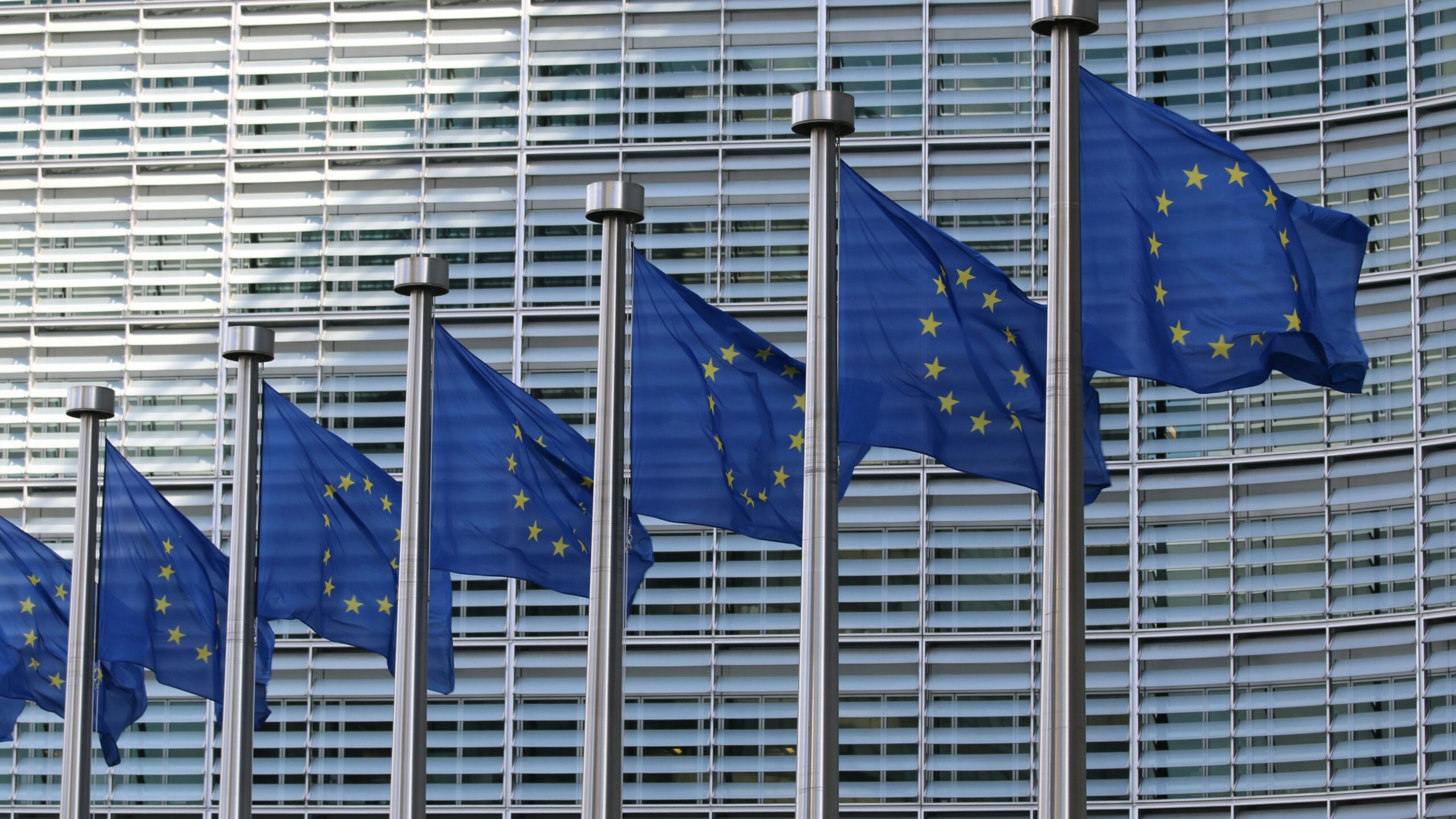
European Union flags on poles
Court hearings will begin on Friday, December 12th, in the ‘Qatargate’ corruption scandal, a whole three years after Belgian investigators first carried out raids. This, of course, is an indication of just how long Brussels’ latest fraud probe could drag on.
Qatargate refers to a criminal investigation that involved raids across Brussels in late 2022 and the arrests of half a dozen politicians for accepting Qatari bribes in exchange for influencing voting in the EU Parliament in favor of the oil-rich Gulf country. The prime suspects are former MEPs Eva Kaili—who last week bashed Belgium as “not a safe place” for politicians—and Antonio Panzeri, S&D members from Greece and Italy.
The Brussels Court of Indictment has been charged with assessing whether the investigation into alleged bribery was conducted properly, and over 20 parties involved in the case will present their arguments throughout the week.
Some establishment officials claim that Belgian prosecutors do not carry out investigations well enough and that, as one EPP MEP told Politico, they can be “a bit exaggerated.”
Indeed, the European Parliament’s legal affairs committee last week voted against lifting the immunity of an Italian Socialist lawmaker accused of being involved in the scandal, saying that Belgian prosecutors did not provide enough evidence. David Lee, who is co-founder of the European Business Association in Georgia, described this as typical of “the corrupt elite in Brussels.”
Norwegian writer Erik Dale, who was once an advisor at the Commission, added ahead of the Qatargate court hearings, that “revelations about the corruption at the heart of the European Parliament are overwhelming and highlight just how much a profound reform is needed to restore trust and sovereignty.” Although he also said “the system is built to prevent” change, which places voters in a possibly impossible position, and adds another argument to the discourse that questions the current form of the European Union.
I used to be an advisor at the Berlaymont.
— Erik Dale 🇳🇴 (@EuroDale) December 6, 2025
Now I’m spilling the beans on how the EU is deliberately designed so citizens can never hold it accountable or force real change from below.
Thread 👇 pic.twitter.com/xYWsm08mOm