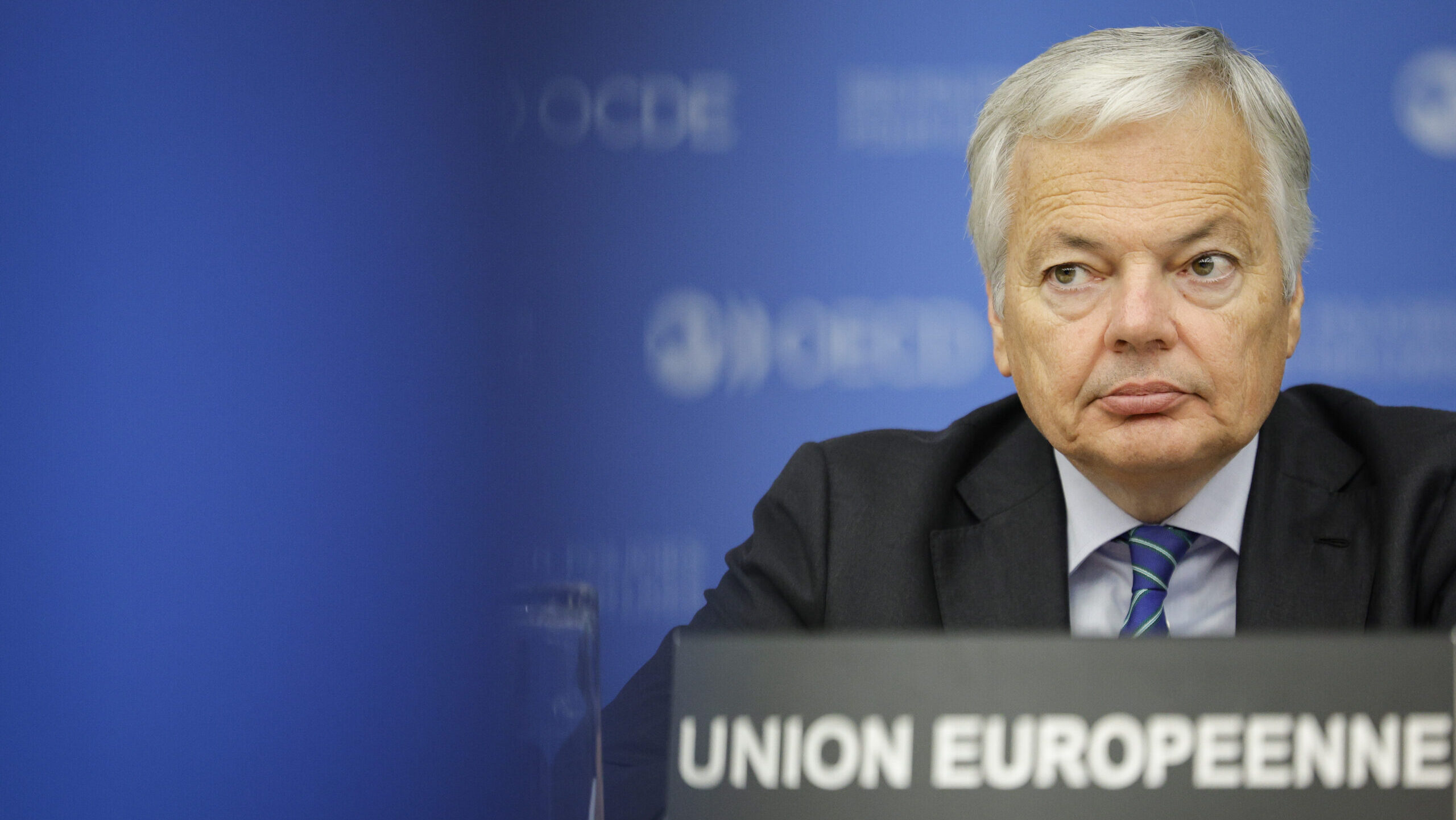
Former EU Justice Commissioner Didier Reynders
Photo: Geoffroy van der Hasselt / © European Union 2024. Source: EC – Audiovisual Service
While the EU Commission has been acting as if nothing happened for the past six months, Belgian investigators have been busy uncovering the details of what has been described as the country’s largest money-laundering scandal,‘Reyndersgate.’
At its center is former EU Commissioner for Justice Didier Reynders, the one responsible, ironically, for “upholding the rule of law” and opening the politically-biased infringement procedures against the conservative governments of Poland and Hungary.
The liberal (MR/Renew) politician is accused of laundering at least €1 million into his personal accounts over a decade, using the national lottery, which he oversaw as finance minister in the 2000s.
It all came crashing down in December last year, when Belgian prosecutors raided Reynders’ properties around the country the minute his EU Commission term, along with his diplomatic immunity, ended.
The former rule-of-law chief denies the allegations, while the von der Leyen Commission refuses to acknowledge them, but the case against him is still growing day by day.
Now, new revelations from Follow the Money and other investigative journalism sources indicate that Reynders’ operation might have extended far beyond the lottery.
On Monday, July 14th, the media reported that authorities also raided several properties of Jean-Claude Fontinoy, the former chairman of the Belgian Railways, who’s said to have been Reynders’ right-hand man for years, as well as both the home and the shop of well-known Brussels antiques dealer Olivier Theunissen, who welcomed Fontinoy as a customer “almost daily” for years.
Both series of raids occurred last month, but neither man has been formally named as a suspect yet. That’s only a matter of time, though, as Fontinoy has been suspected of taking part in many of Reynders’ numerous corruption scandals over the years.
For instance, Fontinoy and Reynders raised suspicion after they approved the “extremely” expensive renovations of the Liege and Mons railway stations. The former was also accused of illegally helping the former liberal minister distribute his campaign material during the 2012 and 2014 Belgian elections. At the same time, Fontinoy built up one of the country’s largest real estate empires over a suspiciously short period of time.
On the other hand, Theunissen’s possible involvement in the money-laundering scheme is much more hazy. We only know that the antiques dealer is said to have belonged to Reynders’ close entourage and had almost daily contact with Fontinoy. He also worked as a ‘consular’ or ‘commercial’ judge, which is usually a businessman without a law degree who takes part in corporate court cases as an advisor.