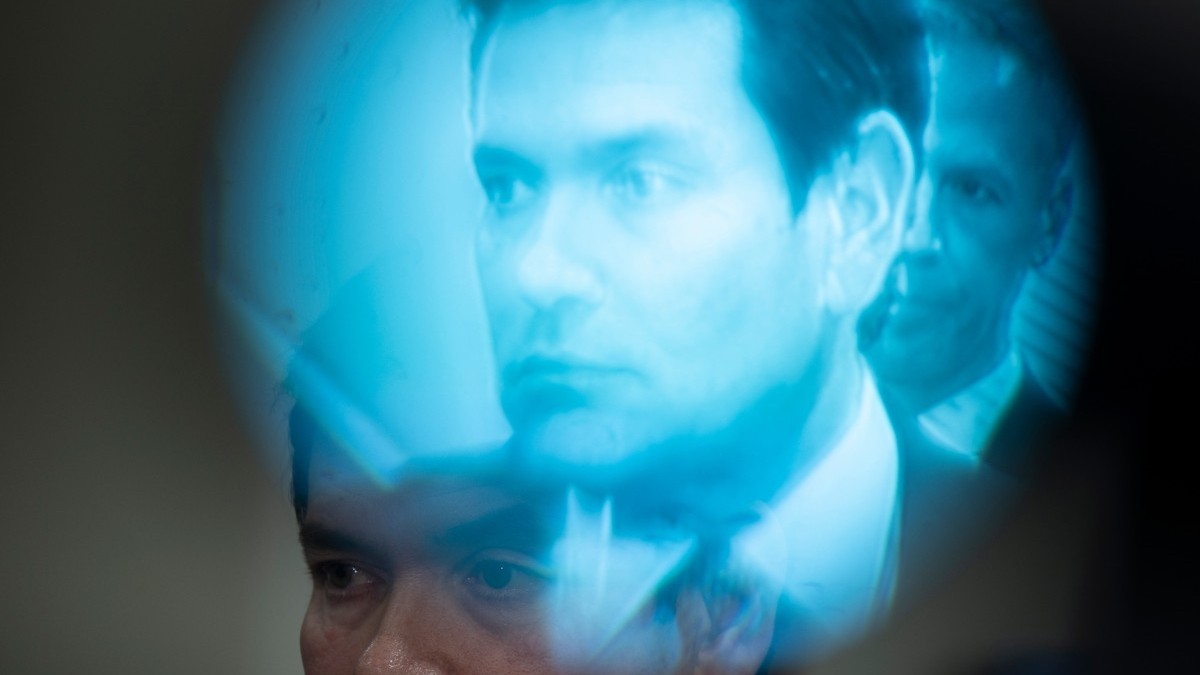
Seen through a video camera viewfinder, U.S. Secretary of State Marco Rubio speaks to reporters after he and top Trump administration officials briefed Senators on U.S. military actions in Venezuela, on Capitol Hill in Washington, D.C. on January 7, 2026.
Brendan Smialowski / AFP
In justifying his desire to ‘take’ Greenland, Donald Trump effectively dismissed Europe’s militaristic capabilities, saying—in capitals, of course—“I DOUBT NATO WOULD BE THERE FOR US IF WE REALLY NEEDED THEM.”
Washington insists it needs the island for security, an issue which it clearly doesn’t trust Europe to keep a handle on, and is currently not ruling out military intervention.
Europe’s continued release of statements in support of Denmark’s control of Greenland comes in spite of the fact leaders would rather the matter was settled by others, suggesting that they are well aware of their own weaknesses.
In a similar vein, Britain has pledged to send troops to Ukraine but is keeping quiet about the details because there is very little it could actually do, and is likely hoping never to be taken up on the offer.
U.S. Secretary of State Marco Rubio said on Wednesday that he will meet with Danish officials next week, adding “we’ll have those conversations [about the situation in Greenland] with them then.”
Asked if Trump planned for the U.S. to buy Greenland, Rubio said:
If the president identifies a threat to the national security of the United States, every president retains the option to address it through military means. As a diplomat, which is what I am now, and what we work on, we always prefer to settle it in different ways—that included in Venezuela.
The Economist reckons that rather than using military force to take Greenland, the U.S. could offer a so-called ‘Compact of Free Association’ to the island, which would hand it duty-free trade in return for America’s armed forces being able to operate freely there. The U.S. already has similar agreements with Micronesia, a country comprising of more than 600 islands in the Pacific Ocean, and the Marshall Islands.
On the same day that Rubio announced his upcoming visit, European Council President António Costa said that both Greenland and Denmark “have the full support and solidarity of the European Union.” That will really fill them with confidence.