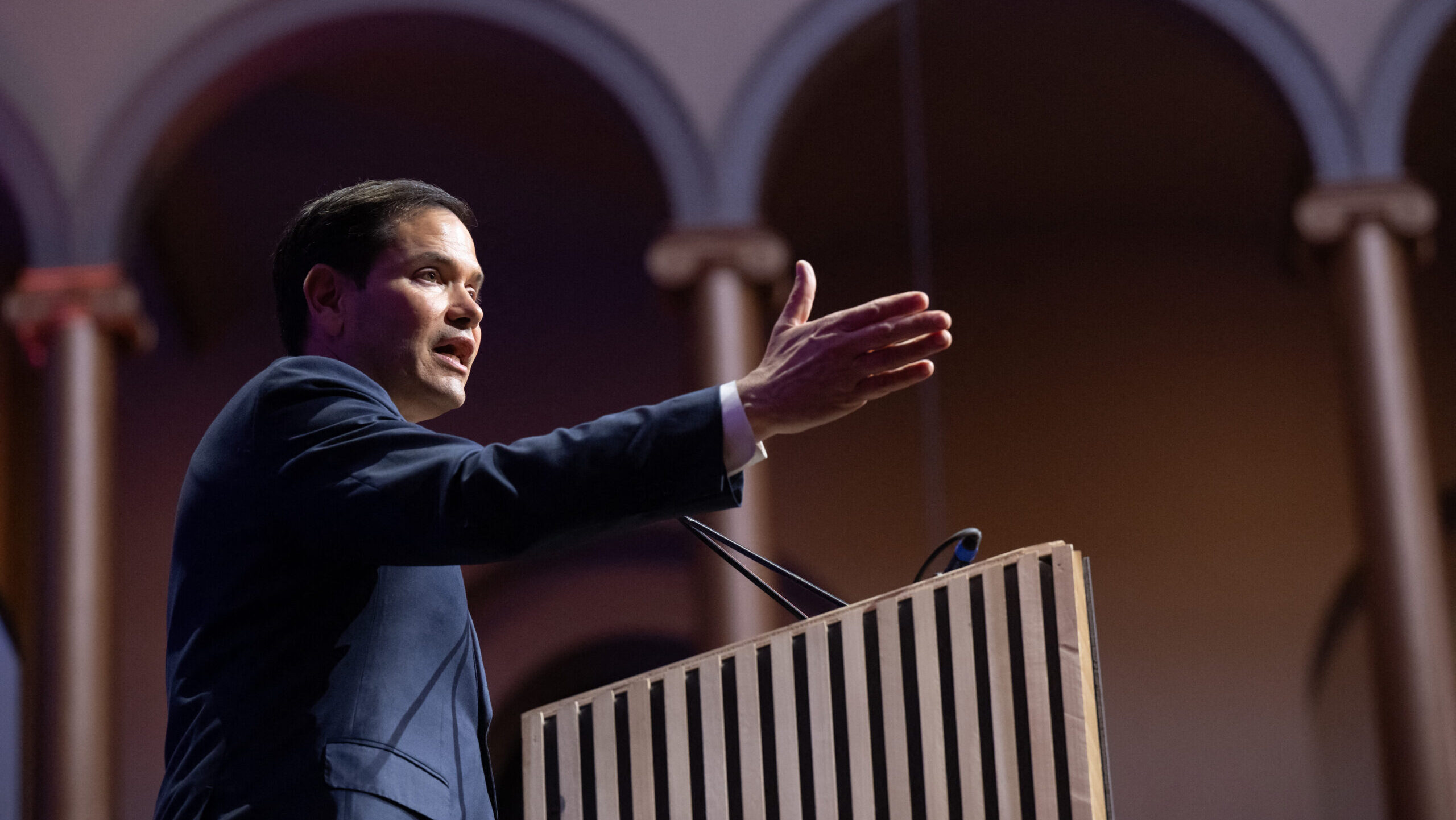
U.S. Secretary of State Marco Rubio
Saul Loeb / AFP
Spanish PM Pedro Sánchez believes he can weasel his way out of the newly agreed-upon NATO defense spending target of 5% of GDP by 2035, but many officials remain unconvinced by his arguments, including U.S. Secretary of State Marco Rubio.
Due to a combination of President Trump’s insistence and the wars in Ukraine and the Middle East, “every single partner in the NATO alliance pledged to get to the 5% mark, with the exception, unfortunately, of Spain,” Rubio said in an interview on Wednesday, June 23rd, as the second day of NATO summit in The Hague was underway.
The dispute is about Sánchez’s assertion that Spain can meet the same capability requirements that all other member states need to, but spending only 2.1% of its GDP on defense instead of the new target of 5%, which is made up of 3.5% direct military spending and another 1.5% on resilience, such as infrastructure or cybersecurity.
“It’s a problem, it’s a big problem,” Rubio said plainly. “They claim they can do it for less, but Spain right now has deep internal political challenges, [and] they have a left-of-center government that basically wants to spend very little, if anything, on the military.”
Rubio added that he understands the socialist PM’s rationale: Sánchez doesn’t want to become unpopular back home by diverting government funds from social services, healthcare, or education. But at the same time, he stressed, Spain must live up to its “capabilities” on the defense front as well.
“I think this is one of the topics that [NATO] leaders will have to confront today” during the summit, Rubio added.
Regarding the murky ‘agreement’ between Sánchez and NATO Secretary General Mark Rutte—which, according to Sánchez, equals a full opt-out from the 5% target for Spain, but is seen by others as merely a delay before full compliance down the road—Rubio said it is unjust for the other allies who will be hit with the financial consequences.
“I don’t think the agreement they reached is sustainable, and frankly, it puts [NATO] in a very tough spot as regards to the other allies,” Rubio said. “If everybody lives up to their commitments, NATO has a chance to become a much stronger alliance,” he added.