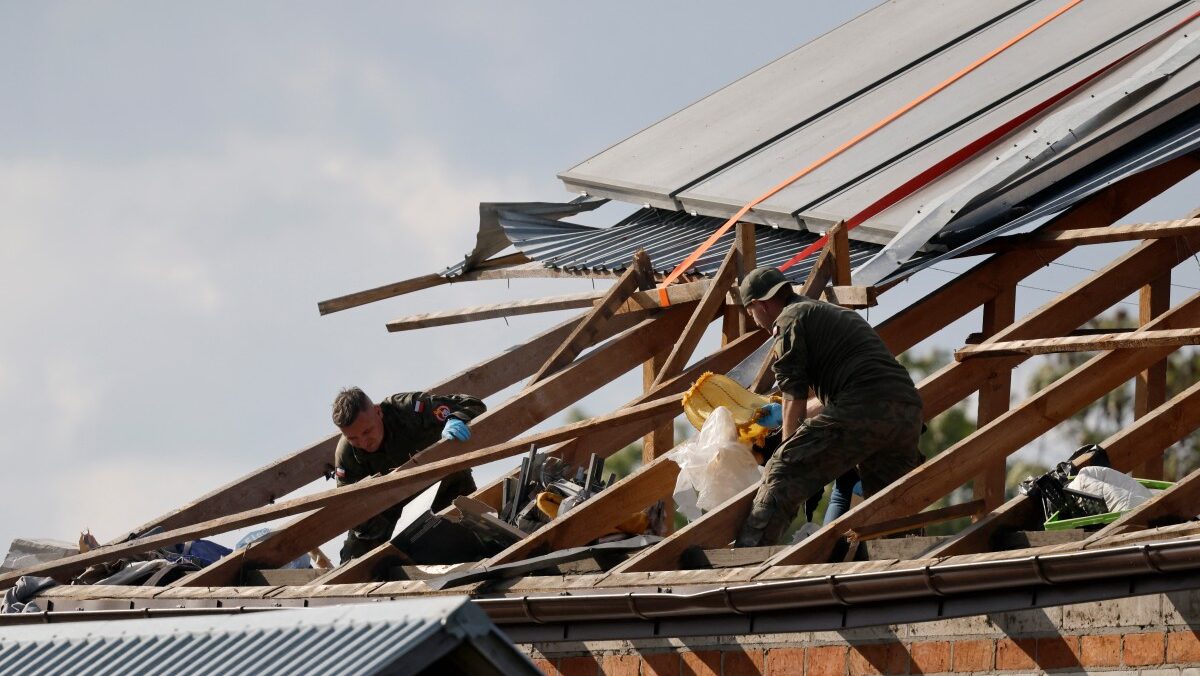
Police and army inspect damage to a house destroyed by debris from a shot down Russian drone in the village of Wyryki-Wola, eastern Poland, on September 10, 2025.
Wojtek Radwanski / AFP
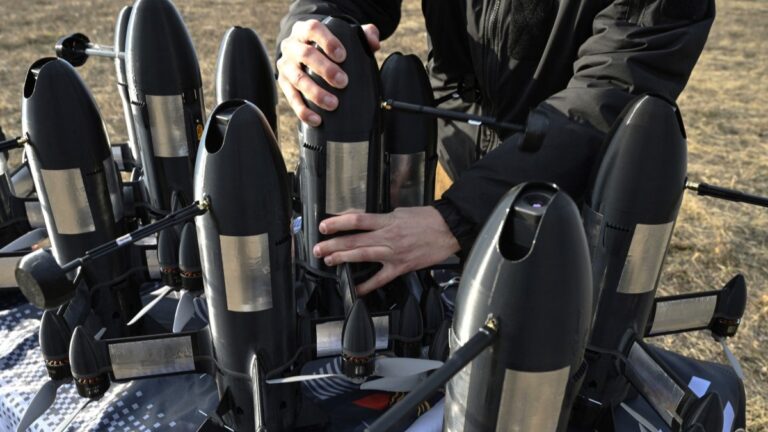
Poland has convened emergency NATO talks after multiple Russian drones violated its airspace overnight during an attack on Ukraine, sparking the most serious confrontation yet between Moscow and the Western alliance since the start of the war.
Prime Minister Donald Tusk told parliament on Wednesday, September 10th, that Polish territory had been violated 19 times, with at least three drones shot down after Polish and allied aircraft scrambled in response.
While no casualties were reported, a house and car in the eastern village of Wyryki were damaged.
“This situation brings us closer than ever to open conflict since World War II,” Tusk warned, while stressing that Poland was not yet in a state of war.
He said Warsaw had invoked NATO’s Article 4—only the eighth time in the alliance’s history. Under Article 4, any member state can call urgent talks when it feels its “territorial integrity, political independence, or security” are at risk.
Last night the Polish airspace was violated by a huge number of Russian drones. Those drones that posed a direct threat were shot down. I am in constant communication with the Secretary General of NATO and our allies.
— Donald Tusk (@donaldtusk) September 10, 2025
The incident came amid one of Russia’s heaviest barrages on Ukraine in months, with missiles and drones striking cities including Lviv, less than 100 kilometres from the Polish border.
Ukrainian President Volodymyr Zelensky described the breach as a “dangerous precedent” and “no accident,” urging Western allies to respond robustly.
NATO officials confirmed that Polish and allied air defences had engaged the drones, marking the first time the alliance’s aircraft have taken action against threats in NATO airspace.
Dutch fighters, German Patriot systems, and an Italian early-warning aircraft were all involved. NATO reacted “quickly and decisively,” said U.S. General Alexus Grynkewich, the alliance’s top commander in Europe.
Alliance chief Mark Rutte hailed a “very successful reaction,” while denouncing Russia’s “reckless behaviour.” NATO’s top council shifted its weekly meeting into an Article 4 format.
Moscow has denied any deliberate targeting of Poland, with its defence ministry insisting there had been “no intentions to engage any targets” on Polish soil.
The Russian foreign ministry accused Warsaw of spreading “myths” to escalate the conflict, while its embassy in Poland said no evidence had been provided to prove the drones were Russian.
Nevertheless, the violations drew swift international condemnation. UK Prime Minister Keir Starmer called the incursion “extremely reckless,” while German Chancellor Friedrich Merz described it as part of a “long chain of provocations” on NATO’s eastern flank.
U.S. President Donald Trump, who has pledged to seek a peace deal in Ukraine, was due to speak with Polish President Karol Nawrocki later in the day. Washington’s ambassador to NATO, Matthew Whitaker, underlined that the United States would “defend every inch of NATO territory.”
Hungarian Prime Minister Viktor Orbán expressed solidarity with Warsaw but reiterated his call for peace talks, saying, “living in the shadow of a war is fraught with risks and dangers.”
Hungary stands in full solidarity with Poland following the recent drone incident. The violation of Poland’s territorial integrity is unacceptable.
— Orbán Viktor (@PM_ViktorOrban) September 10, 2025
The incident proves that our policy of calling for peace in the Russia-Ukraine war is reasonable and rational. Living in the shadow…
Slovak leader Robert Fico also urged caution, warning against political games while stressing the need for an “objective” investigation into whether the drones were deliberately directed into Poland.
The incident comes just days before major Russian-Belarusian military drills near Poland’s borders, which Warsaw has described as “critical days” for regional security. With NATO allies now on high alert, Poland has closed its last border crossings with Belarus and tightened airspace restrictions.